
What Is A Flock Camera? A Powerful, Divisive Tool
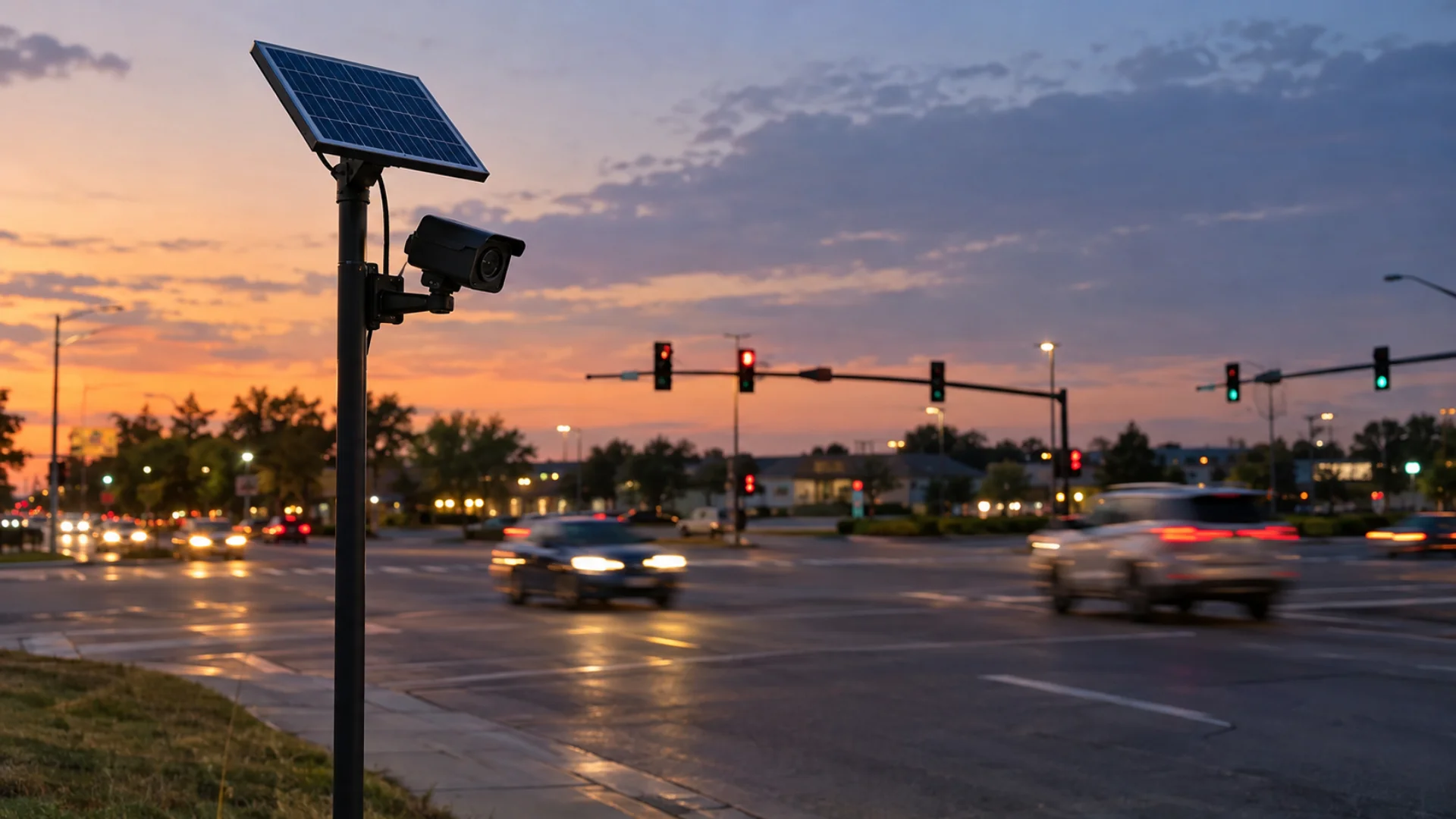
A Flock camera is an automated license plate reader made by Flock Safety. It is usually a small black camera on a slim pole, often with a solar panel on top. It photographs every vehicle that drives past, reads the plate, and saves the result in a searchable database that police can use.
Supporters say it helps find stolen cars and missing people. Critics say it builds a record of where ordinary drivers go. Both sides have new evidence in 2026, and this guide covers what the cameras are, what they record, and why so many cities are now voting to remove them.
What Is A Flock Camera In Simple Terms
Flock Safety is an Atlanta-based company founded in 2017. Its best-known product is the Falcon, a still image camera built for automated license plate recognition. Flock says it works with more than 6,000 communities in 49 states and handles more than 20 billion vehicle scans a month, according to its Wikipedia entry. A Cybernews report counted more than 120,000 cameras installed across the country.
Buyers include city police, sheriffs, school systems, businesses, and homeowner associations. A Flock camera isn’t a speed camera or a red-light camera. It does not issue tickets, and it records every passing vehicle, not just the ones breaking a rule.
What Does A Flock Camera Look Like
Once you know the shape, you will start noticing them. A Berkeley Side explainer describes small black oval devices with a lens aimed at a busy lane of traffic.
| Part | What to look for |
|---|---|
| Camera | A compact black or dark gray unit, about the size of a large coffee mug, pointed at oncoming or passing traffic |
| Solar panel | A small dark panel tilted toward the sky above the camera |
| Pole | A slim standalone pole or an existing light pole, usually several feet above the road |
| Extras | An infrared flash for night shots and sometimes a battery box |
Not every Flock camera has a solar panel, because some are hardwired. Traffic cameras and signal sensors can look similar from a distance. Flock also sells video cameras, mobile security trailers, gunshot detection, and drones. Commercial drones are a fast-growing category, as Garuda Aerospace shows.
What Is A Flock Camera Used For
The simple answer is investigations. When a car is stolen, or a witness remembers part of a plate, police can search the database to see where they spotted the vehicle.
What police use it for
Flock says its readers help agencies locate missing people, recover stolen vehicles, and investigate crime faster. The system can also send alerts when a plate matches a list, such as stolen vehicles, wanted persons, or AMBER and Silver alerts. Officers can search by plate or by a description, such as a blue sedan with a roof rack.
A police chief in Greenfield, Massachusetts, told local officials the cameras helped officers improve investigations and emergency responses, even as the city moved to remove them.
What neighborhoods and businesses use it for
Homeowner associations, retailers, and campuses use the cameras to log who enters and leaves a property. Safety technology on school grounds is a related market, and our profile of Raptor Technologies looks at one company in it.
What Is A Flock Camera And How Does It Work
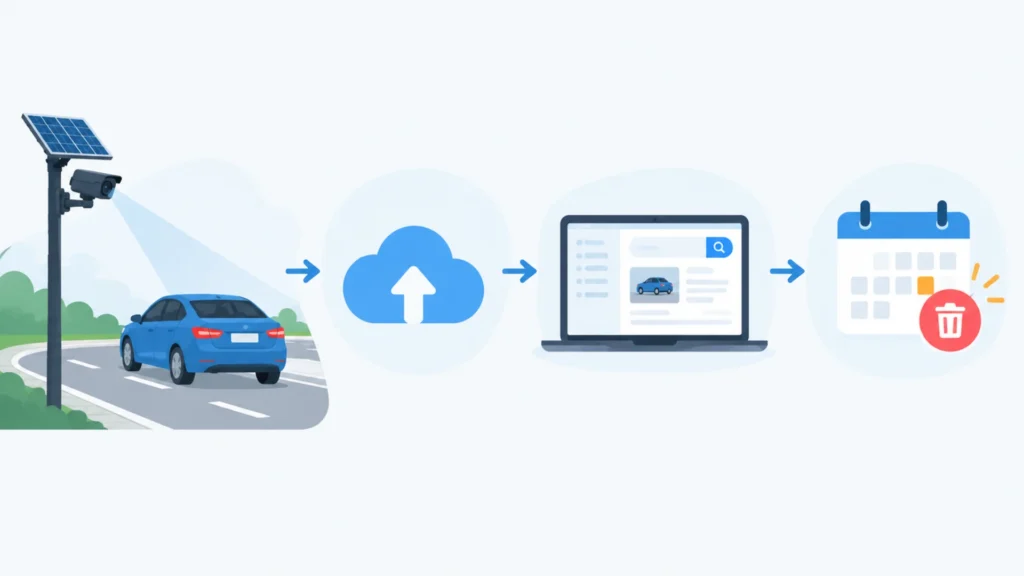
Every pass follows the same basic path.
- Motion triggers the camera to photograph the rear of a passing vehicle
- The image uploads over a cellular connection to Flock’s cloud
- Software reads the plate and builds a “vehicle fingerprint”
- The system checks the plate against alert lists and sends a notice on a match
- The record stays searchable until the retention period ends
- Authorized users search the database, and some agencies share access with others.
The vehicle fingerprint is Flock’s term for details beyond the plate. It includes make, color, body type, and features like bumper stickers, roof racks, or damage. That is why a search can work even when a plate is covered or missing.
Flock says it does not use facial recognition, and that its customers own their data and decide how it is shared. It also says every search must have a documented reason and is logged for review.
Retention matters a lot. Flock long used a 30-day default. In August 2026, it cut its recommended default to seven days and said all law enforcement customers must use case codes and an audit tool by January 1, 2027. Customers can still keep data longer where the law allows, and some states set their own limits.
Why Do People Hate Flock Cameras
Most objections are not about one photo of one plate. They are about what thousands of cameras add up to. Here are the five complaints that come up most.
A record of where you go
A single reading is harmless, but weeks of readings can reveal habits, like where you work, worship, or visit a doctor. In the Norfolk, Virginia lawsuit, the city’s own records showed the plaintiffs’ cars were logged hundreds of times in about four months, according to a case explainer.
Data sharing and immigration
Records from Danville, Illinois showed more than 4,000 searches by federal agencies, some with a possible immigration focus, even though ICE had no Flock contract, according to The Conversation. University of Washington researchers described what they called side door searches, where local officers searched on behalf of federal agents.
Flock says it has no contract with ICE and that ICE cannot access its cameras directly. It also added a setting in January 2026 that lets agencies switch off federal sharing with one toggle, as described in its post on ICE and data sharing.
Officer misuse
Indianapolis police did not routinely audit searches until The Washington Post flagged thousands of questionable queries by one officer, and a later audit found alleged misuse by four more. VPM reported in October 2026 that a Chesterfield, Virginia police employee was charged with misuse of the cameras.
Who gets watched
A Christopher Newport University study found license plate readers in Hampton Roads were concentrated around Black communities, according to WHRO.
Trust and transparency
Several police departments learned about misuse from reporters rather than their own checks. That lowers confidence even when most officers follow the rules.
The Case For Flock Cameras
There is a real counterargument. Police and many residents say the cameras solve cases that would otherwise stall, especially stolen vehicles and missing persons. Flock says its system supported more than a million cases last year, though that figure is the company’s own.
Flock also points to safeguards, including a seven-day default deletion period, logged searches, customer-controlled sharing, transparency portals, and no contracts with ICE. Whether those safeguards are enough is the heart of the debate, and you can read the company’s side on its What Is Flock page.
What The Law Says Right Now
This is general information, not legal advice, and rules vary by state.
Courts
On January 27, 2026, a federal judge upheld Norfolk’s network of 176 Flock cameras, finding the plaintiffs had not shown the system could track the whole of a person’s movements. The judge also warned that this could change as the technology expands. The plaintiffs, represented by the Institute for Justice, are appealing to the Fourth Circuit. A University of North Carolina legal blog noted that, as far as its author knew, no court had ruled that Flock cameras violate the Fourth Amendment.
States
Virginia limits data retention to 21 days. Washington’s Driver Privacy Act, signed March 30, 2026, limits use to certain investigations, bars sharing except in court proceedings, and requires deletion after 21 days. The ACLU of Washington said the law did not go far enough. Illinois bars using plate data to enforce other states’ abortion or immigration laws. Indiana, by contrast, has no law regulating the cameras, according to a local news report.
Why Cities Are Dropping Flock
Cancellations have surged. Secure Justice counted 214 localities that dropped Flock since 2021, including 90 in August 2026 alone, according to Cybernews. The ACLU says more than 200 cities ended contracts with Flock and similar companies since the start of 2026. The counts differ because groups measure differently, but the direction is clear.
Indiana and Texas have seen waves of county and city votes, and El Cerrito, California, switched its cameras off in June. Amazon’s Ring also canceled a planned Flock integration after a Super Bowl ad drew backlash, and several cities followed, as Fortune reported. Even so, other cities are expanding their use, so the market is split.
What You Can Do As A Driver
You cannot opt out of driving on public roads, but you can learn what your town does with the data.
- Search your city or police department website for a Flock policy or transparency page.
- Use the Flock camera map, where agencies choose to publish locations, and check crowdsourced maps run by privacy groups.
- Ask your city for its retention period, sharing settings, and audit process through a public records request.
- Attend a council meeting and ask whether searches need case numbers, whether federal sharing is off, and what the penalty is for misuse.
- If you suspect misuse, contact the department’s internal affairs office or your state attorney general.
For your personal digital footprint, our guide on how to turn off AI features covers the settings you do control.
Questions People Ask About Flock Cameras
Who owns the data from Flock cameras?
Flock says its customers, such as police departments, own their data and control access, sharing, and retention. Flock says it does not sell it.
Do Flock cameras use facial recognition?
Flock says no. Critics respond that a searchable record of a vehicle’s movements can still reveal a lot about the driver.
Do Flock cameras record video?
The standard Falcon takes still images. Flock sells separate video cameras and drones.
How long does Flock keep data?
Flock’s default is now seven days, down from 30. Customers can choose longer periods where the law allows, and some states cap it at 21 days.
Are Flock cameras legal?
In most places, yes. One federal court upheld a large Norfolk network; an appeal is pending, and state rules vary.
Can I opt out of Flock cameras?
No. There is no way for a driver to opt out on a public road.
How do I find Flock cameras near me?
Check the Flock camera map and any crowdsourced maps. Also look for the black camera on a pole with a solar panel.
What To Watch Next
Three things will shape the next year. The Fourth Circuit will decide the Norfolk appeal, Flock’s mandatory audits and case codes begin on January 1, 2027, and more states are considering their own rules. City votes will keep coming too, so the answer to what a Flock camera is may depend on where you live.