
Raptor Technologies Complete Overview and Best Safety Features Revealed
Search “raptor technologies”, and Google surfaces a strange mix: a school safety software company, a Downdetector status page, and news about a $1.8 billion private equity deal. That’s actually a good summary of where this company stands right now. It’s not a startup anymore. It’s a mature, widely deployed safety platform that just changed hands in a major acquisition, and school administrators researching it deserve more than a product brochure.
This profile covers what Raptor Technologies actually does inside a school building, who owns the company today, how to check if the platform is having an outage, and what people should know before recommending it to a district. It also answers the “raptor technologies careers” question directly, since a fair number of people searching this term are looking for a job, not a vendor.
What Is Raptor Technologies?
Raptor Technologies is a Houston, Texas-based software company that builds safety and security tools specifically for K-12 schools. It was founded in 2002 and has grown into one of the most widely used school safety platforms in the country, currently serving more than 60,000 schools across 55 countries, including over 5,000 U.S. school districts.
The company isn’t a general-purpose security vendor. Everything it builds is designed around a single environment: the school campus, with its specific mix of students, staff, parents, volunteers, and visitors moving through the building all day. That focus shows up in almost every product decision the company makes.
What Does Raptor Technologies Actually Do?
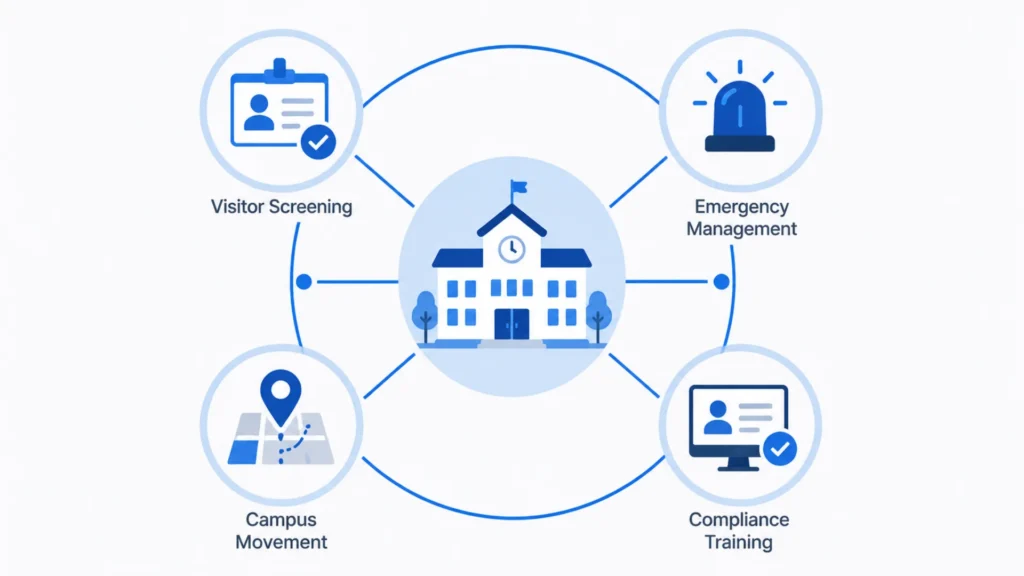
Raptor’s platform breaks down into four connected product areas, and understanding what each one does answers most of what people actually want to know when they search “what is Raptor Technologies.”
Visitor and Volunteer Screening
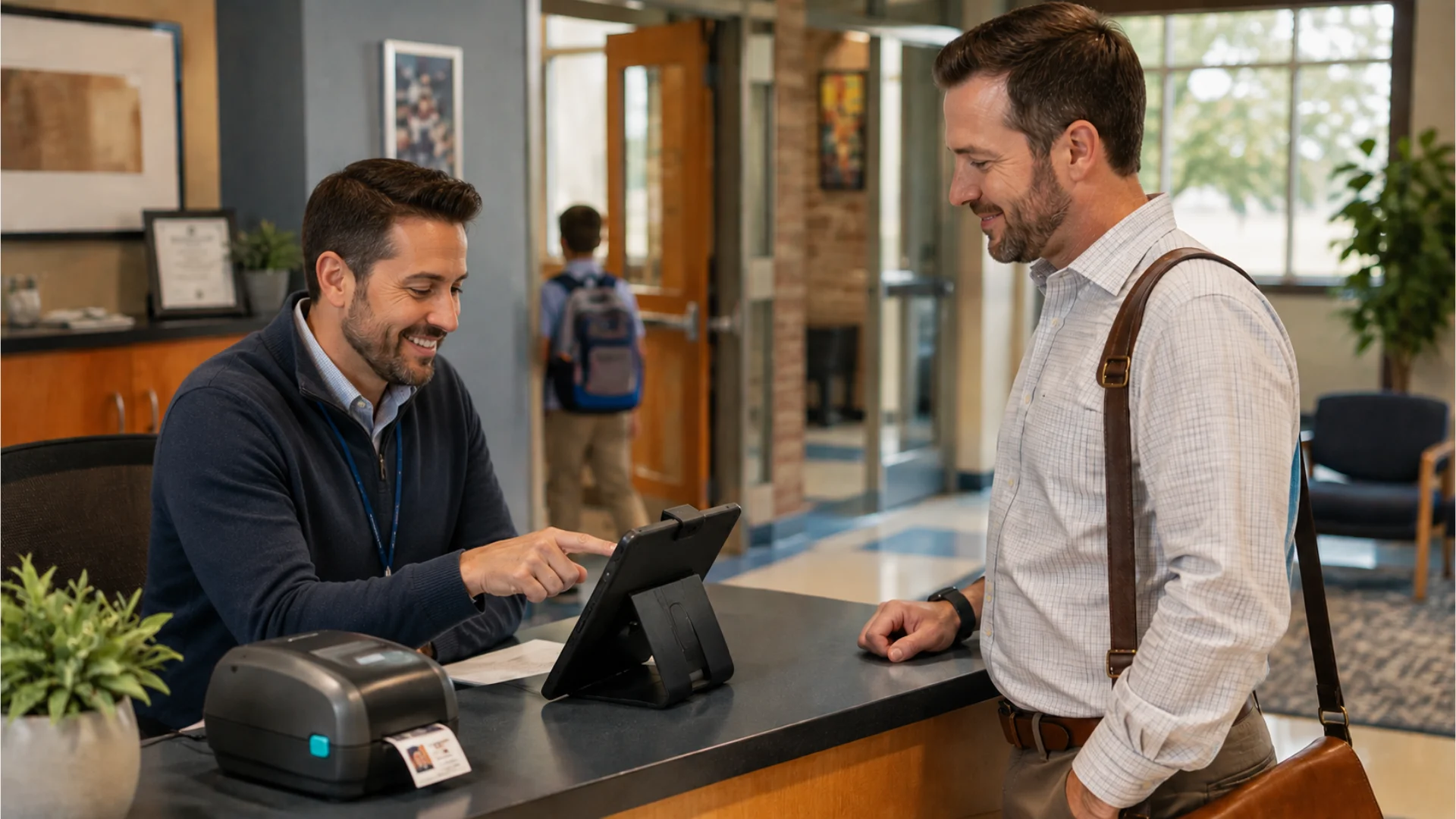
This is where Raptor started, and it’s still the product most schools recognise first. When someone checks in at the front office, Raptor scans their government-issued ID and instantly cross-references it against sex offender registries and any district-specific watch lists, including custody restrictions tied to a specific student.
According to the company, this screening process has flagged more than 50,000 registered sex offenders attempting to enter K-12 campuses since the system launched. The same workflow extends to volunteers, who go through background check integration, and to contractors working on campus.
Emergency Management
Raptor Emergency Management, introduced in 2017, gives schools a way to prepare for, respond to, and recover from a crisis. That includes:
- Drill Manager®, which schedules and documents required safety drills with real-time dashboards and after-action reporting for compliance purposes.
- Raptor Connect™, which activates multiple alert systems at once during a real emergency: strobe lights, screen takeovers on classroom computers, intercoms, and digital signage, all from a single trigger.
- Direct 911 connectivity, which sends accurate location data straight to 911 dispatchers and first responders without routing through a third party.
- Raptor Reunification®, built on the “I Love U Guys” Foundation’s Standard Reunification Method, helps schools verify and document the safe release of students to guardians after an incident.
Campus Movement
Launched more recently, this suite tracks how people move through a campus during the normal school day, not just during emergencies. It covers electronic hall pass tracking, event and ticketing management for things like sporting events or open houses, and dismissal automation. In 2023, Raptor acquired SchoolPass, a company specializing in license-plate recognition and RFID-based carline management, and folded that technology into this suite.
Student Wellbeing and Compliance Training
Raptor also offers tools for early behavioral intervention, allowing staff to document and escalate concerns about a student before a situation becomes a crisis, alongside compliance training modules that help districts track required staff certifications.
Districts can license these products individually or bundle them through Raptor Complete, a single subscription covering the full suite, which the company introduced in 2024 as part of a broader platform expansion.
Raptor Technologies’ Ownership History
This is the part most competitor content skips entirely, and it’s genuinely relevant if you’re evaluating Raptor as a long-term vendor for your district, since ownership changes can affect pricing, support quality, and product direction.
Raptor operated as a founder-led private company for most of its history. Private equity firm JMI Equity became an investor, and in 2023 the company used that backing to acquire SchoolPass, expanding its dismissal and carline technology.
Thoma Bravo, one of the largest software-focused private equity firms in the world, later took a controlling stake in Raptor. Then, in November 2025, Reuters reported that Warburg Pincus agreed to acquire a majority stake in Raptor Technologies from Thoma Bravo, in a deal valuing the school safety provider at approximately $1.8 billion. JMI Equity retained a minority stake in the company as part of that transaction, and Thoma Bravo confirmed the completion of the sale in early 2026.
For a district or school administrator, the practical takeaway is this: Raptor is now backed by one of the country’s largest growth-equity firms, with a valuation that reflects real scale rather than early-stage hype. That tends to mean more resources for product development and customer support, though it’s also worth watching how ownership transitions affect pricing over the next contract renewal cycle, which is common after any private equity ownership change.
Is Raptor Technologies Down Right Now?
If you landed here because Raptor’s software seems slow or unresponsive at your school, you’re not alone. Like any cloud-based SaaS platform, Raptor occasionally experiences outages or degraded performance, and schools understandably want to know quickly whether the issue is a local network problem or on Raptor’s end.
Third-party status trackers like Downdetector aggregate real-time user reports to show whether an outage is widespread or isolated to your specific network. If you’re seeing errors, checking a service status tracker for Raptor Technologies before assuming it’s your school’s Wi-Fi or firewall can save your IT staff time.
A few practical steps if the platform seems unresponsive:
- Check whether other staff members at your school are experiencing the same issue, or if it’s isolated to a single device or login.
- Confirm your school’s internet connection and that any content filtering settings aren’t blocking Raptor’s domains.
- Check a third-party outage tracker to see if reports are spiking across other districts at the same time.
- Contact Raptor’s support team directly if the issue persists, since downtime of safety software during school hours requires a fast escalation path, not a wait-and-see approach.
Because Raptor’s Emergency Management tools are meant to function during real crises, districts should also ask their IT teams about the platform’s documented uptime history and any offline fallback procedures as part of the initial vendor evaluation, not after a problem occurs.
Raptor Technologies Careers
Raptor Technologies employs somewhere in the range of 150 to 200 people, according to LinkedIn’s company data, with its headquarters in Houston and an additional office location in Raleigh, North Carolina. The company has continued hiring across engineering, customer success, sales, and product roles as it’s expanded its product suite and, more recently, absorbed new resources following the Warburg Pincus acquisition.
Roles at Raptor span a mix of on-site, hybrid, and remote positions depending on the team. Given the company’s focus on child safety, several roles, particularly those in customer success and implementation, involve direct interaction with school administrators and safety coordinators rather than purely internal technical work.
If you’re specifically researching Raptor Technologies’ careers, the most reliable source is the company’s current openings page, since third-party job boards can lag on posting status or list roles that have already been filled.
How Raptor Technologies Compares to Other School Safety Vendors
Raptor isn’t the only company in this space, and understanding where it fits helps clarify what makes it distinct.
Companies like Motorola Solutions (through its Rave Mobile Safety and Centegix-style panic button acquisitions) and Centegix focus heavily on wearable panic-button hardware and rapid, staff-initiated alerts. Verkada and similar physical security vendors concentrate on cameras, access control, and door hardware rather than the administrative and compliance side of school safety.
Raptor’s differentiator is breadth within the software layer, specifically for K-12: visitor screening, emergency response, campus movement, and compliance training, all under one vendor relationship and one login, rather than districts stitching together five separate point solutions from five separate companies. The tradeoff is that Raptor leans less on physical security hardware, such as door locks and access control panels, areas where dedicated physical security vendors typically go deeper.
Raptor’s platform specializes in software-based campus management and visitor screening; districts evaluating broader site security often compare these tools alongside physical monitoring technologies, much like how organizations evaluate hardware innovations from companies like Garuda Aerospace for aerial surveillance and perimeter safety.
Common Questions to Ask Before Adopting Raptor
Does it integrate with our existing Student Information System?
Raptor states compatibility with common SIS platforms like PowerSchool, Blackbaud, and Veracross, but districts should confirm the depth of integration for their specific system during a demo, not after signing a contract.
What happens during an internet outage?
Emergency management tools are only useful if they work when the network is under stress. Ask directly about offline functionality and failover procedures.
How is student and visitor data stored and secured?
Given the sensitivity of sex offender screening data and custody information, districts should request specifics on data encryption, retention policies, and compliance with student privacy laws like FERPA.
What does onboarding and staff training actually look like?
A safety system only works if front-office staff and teachers actually use it correctly during real events, not just during scheduled drills.
Frequently Asked Questions
What does Raptor Technologies do?
Raptor Technologies builds software that helps K-12 schools screen visitors and volunteers, manage emergency responses, track student movement throughout the school day, and handle safety compliance training, all on one connected platform.
Is Raptor Technologies a public company?
No. Raptor Technologies is privately held. As of November 2025, it’s majority-owned by private equity firm Warburg Pincus, following an acquisition from Thoma Bravo, with JMI Equity retaining a minority stake.
How many schools use Raptor Technologies?
Raptor reports partnerships with more than 60,000 schools across 55 countries, including over 5,000 K-12 school districts in the United States.
How do I check if Raptor Technologies is experiencing an outage?
Third-party outage trackers show real-time user reports and can help confirm whether an issue is widespread or isolated to your school’s network, which is a faster first step than assuming it’s a local problem.
Does Raptor Technologies have job openings?
Yes. Raptor regularly hires for engineering, sales, customer success, and product roles across its Houston headquarters, Raleigh office, and remote positions. Its official careers page lists current openings directly.
What’s the difference between Raptor and SchoolPass?
SchoolPass was an independent company specialising in license-plate recognition and dismissal automation before Raptor Technologies acquired it in 2023. SchoolPass’s technology is now integrated into Raptor’s Campus Movement product suite.
Conclusion
Raptor Technologies has grown from a founder-led visitor management startup into one of the largest school safety software providers in the country, now backed by a major private equity firm at a valuation north of $1.8 billion. For school districts evaluating the platform, the product breadth is genuinely useful: one vendor covering visitor screening, emergency alerts, and campus movement instead of five. The questions worth asking before signing are less about whether the software works and more about how it holds up during an actual crisis, how it integrates with your existing systems, and how the recent ownership change might shape pricing and support down the road.