What Is A 3D Filament? An Easy, Essential Guide
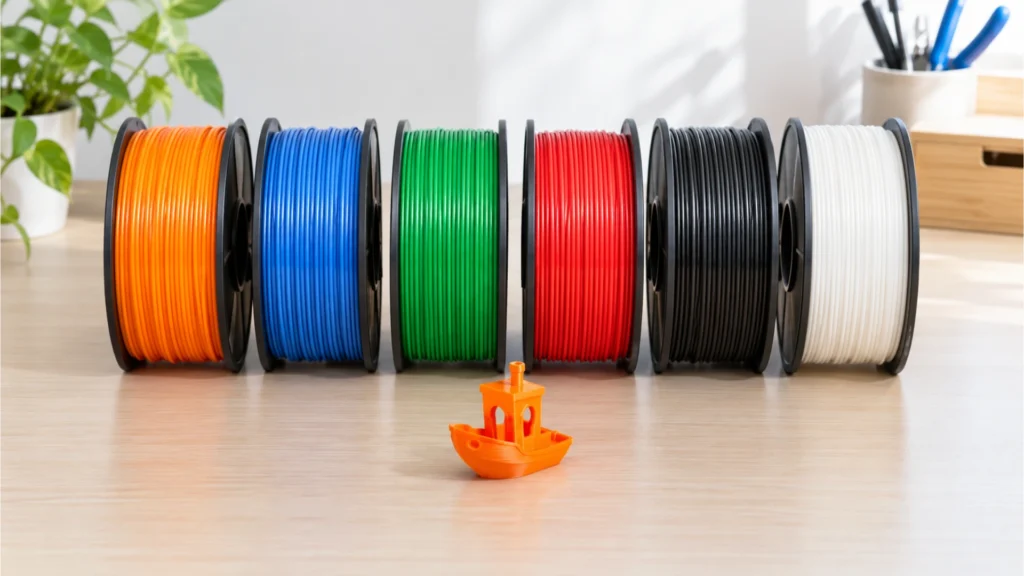
A 3D filament is a thin plastic string, usually wound on a spool, that a 3D printer melts and lays down one thin layer at a time to build an object. Think of it as the ink of a 3D printer, except it is solid plastic, and one 1 kg spool costs about as much as a lunch.
Most beginners hit the same wall. They buy a printer, then discover words like PETG, slicer, AMS, and filament dryer that nobody explained. This guide covers all of it in plain English, including what a 3D printer is, how it works, what it is used for, and why the filament you choose matters more than most people expect.
What Is A 3D Filament In Simple Terms?
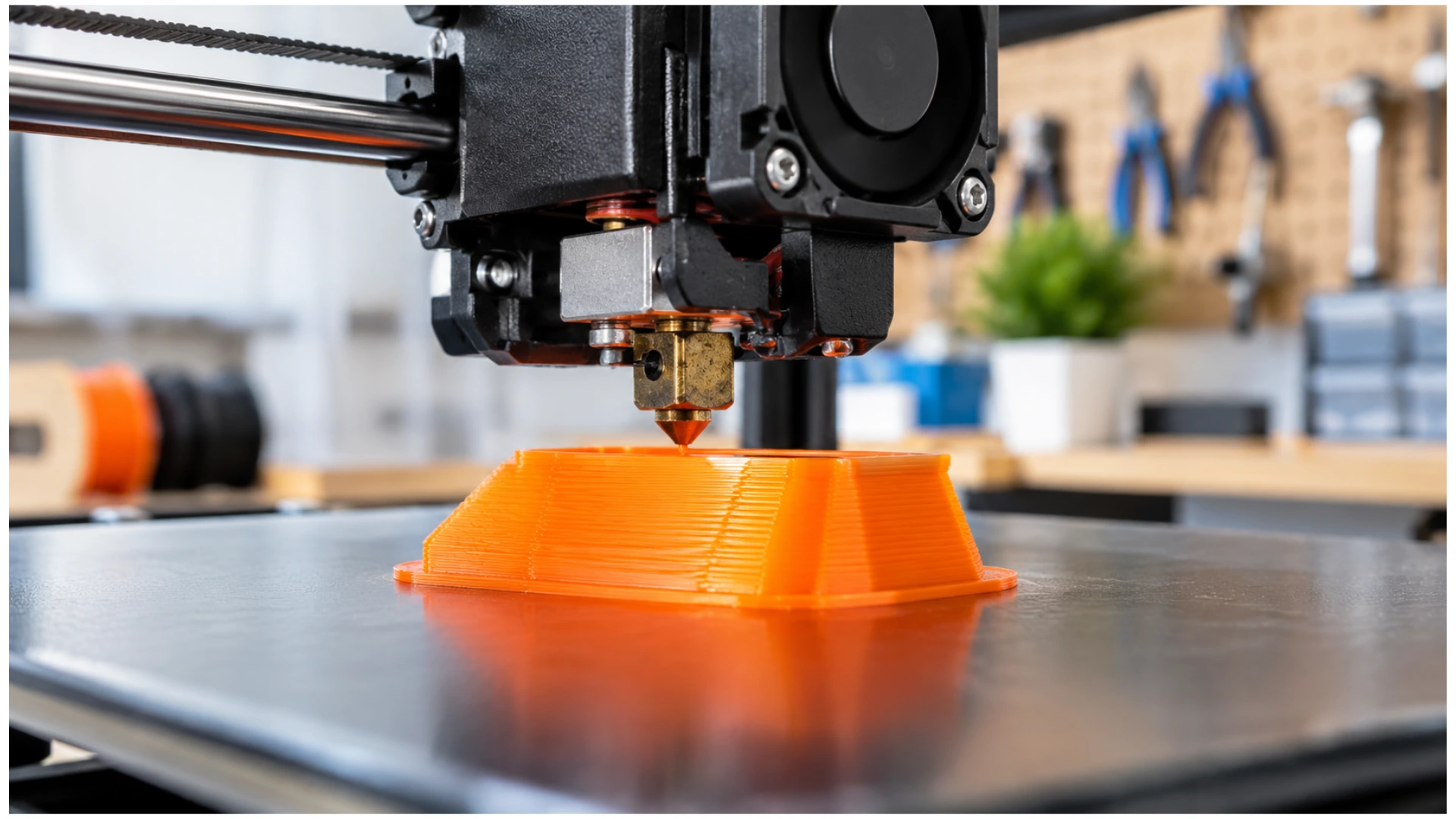
Filament is a thermoplastic, which means it softens when heated and hardens again when it cools. A printer pushes it through a hot nozzle; the plastic comes out as a thin bead, and the printer stacks those beads into a shape. The details of the material are covered in more depth on the 3D printing filament page on Wikipedia.
A few basics are worth knowing before you buy anything.
- The most common diameter is 1.75 mm. Some older printers use 2.85 mm, often sold as 3 mm.
- A standard spool holds 1 kg, though smaller spools exist, so always compare the price per kilogram.
- Standard PLA averages about $20 per kilogram, or roughly two cents a gram.
- Printers only accept the diameter they were built for. A 1.75 mm printer will not work with 2.85 mm filament.
What Is A 3D Printer And How Does It Work
A 3D printer builds a physical object from a digital design. The type that uses filament is called an FDM printer, short for fused deposition modeling, or fused filament fabrication. That is also the answer to what a 3D filament printer is. It is simply a printer that eats filament, as opposed to resin printers that harden liquid with light.
The process is easier to follow as a short sequence.
| Step | What happens |
|---|---|
| 1 | You pick or design a 3D model on your computer |
| 2 | Slicer software converts the model into layer-by-layer instructions |
| 3 | The extruder pulls filament from the spool into the hot end |
| 4 | The nozzle melts the plastic and draws the first layer on the bed |
| 5 | The printer repeats this layer after layer until the object is finished |
Inside the machine, you will find a spool holder, an extruder, a heated nozzle, a build plate that is often heated, and motors that move everything with precision.
What Is A 3D Printer Used For
People use desktop 3D printers for far more than toys. Common jobs include replacement parts like a broken drawer knob or a missing appliance clip, cable organizers, phone stands, tabletop game miniatures, cosplay props, classroom models, and prototypes for new products. Small businesses print jigs, fixtures, and custom packaging inserts that would be expensive to machine.
Hobbyists also print drone frames and robot parts. For a look at commercial hardware companies in those fields, check out Garuda Aerospace and Gecko Robotics.
The pattern is simple. If you can describe a small plastic part, you can probably print it.
What Is A 3D Printer Slicer?
A slicer is free software that cuts a 3D model into thin layers and turns it into instructions the printer can follow. Those instructions are usually written in G-code, a simple command language that tells the machine where to move, how fast, and how hot to run.
The slicer is where you choose your filament profile, layer height, infill, and supports. A typical first print uses a layer height around 0.2 mm and light infill, and the slicer’s default profile for your printer is a safe place to start.
Types Of 3D Filament And What Each Is Best For
Four materials cover most hobby printing, and PLA alone is estimated to make up about half of the filament market, according to ALL3DP. The table below uses typical print temperatures from that guide and 2026 price ranges from several retailers and trackers, so expect your own prices to vary.
| Filament | Print temperature | Typical price per kg | Best for |
|---|---|---|---|
| PLA | 180 to 230 °C | $18 to $25 | Beginners, models, decor, prototypes |
| PETG | 220 to 250 °C | $22 to $30 | Tougher functional parts |
| ABS | 210 to 250 °C | $20 to $28 | Heat and impact resistance |
| ASA | 240 to 260 °C | $30 to $40 | Outdoor parts that face sunlight |
| TPU | 220 to 250 °C | $25 to $45 | Flexible parts like grips and gaskets |
| Nylon | 240 to 260 °C | $35 to $55 | Gears and wear-resistant parts |
Specialty filaments mix in wood, metal powder, glow pigments, or carbon fiber. Fiber and metal blends wear down a brass nozzle quickly, so they need a hardened steel nozzle.
Which Filament Should A Beginner Buy
Start with PLA. It prints at lower temperatures, barely warps, and does not need an enclosure. Its main weakness is heat, because PLA softens around 60 °C, so do not leave a PLA part in a hot car.
Move to PETG when you need a tougher part, and to ASA for anything that lives outdoors. ABS, ASA, and nylon work best in an enclosed printer.
One shopping tip saves real money. Compare the price per kilogram, not the sticker price. A 750 g spool at $39 works out to $52 per kilogram, which is more than double a regular 1 kg spool.
What Is A 3D Filament Dryer?
Many filaments are hygroscopic, which means they soak up moisture from the air. Wet filament causes popping or hissing at the nozzle, stringing, rough surfaces, and weak, brittle prints. A filament dryer is a small heated box that gently warms a spool to drive the water out, and many let you print straight from the box.
Drying settings depend on the material. These are common starting points from drying guides.
| Filament | Temperature | Time |
|---|---|---|
| PLA | 45 to 55 °C | 4 to 6 hours |
| PETG | 60 to 65 °C | 4 to 6 hours |
| ABS and ASA | 65 to 80 °C | 2 to 6 hours |
| TPU | 50 to 55 °C | 4 to 6 hours |
| Nylon | 70 to 90 °C | 8 to 16 hours |
Do not go hotter than the spool can handle. Plastic spool sides and cardboard cores can soften before the filament reaches its drying temperature, and silk or modified PLA should stay under about 45 °C.
How fast filament gets wet again also matters. On an open shelf in average humidity, that nylon shows problems within 24 to 48 hours, PETG in one to two weeks, and PLA in one to two months. Keep spools in a sealed bag or box with desiccant.
You do not need to spend much. Single spool dryers from budget brands cost around $45 to $50, and a basic food dehydrator can work for PLA, PETG, and TPU if you verify its real temperature with a thermometer.
What Is A 3D Printer AMS?
AMS stands for Automatic Material System, and it is Bambu Lab’s multi-spool filament feeder. It holds four spools, feeds the printer automatically, and switches filament mid-print, which is how a single nozzle printer makes multicolor models. Bambu says up to four units can be linked for as many as 16 colors.
An AMS also helps in two other ways. It can read the RFID tag on a Bambu spool to set the right material profile, and it can switch to a backup spool when one runs out.
There are several versions, and your printer usually decides which one you can use.
| Version | Works with | Key point |
|---|---|---|
| AMS Lite | A1 series | Open, compact, no drying, around $199 |
| AMS | P1 and X1 series | Enclosed, passive moisture control |
| AMS 2 Pro | P, X, and H series | Enclosed with active drying, around $299 |
| AMS HT | H2D | One spool with high-temperature drying |
Prices shift often, so check the store before buying.
Two honest caveats matter here. First, multicolor printing on one nozzle wastes filament because the printer purges the old color before it starts the next, usually into a purge tower. Second, the AMS 2 Pro dries up to about 65 °C, which suits PLA and PETG but is too low for ABS or nylon. Its firmware also lowers the drying temperature during a print, about 45 °C for PLA and 55 °C for PETG, to keep the feeder from softening spools.
If you mostly print single-color functional parts, you probably do not need an AMS yet. Other brands sell similar multi-spool systems under their own names.
What Is A 3D Filament Pen And A 3D Printing Pen?
A 3D pen is a handheld extruder. It melts a small amount of filament and lets you draw in the air or on a surface, and the plastic hardens as it cools. It has no motors, no bed, and no slicer, so everything depends on your hand.
Most pens use 1.75 mm filament, which is the same size as printer filament. Some models use only their own filament, while others accept ordinary PLA and ABS. Separately, one popular pen model lets you set about 160 to 210 °C for PLA and 210 to 235 °C for ABS.
Kid-focused pens often use PCL, a low-temperature filament that melts well below PLA and ABS and is safe to handle quickly after extrusion. PCL is not interchangeable with printer filament, so match the filament to the pen. Whatever the model, supervise children, because the nozzle can still be hot.
People use pens for freehand art, quick repairs, filling gaps in prints, and classroom projects. They do not replace a printer for precise, repeatable parts.
Safety, Storage, And Waste Basics
Print in a ventilated room, and be especially careful with ABS and ASA, which give off stronger fumes. ALL3DP has a guide to 3D printing emissions if you want to go deeper.
PLA is plant-based, but it only breaks down under industrial composting conditions, not in a normal landfill. Store spools sealed and dry, and keep failed prints and scrap out of your regular trash when you can recycle them.
Common Filament Problems And Fixes
| Symptom | Likely cause | What to try |
|---|---|---|
| Popping or hissing and stringing | Wet filament | Dry the spool and store it sealed |
| Brittle filament that snaps | Old or wet PLA | Dry it, or use a fresh spool |
| Nozzle clogs | Wrong temperature or abrasive filament | Check temperature; use a hardened nozzle for fiber blends |
| Corners lifting | Warping with ABS or ASA | Use an enclosure and heated bed |
| Weak layers | Nozzle too cool | Raise temperature slightly within the spool’s range |
Questions People Ask About 3D Filament
What is 3D filament made of?
Most is made from thermoplastics such as PLA from plant starch, or PETG and ABS from petroleum-based plastics. Specialty versions add wood, metal, or carbon fiber.
How much does 3D filament cost?
Standard PLA, PETG, and ABS usually cost about $18 to $30 per kilogram, while TPU and nylon often cost more.
Do I need a filament dryer?
Not always. It helps most with PETG, TPU, and nylon, and with any spool that pops or strings.
Can I use any filament in any printer?
No. Match the diameter, and make sure your nozzle and hot end can reach the material’s temperature.
Does a 3D pen use the same filament as a printer?
Often yes, for pens that take 1.75 mm PLA or ABS, but kid-safe pens may need PCL or a proprietary filament.
What is the difference between a slicer and a printer?
The slicer is software that prepares the instructions. The printer is the machine that follows them.
Where To Start
Buy one 1 kg spool of 1.75 mm PLA, download a free slicer, and print a small test object with the default profile. Add a dryer when you notice moisture symptoms, and wait on an AMS until multicolor printing is a real need.