
Gecko Robotics Extraordinary Climb From College Dorm To Billion-Dollar Unicorn
In 2012, a college engineering student walked into a power plant and learned that someone had recently died there, falling from a boiler while checking it for cracks. That single conversation is why Gecko Robotics exists today.
Thirteen years later, Gecko Robotics is a Pittsburgh-based company worth 1.25 billion dollars, working with the U.S. Navy, major power producers, and defense primes to inspect infrastructure that is too dangerous, too tall, or too hard to reach for people to check by hand. If you searched for Gecko Robotics because you are considering applying for a job, evaluating its stock, or just trying to understand what the company actually builds, this guide covers all of it in one place.
What Is Gecko Robotics
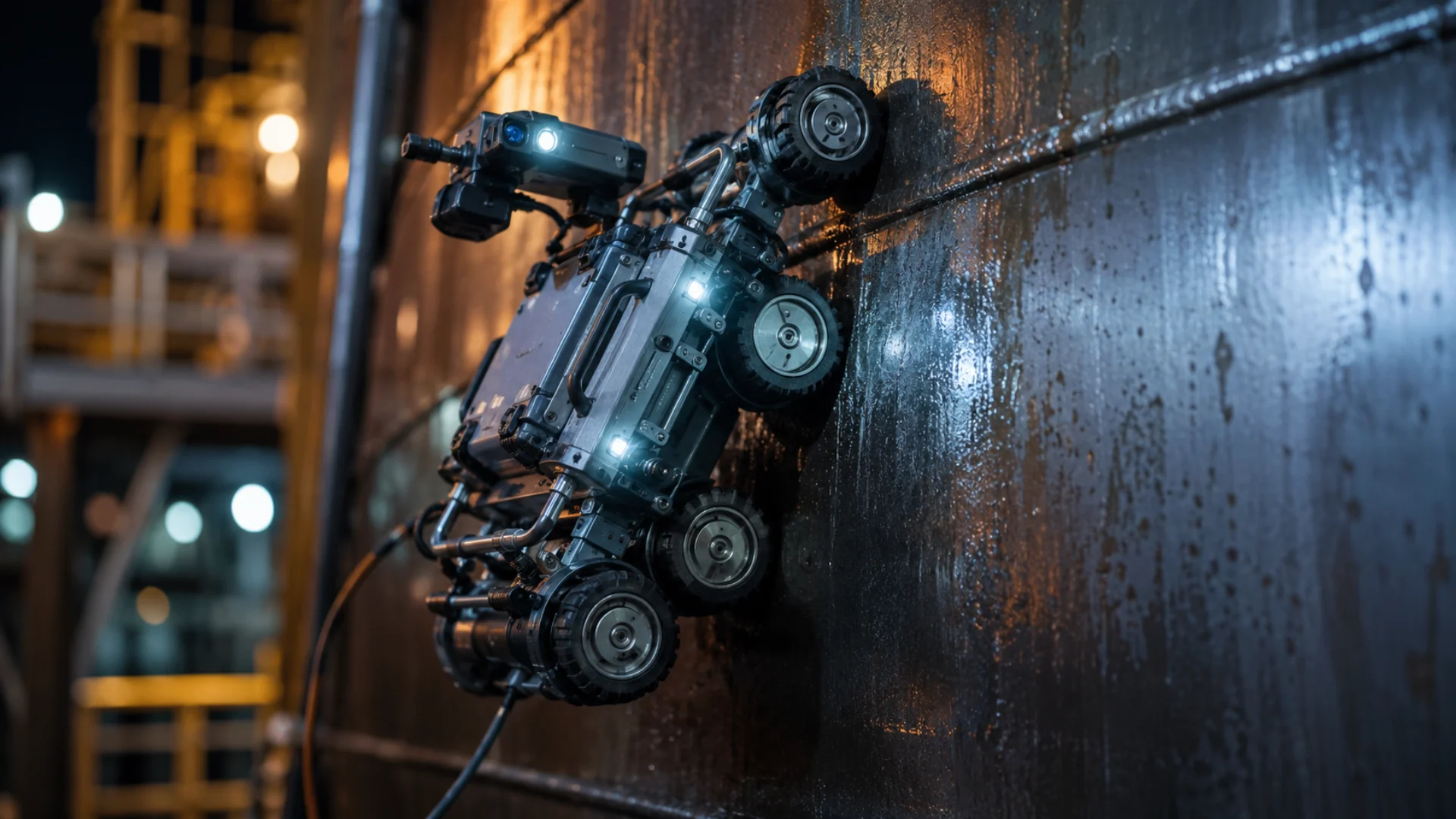
Gecko Robotics designs robots that climb, crawl, swim, and fly across industrial structures to collect data on their condition. Think ship hulls, power plant boilers, storage tanks, pipelines, and even nuclear submarine components. These robots carry ultrasonic sensors and high-definition cameras that detect cracks, corrosion, and thinning metal long before those problems turn into expensive failures or safety hazards.
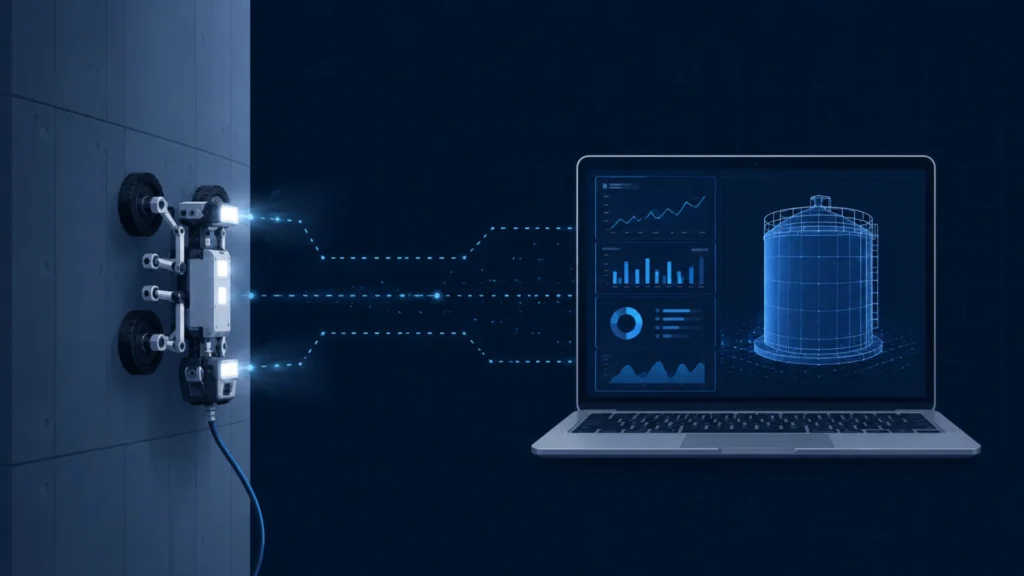
The company’s flagship hardware line is called TOKA, a series of wall-climbing robots now in its fifth generation. But hardware is only half the business. The data these robots collect feeds into Cantilever, Gecko’s AI-powered software platform, which turns raw sensor readings into a digital twin of the asset and flags where maintenance is actually needed instead of relying on fixed inspection schedules.
Gecko Robotics serves three main industries: defense, energy, and manufacturing. Its customers range from the U.S. Navy and Air Force to Fortune 100 energy operators and industrial giants who need to keep aging infrastructure running safely.
The Founding Story Behind Gecko Robotics
A Death That Changed Everything
Jake Loosararian was an electrical engineering student at Grove City College, a small school outside Pittsburgh, when a class project sent him to visit a local power plant. The plant had suffered repeated shutdowns that were costing millions of dollars a month, and while he was there, someone told him about a worker who had recently died falling from elevated scaffolding while inspecting a boiler the size of a football field for structural defects.
Loosararian went back to his dorm room and started building a robot that could climb walls while carrying ultrasonic sensors, so a person would never have to risk that fall again. The first version weighed 40 pounds and helped that same power plant sharply cut its downtime. That success convinced him the idea was worth pursuing as a real company.
Sleeping On A Friend’s Floor
The years right after graduation were rough. Loosararian bootstrapped Gecko Robotics starting in 2013, working a systems automation day job for 50 to 60 hours a week on top of another 40 to 50 hours building the company, and slept on a friend’s couch for roughly two and a half years to keep costs down. His original co-founder eventually burned out and left the company, and most of the people Loosararian trusted told him not to pursue the idea at all.
He and current co-founder Troy Demmer, a fellow Grove City College graduate with a Carnegie Mellon MBA, pushed through it anyway. The company later went through Y Combinator, and at one point turned down an early acquisition offer to keep building Gecko on its own terms. That decision looks a lot smarter today than it may have at the time.
Gecko Robotics Valuation And Funding Rounds Explained
Gecko Robotics has raised more than 347 million dollars across eight funding rounds since its first outside investment in 2014. Here is how the major rounds broke down.
- Series C, December 2023. A 173 million dollar round, including a 100 million dollar extension that added Thomas Tull’s US Innovative Technology Fund and Peter Thiel’s Founders Fund to the company’s board. This round valued Gecko Robotics at 633 million dollars.
- Series D, June 2025. A 125 million round led by new investor Cox Enterprises, joined by USIT, XN, Founders Fund, and Y Combinator. This round doubled the company’s valuation to 1.25 billion dollars, officially making Gecko Robotics a unicorn, meaning a private startup valued at more than a billion dollars.
That Series D made Gecko the eighth Pittsburgh-based company to reach unicorn status in the past eight years, part of a wider wave of billion-dollar startups emerging from the city’s tech scene. Gecko Robotics was also named to the 2025 CNBC Disruptor 50 list, its second appearance on that ranking.
Is Gecko Robotics Stock Available To Buy
If you searched for Gecko Robotics stock, here is the short answer: it is not publicly traded, so you cannot buy shares through a normal brokerage account like Fidelity or Robinhood.
You may have come across a listing for GERO.PVT on Yahoo Finance. That “.PVT” tag is Yahoo’s way of tracking private companies for informational purposes only. It reflects an estimated valuation based on funding rounds and secondary market activity, not a real, tradable stock price the way GOOGL or AAPL would have one.
Because Gecko Robotics remains privately held, shares are only accessible through a few limited paths.
- Direct investment during a funding round, which is restricted to venture capital firms and institutional investors
- Secondary marketplaces like Forge Global or Nasdaq Private Market, which connect accredited investors with existing shareholders looking to sell
- Employee stock options or RSUs, which Gecko Robotics offers as part of its compensation packages
As of now, Gecko Robotics has not filed for an IPO or announced a public listing date. Given that the company just crossed a billion-dollar valuation and continues landing large government contracts, an eventual public offering is plausible, but nothing has been confirmed.
How Gecko Robotics Makes Money
Gecko Robotics earns revenue through long-term inspection and maintenance contracts, not one-off robot sales. Customers pay for access to Cantilever and the ongoing data collection and analysis that comes with it, which creates a more predictable, recurring relationship than selling hardware alone.
Some of the contracts that illustrate the scale of this business:
- A five-year IDIQ contract with the U.S. Navy and General Services Administration worth up to 71 million dollars, starting with 18 ships in the U.S. Pacific Fleet
- Work on the Navy’s Columbia-class and Virginia-class submarine programs, helping speed up production timelines for a program valued at 132 billion dollars overall.
- A multi-year partnership worth more than 100 million dollars with NAES Corporation, the largest independent power plant operator in the United States
- A partnership with BPMI, a contractor for the Naval Nuclear Propulsion Program, that has cut inspection times on nuclear carrier and submarine components by up to 90 percent
- Digital twin work with defense contractor L3Harris on military aircraft
This mix of defense and energy sector work is a useful comparison point for anyone tracking infrastructure and industrial technology more broadly. PurelyTechHub’s coverage of Form Energy, a company working on long-duration energy storage, shows a similar pattern where hard infrastructure problems are attracting serious venture capital, not just software.
Why Gecko Robotics Chose Pittsburgh
Gecko Robotics is headquartered in a converted shopping mall called Nova Place on Pittsburgh’s North Side, a roughly 60,500-square-foot space that mixes startup amenities like an espresso bar and basketball court with the kind of heavy industrial testing areas you would not find at a typical software company. The headquarters employs around 300 people.
The Pittsburgh location is not incidental. The city has deep roots in steel, manufacturing, and industrial engineering, along with a growing defense technology cluster and strong ties to Carnegie Mellon University’s robotics programs. Gecko Robotics has leaned into those regional strengths, and its Navy partnership alone saw usage increase 400 percent in 2024, helped along by Pittsburgh’s existing defense industry connections. One tangible result: the company says it cut ship rudder inspection times from 11 days down to just one.
That regional pattern is worth watching more broadly. PurelyTechHub’s profile of Indian drone company Garuda Aerospace covers a similar story of a robotics company building deep, geography-specific government relationships rather than trying to scale everywhere at once.
Gecko Robotics Careers
Gecko Robotics careers span software engineering, robotics and mechanical engineering, field service technicians who operate the robots on site, data analysts, and defense program management roles. Because a meaningful share of its business involves the U.S. Navy and Air Force, several roles require the ability to obtain and maintain a government security clearance.
The company has historically emphasized a scrappy, high-ownership culture, something you would expect from a business that started in a dorm room and grew through Y Combinator. Employee reviews describe founding-level responsibility for early hires and interesting engineering problems, particularly around the 3D rendering and digital twin technology behind Cantilever.
If you are applying for Gecko Robotics careers, expect a startup pace even though the company has crossed a billion-dollar valuation. Recent reviews mention a management restructure and a sharper focus on government contracts over the past year, which is a normal part of a company maturing from an early-stage startup into a defense and energy infrastructure supplier.
Gecko Robotics Reviews From Employees
On Glassdoor, Gecko Robotics holds an overall rating in the mid-3s out of 5, with roughly half to 60 percent of employees saying they would recommend working there to a friend, depending on the time period measured. Compensation and benefits tend to score higher, often around 3.8 out of 5, with employees specifically praising unlimited PTO, strong health insurance options, and perks like free lunch and ClassPass memberships.
Common praise in reviews includes a strong sense of mission, talented and driven coworkers, and meaningful early ownership over projects. The most frequent criticisms involve inconsistent management, particularly during periods of reorganization, and a shift in focus toward government contracts that has narrowed the type of engineering work available on some teams.
As with most fast-growing startups, the experience varies quite a bit by team and by when someone joined. Employees who came in during the early Y Combinator years describe a different company than those who joined after the Series C and D rounds brought in defense-focused leadership and structure.
Gecko Robotics Competitors And Market Position
Gecko Robotics operates in the infrastructure inspection and asset management space, competing with companies offering non-destructive testing, drone-based inspection, and industrial AI analytics. Tracxn lists dozens of competitors in adjacent categories, though few combine hardware, software, and defense-grade government contracts at Gecko’s scale.
What differentiates Gecko Robotics is the combination of proprietary robots, the Cantilever software platform, and deep relationships with government customers like the Navy and Air Force, relationships that smaller inspection tech startups typically cannot access without years of security clearance and compliance work behind them.
Frequently Asked Questions
What does Gecko Robotics actually make?
Wall-climbing, crawling, swimming, and flying robots that inspect infrastructure like ship hulls, power plant boilers, pipelines, and storage tanks, paired with an AI software platform called Cantilever that turns the collected data into maintenance insights.
Who founded Gecko Robotics?
Jake Loosararian founded the company in 2013 after a college project led him to a power plant where he learned about a fatal fall during a routine boiler inspection. Troy Demmer joined as co-founder shortly after.
What is Gecko Robotics’ valuation?
Gecko Robotics was valued at 1.25 billion dollars following its Series D funding round in June 2025, up from 633 million dollars after its Series C in December 2023.
Can I buy Gecko Robotics stock?
Not through a regular brokerage account. The company is privately held, so shares are only available to accredited investors through secondary marketplaces, or to employees through stock options and RSUs.
Where is Gecko Robotics headquartered?
Pittsburgh, Pennsylvania, in a converted mall space called Nova Place on the city’s North Side, with roughly 300 employees at that location.
Does Gecko Robotics work with the military?
Yes. The company holds multiple U.S. Navy and Air Force contracts, including a five-year IDIQ contract worth up to 71 million dollars and work on the Columbia-class and Virginia-class submarine programs.
Conclusion
Gecko Robotics turned a genuinely tragic problem, workers dying while inspecting infrastructure by hand, into one of Pittsburgh’s fastest-growing tech companies. The path from a 40-pound dorm room robot to a billion-dollar defense and energy technology supplier took over a decade of bootstrapping, floor sleeping, and betting on an industry most investors overlooked.
Whether you are researching Gecko Robotics because of its Navy contracts, its careers page, or its climbing valuation, the throughline is the same. The company found a real, dangerous, expensive problem in the physical world and built the robots and software to solve it, one wall at a time.