
Mach Industries Achieves a Stunning Valuation Breakthrough in Defense Tech
Three years ago, Mach Industries did not exist. Today it is valued at $1.8 billion, backed by Sequoia Capital, and building six different weapons systems for the Pentagon.
That kind of jump does not happen often, even in defense tech. And it has put one company, and one very young founder, at the center of a much bigger conversation about how America builds its next generation of military hardware.
This guide breaks down everything worth knowing about Mach Industries. Who started it, what it actually builds, why its valuation keeps climbing, and why you cannot buy Mach Industries stock on any exchange, no matter what a Google search result might suggest.
What Is Mach Industries
Mach Industries is a defense technology and manufacturing company based in Huntington Beach, California. It designs and builds autonomous aerospace systems, including drones, gliders, and long-range munitions, for the U.S. military and its allies.
The company was founded in 2023 and has grown at a pace that even seasoned venture investors describe as unusual. It now runs six separate weapons programs, operates its own manufacturing network called Forge, and recently acquired a solid rocket motor company to control more of its own supply chain.
At its core, Mach is trying to answer one question. Can a startup build weapons faster and cheaper than the traditional defense primes like Lockheed Martin and Northrop Grumman? So far, investors seem convinced the answer is yes.
Who Founded Mach Industries
Mach Industries was founded by Ethan Thornton, who serves as CEO, along with early collaborators Ashton Bennett and Caine Ardayfio.
Thornton is the name most associated with the company, and his backstory has become part of the pitch. He is often described in press coverage as a 22-year-old founder running a nearly $2 billion company, which is unusual even by Silicon Valley standards.
From a Texas Workshop to an MIT Dropout
Thornton grew up in Boerne, Texas, a small town outside San Antonio, in a family with military ties. In high school, he ran a metal and woodworking shop and used the profits to fund early weapons prototypes, well before Mach Industries had a name or a single dollar of outside funding.
He briefly attended MIT through an Air Force ROTC program. In 2022, he interned as an engineering consultant, where he helped redesign a knee rehabilitation device that later received a patent. But by 2023, he had dropped out of MIT entirely to work on Mach full time, a decision he has since called the riskiest thing he did, made before the company had any capital or team behind it.
The Hydrogen Setback That Almost Ended the Company
Mach’s first technical direction was not drones. It was hydrogen.
Thornton originally believed that stabilized hydrogen could power tactical weapons platforms in the field. The company built an early prototype gun around that idea, using parts sourced from Home Depot and Amazon.
It exploded. The blast sent shrapnel flying and injured a team member, an incident first reported by Forbes and later confirmed by Thornton himself in interviews. At the time, the company was self-funding its work and did not have the budget for proper safety procedures. Mach essentially paused all operations until it closed its seed round.
That seed round came from Sequoia Capital in the summer of 2023, marking Sequoia’s first investment in a defense technology startup. With funding secured, Mach built out a real safety team and pivoted away from hydrogen almost entirely, calling it, in Thornton’s words, “a bad tech bet.”
It is worth putting this in context. Building anything that involves propulsion, energetics, or explosives carries real risk, which is one reason the broader defense manufacturing sector treats safety engineering as its own discipline rather than an afterthought. You can read more about how hardware startups approach test safety on Wikipedia’s overview of aerospace manufacturing.
Mach Industries Valuation Jumps to 1.8 Billion Dollars
In June 2026, Mach Industries closed a $300 million Series C round led by Infinite Capital and Ribbit Capital, with continued participation from Sequoia Capital, Bedrock Capital, and Khosla Ventures. The round valued the company at $1.8 billion.
That is nearly a 4x jump from the roughly $470 million valuation Mach carried just a year earlier, in June 2025. Thornton has said the company initially planned to raise $200 million but pushed the round up to $300 million after investor demand came in well above target.
This kind of Mach Industries valuation growth places the company firmly among the fastest-rising names in defense tech, though it still sits well below giants like Anduril. For comparison, the entire defense tech sector has pulled in more than $100 billion in venture and private equity funding over the past five years, a dramatic shift from an industry that Silicon Valley largely avoided for decades.
A Quick Look at the Funding Timeline
- June 2023: $5.7 million seed round led by Sequoia Capital, its first defense tech bet
- Fall 2023: $79 million Series A led by Bedrock Capital
- June 2025: $100 million round at a $470 million valuation, co-led by Khosla Ventures and Bedrock Capital
- June 2026: $300 million Series C at a $1.8 billion valuation, led by Infinite Capital and Ribbit Capital
Total funding raised now for Mach Industries sits at roughly $485 million to $529 million, depending on the source and how convertible notes are counted.
What Mach Industries Actually Builds
Mach Industries currently has five autonomous vehicles in active development, plus a sixth under a new, previously undisclosed government contract.
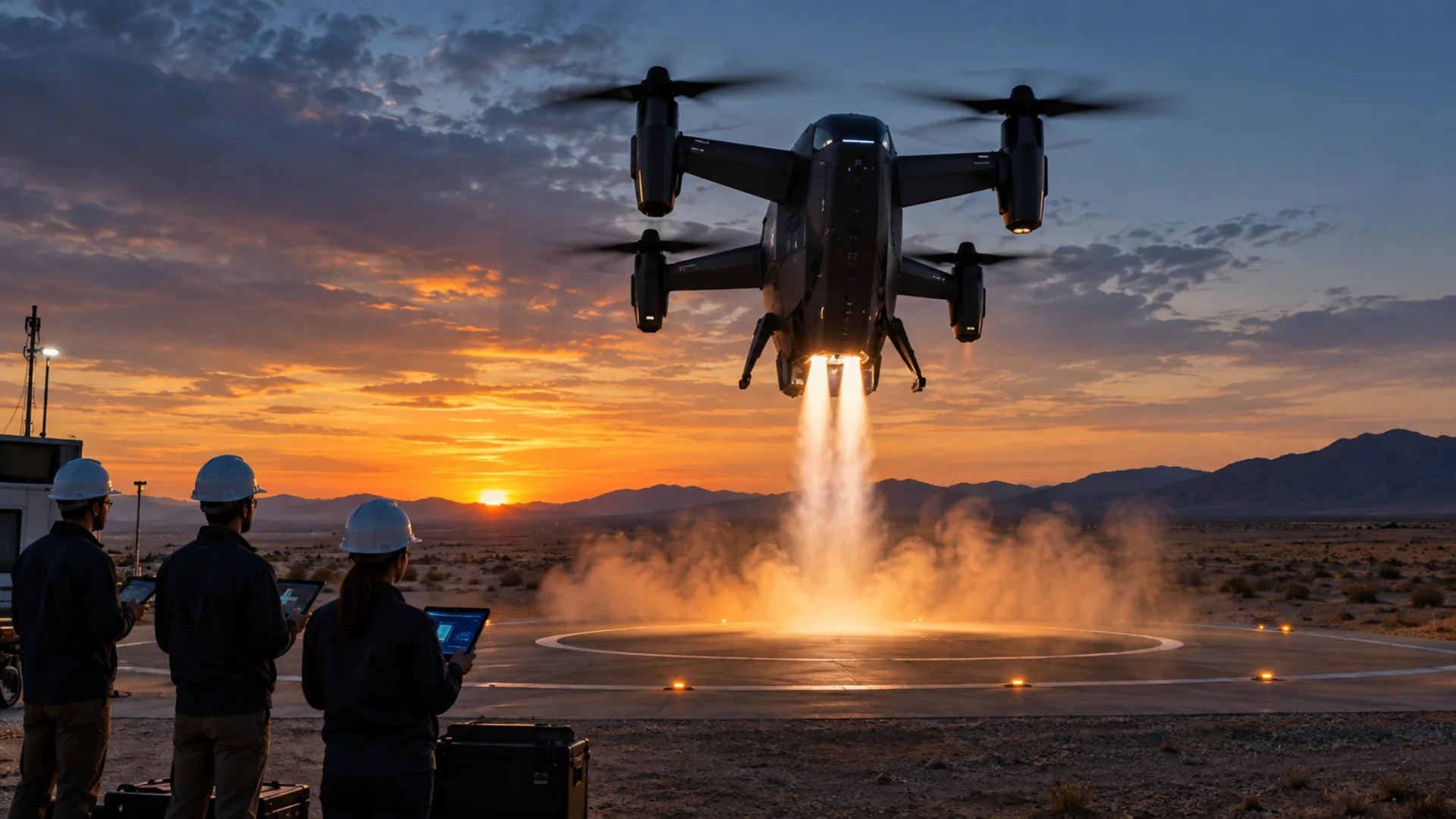
- Viper is a jet-powered, vertical takeoff one-way attack drone. It needs no runway or launcher, which makes it useful in remote or GPS-denied environments. Thornton has described it as a miniature fighter jet that two people can launch by hand.
- Glide is a high-altitude glide munition built for low-cost precision strikes at long range.
- Stratos is a high-altitude platform that behaves like a pseudo-satellite, capable of carrying sensors and communications equipment from the stratosphere.
- Pike is a long-range, low-cost munition meant for decentralized, mass deployment rather than single high-value strikes.
- Dart is a low-cost kinetic interceptor designed for counter-drone defense.
In May 2026, Mach acquired Exquadrum, a California-based propulsion and energetics company, in a $50 million cash-and-equity deal. The acquisition, folded into a new division called Mach Energetics, gives Mach in-house access to solid rocket motors, an area with severe supply shortages controlled mostly by two major contractors, Aerojet Rocketdyne and Northrop Grumman. Just weeks later, Mach won a Department of Defense Innovation Unit contract to build a sixth vehicle, a runway-independent strike aircraft for the Navy.
Inside the Forge Manufacturing Network
Most defense startups focus on designing better hardware. Mach has spent just as much energy on how that hardware actually gets built.
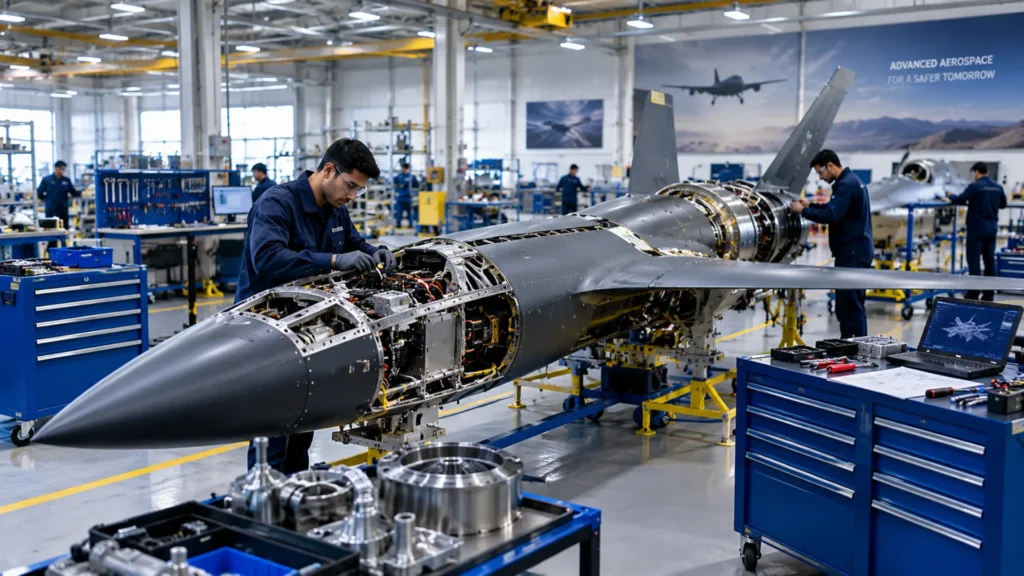
Its answer is called Forge, a network of smaller, decentralized factories rather than one massive centralized plant. The idea is that if one facility goes down, whether from an attack, a supply disruption, or anything else, production continues elsewhere.
The first site, Forge Huntington, is a 115,000-square-foot facility in Huntington Beach that Mach says can eventually produce up to 1,000 Viper units per month at full capacity, at a unit cost under $100,000. That price point matters because it puts Viper in the category of an attritable weapon, meaning the military can afford to lose a meaningful number of them without it being catastrophic financially.
Forge also works as a contract manufacturer for other companies. In 2025, Mach partnered with HevenDrones, a hydrogen drone maker, to produce several of its platforms out of Forge Huntington, essentially renting out spare production capacity the same way a cloud provider rents out server space. Some industry commentary has gone as far as calling the model an “AWS for defense hardware.”
This kind of vertically integrated, drone-focused manufacturing approach echoes a broader trend in the industry, one also visible in companies like Garuda Aerospace, which has built its own domestic drone production pipeline in a different market.
Mach Industries Stock Explained
This is where a lot of confusion comes from, so let’s clear it up directly.
There is no Mach Industries stock price you can look up on Nasdaq or the NYSE, and there is no ticker symbol, because Mach Industries has never gone public. It remains a privately held company, and there is currently no announced IPO timeline.
Several private secondary market platforms, including Forge Global, Hiive, EquityZen, and the Nasdaq Private Market, list estimated share prices for Mach Industries based on secondary trading activity among existing employees and early investors. These numbers move around quite a bit and are not the same as an official, publicly quoted stock price. As of mid-2026, some of these estimates have placed shares anywhere between roughly $3 and $5, though these figures reflect thin, illiquid trading rather than a real market.
If you are searching for “Mach Industries stock price” hoping to invest through a regular brokerage account, the honest answer is that you currently cannot. Only accredited investors can access pre-IPO shares through specialized platforms, and even then, availability is limited, and prices are speculative.
This situation is fairly common among fast-growing private companies. Large, privately held industrial businesses like Koch Industries have operated for decades without ever listing shares publicly, proving that a company does not need to trade on an exchange to be worth billions. In finance, a private company that reaches a valuation of at least $1 billion is often referred to as a unicorn, a term Mach Industries now firmly qualifies for.
Mach Industries Careers and Company Culture
Mach Industries currently employs somewhere between 100 and 125 people, according to available company data, a small headcount for a company carrying a $1.8 billion valuation. That is expected to grow quickly as production ramps up at Forge Huntington and additional Forge sites come online.
Open roles are listed on the company’s careers page and typically span mechanical and aerospace engineering, propulsion and energetics, manufacturing and production, software and avionics, and program management for government contracts. The company has also brought on more senior leadership recently, including a former Air Force colonel who joined as President and Chief Strategy Officer in early 2026 to help manage the shift from prototyping into full-scale manufacturing.
Tips If You’re Considering Applying
- Expect a fast-paced, hands-on engineering culture closer to a hardware startup than a typical defense contractor
- Security clearance requirements apply to many roles given the nature of government contracts
- Manufacturing and production roles are concentrated in Huntington Beach, California, with a smaller office presence in Austin, Texas
- Because the company is scaling quickly, job responsibilities can shift often, so comfort with ambiguity helps
How Mach Industries Compares to Other Defense Tech Startups
Mach Industries is frequently mentioned in the same breath as Anduril, the much larger defense tech company founded by Palmer Luckey. Thornton has been careful in interviews to frame the relationship as collaborative rather than adversarial, saying both companies are ultimately working toward the same goal of strengthening Western defense capability.
The comparison mostly comes down to scale. Anduril’s valuation sits far above Mach’s, and it has been operating for nearly a decade longer. But Mach’s rapid rise, four times its valuation in a single year, has made it one of the more closely watched newer entrants in the space.
Within the broader autonomous systems and AI-driven defense landscape, companies increasingly rely on software and machine learning layered onto hardware platforms, a pattern also visible in AI-focused firms like Skild AI, even though their end markets differ.
Common Mistakes People Make Researching Mach Industries
- Assuming it’s publicly traded. It is not. Any site quoting a real-time “Mach Industries stock price” is showing a private secondary market estimate, not an exchange-listed price.
- Confusing it with Mach Aerospace or similar-sounding companies. Search results sometimes mix up unrelated businesses that share part of the name. Always check for the Huntington Beach, California headquarters and CEO Ethan Thornton to confirm you have the right company.
- Assuming the valuation reflects current revenue. A $1.8 billion valuation is what a small group of investors agreed to pay for a stake in the company. It does not necessarily reflect current revenue, profitability, or delivered contract volume, which are separate figures the company has not fully disclosed.
- Overlooking the safety history. The 2023 hydrogen explosion is sometimes left out of glowing coverage entirely. It is a meaningful part of the company’s story and shaped its current focus on formal safety processes.
Frequently Asked Questions
Who is the founder of Mach Industries?
Ethan Thornton founded Mach Industries in 2023 and serves as its CEO. He dropped out of MIT to run the company full-time after starting early prototypes in a high school workshop in Texas.
What is the current Mach Industries valuation?
As of June 2026, Mach Industries is valued at $1.8 billion following a $300 million Series C round, up from about $470 million a year earlier.
Is there a Mach Industries stock price I can buy today?
No. Mach Industries is privately held and has no ticker symbol. Estimated share prices exist only on private secondary market platforms and are not accessible through standard brokerage accounts.
What products does Mach Industries make?
Its main systems are Viper, Glide, Stratos, Pike, and Dart, along with a newly added propulsion division called Mach Energetics and an undisclosed sixth vehicle under development for the Navy.
Where is Mach Industries headquartered?
Huntington Beach, California, where its flagship Forge factory is located, with a secondary office in Austin, Texas.
How can I apply for Mach Industries careers?
Open roles are posted on the company’s official Ashby careers page, primarily in engineering, manufacturing, and program management.
Conclusion
Mach Industries went from a garage-style hydrogen experiment to a $1.8 billion defense manufacturer in under three years. That trajectory is rare, and it says as much about the current appetite for defense tech investment as it does about the company itself.
The real test now is whether Mach can turn its funding and factory capacity into sustained, full-scale production. For now, it remains one of the most closely tracked private companies in American defense technology, with no public stock, a fast-growing team, and a founder still in his early twenties trying to prove that startups can out-build the primes.