
Skild AI Is Quietly Building a Robot Brain Worth Billions
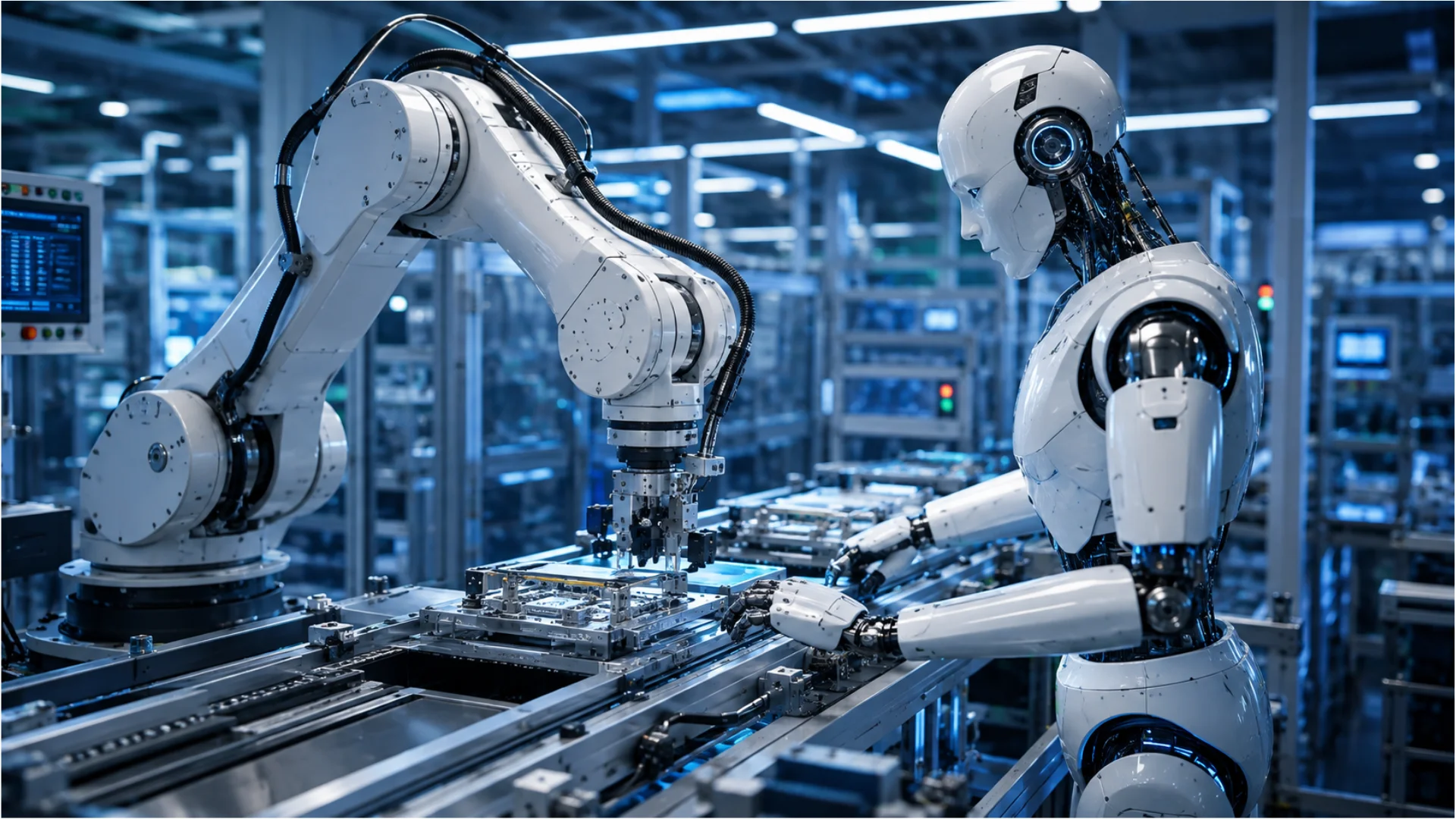
Most robotics companies spend years building one robot really well. Skild AI is trying something different. Instead of building hardware, it’s building a single AI brain meant to control almost any robot for almost any task.
That bet has attracted more than $2 billion in funding and a valuation north of $14 billion in under three years, an unusually fast climb even by AI startup standards. If you’re researching Skild AI for a job application, an investment decision, or just trying to understand where the robotics industry is headed, this guide covers everything that actually matters: the founders, the funding history, what the technology does, and where the company stands today.
What Skild AI Actually Does
Skild AI is a robotics AI company building what it calls a universal robot foundation model, branded as the Skild Brain. Rather than programming a robot for one specific task on one specific type of hardware, Skild trains a single AI system that can transfer skills across different robots, environments, and jobs with little or no retraining.
The company describes this as “omni-bodied” intelligence. The same underlying model that helps a robotic arm assemble electronics can, in theory, help a different robot climb stairs or navigate a warehouse, because the system was trained on a massive range of movement and interaction data rather than on a single narrow task.
This is a meaningfully different approach from companies like Figure AI or 1X, which build their own humanoid robots alongside the software that runs them. Skild positions itself closer to a software layer, something robot manufacturers and enterprises plug into existing hardware through a cloud platform and API rather than a hardware company in its own right.
How the Skilled Brain Is Trained
The technical approach behind Skild AI’s model relies heavily on simulation before any real-world deployment. The system is pretrained on internet-scale video of human movement combined with large-scale physics simulations, then fine-tuned on a smaller amount of real robot data once it’s ready for deployment.
Skild built this training pipeline in partnership with NVIDIA, using tools such as NVIDIA Isaac Lab, Isaac Sim, and the Newton physics engine for simulation, and NVIDIA Cosmos to generate synthetic training data. Once trained, the model runs on NVIDIA Jetson hardware for real-time inference on the robot itself.
The company describes the result as a data flywheel. As more robots run the Skild Brain in the field, that real-world data feeds back into the model, which improves performance across every robot using the system, not just the one that generated the data.
Skild AI Company Overview
| Founded | 2023 |
| Headquarters | Pittsburgh, Pennsylvania |
| Additional offices | San Mateo, California, San Francisco, California, and Bengaluru, India. |
| Founders | Deepak Pathak and Abhinav Gupta |
| CEO | Deepak Pathak |
| Industry | Robotics, artificial intelligence, physical AI |
| Employees | Roughly 50 to 65, depending on the source and date of the count |
| 2025 revenue | Approximately $30 million, reported by multiple funding trackers |
Skild AI grew out of Carnegie Mellon University, where both founders previously worked as professors before launching the company. That Pittsburgh connection remains central to the company’s identity, and the city has increasingly positioned itself as a growing hub for robotics and AI research, partly because of Carnegie Mellon’s long history in the field.
Skild AI Founders and Leadership
Deepak Pathak, the company’s CEO and co-founder, previously worked as a professor at Carnegie Mellon’s Robotics Institute, where his research focused on machine learning and robotic control. Abhinav Gupta, the company’s co-founder and president, also came from a Carnegie Mellon faculty position with a research background in computer vision and robot learning.
Their academic background matters here because it shaped Skild’s early technical direction. Rather than starting with a hardware product, the founders built the company around a research thesis: that a single, sufficiently large foundation model could generalize across robot types in the same way large language models generalize across language tasks. That thesis is what investors have been funding at increasingly aggressive valuations.
Skild AI Funding and Valuation History
Skild AI’s funding trajectory is one of the fastest in robotics history, and it’s worth walking through round by round to understand how the valuation climbed so quickly.
- Seed round, 2023: Skild raised approximately $14.5 million, co-led by Lightspeed Venture Partners and Sequoia Capital, while the company was still in stealth mode.
- Series A, July 2024: The company raised $300 million at a $1.5 billion valuation. This round was led by Lightspeed and Coatue, with participation from SoftBank Group, Bezos Expeditions, Sequoia Capital, and General Catalyst.
- Series B, summer 2025: A reported $500 million round, led by SoftBank with participation from Nvidia and Samsung, pushed the valuation to roughly $4.5 billion.
- Series C, January 2026: Skild closed approximately $1.4 billion, led by SoftBank Group, with participation from Nvidia’s venture arm NVentures, Macquarie Capital, Jeff Bezos through Bezos Expeditions, and 1789 Capital. This round valued the company at more than $14 billion, according to Skild AI’s announcement and corroboration from Bloomberg and TechCrunch.

Taken together, Skild AI has raised between $1.7 billion and $2.2 billion in total funding, depending on which tracker’s figures you use, across just three major rounds and a seed round. The jump from a $1.5 billion valuation in mid-2024 to over $14 billion by January 2026 represents roughly a ninefold increase in eighteen months.
Who Has Invested in Skild AI
The investor list reads like a cross-section of major venture, strategic, and sovereign capital. Beyond the lead investors already mentioned, Skild’s cap table includes Felicis Ventures, Menlo Ventures, CRV, SV Angel, LG, Schneider Electric, Salesforce Ventures, CommonSpirit Health, 1789 Capital, Mirae Asset, and the Amazon Industrial Innovation Fund, among others. Carnegie Mellon University itself is also listed as an investor, a detail that reflects the company’s academic origins.
Is Skild AI Publicly Traded, and What About Skild AI Stock
This is one of the most common points of confusion, so it’s worth answering directly. Skild AI is a privately held company. There is no Skild AI stock available on the NYSE, Nasdaq, or any other public exchange, and the company does not have a ticker symbol.
You may see references to a “Skild AI stock price” on platforms like Forge Global. These aren’t public market prices. They reflect a derived estimate based on private secondary-market transactions, in which accredited investors buy and sell shares in pre-IPO companies. That figure can move significantly and shouldn’t be confused with a listed stock price you’d see on a traditional brokerage platform.
As for a Skild AI IPO, the company hasn’t announced one, and there’s no confirmed public timeline. Given the pace of its private funding and the willingness of major investors to keep writing large checks, an IPO in the near term seems unlikely to be a priority. Other outcomes, including additional private funding rounds, strategic partnerships, or an eventual acquisition, remain just as plausible as a public offering.
Skild AI Partnerships and Deployments
Funding numbers only tell part of the story. What actually matters in the long term is whether the technology works in real deployments, and Skild has been building a growing list of industrial partnerships to prove that.
In 2026, the company announced expanded collaborations with ABB Robotics, Universal Robots, and Nvidia to deploy the Skild Brain across widely used industrial and collaborative robot platforms. One of the most notable deployments involves Foxconn, where Skild’s software is used to control dual robotic arms performing high-precision assembly on Nvidia’s Blackwell GPU production lines in Houston, Texas, a task that previously required significant manual labor and custom engineering for each step.
Skild has also mentioned deployments across warehousing, construction, and inspection industries, though the company has generally kept the specific client names confidential.
One figure worth noting from Nvidia’s own case study on the partnership: Skild’s approach is designed to work with lower-cost hardware, robots in the $4,000 to $15,000 range, compared to the $250,000 or more that conventional, task-specific automation systems typically require. If that cost advantage holds up at scale, it’s a meaningful part of the company’s pitch to manufacturers.
Skild AI Careers and Jobs
If you’re researching Skild AI careers, the company is actively hiring across several locations, primarily its Pittsburgh headquarters and its San Mateo, California office, with smaller teams also based in San Francisco and Bengaluru, India.
Open roles tend to cluster around a few categories. Robotics and controls engineering, including system identification and controls engineers who validate robot dynamics and test automated identification processes. Computer vision and machine learning, covering perception systems and deep learning model development. Data collection and robot operations, hands-on roles working directly with physical robots to gather the training data the Skild Brain depends on.
Compensation for engineering roles at the company has been reported in a fairly wide range, with some technical positions listed between $100,000 and $300,000 annually, reflecting both the seniority spread across open roles and the highly competitive market for robotics AI talent right now. The company’s own careers page frames its work around building meaningful, general-purpose robotic intelligence rather than a narrow product, a message that shows up consistently across its job postings and public communications.
Common Misconceptions About Skild AI
Assuming Skild builds its own robots. It doesn’t, at least not as its core business. Skild is a software and foundation model company. It partners with existing robot manufacturers rather than competing with them on hardware.
Confusing Skild AI with Skild AI stock on a public exchange. As covered above, there’s no public listing. Any “stock price” you find online reflects private secondary market activity, not a regulated public market.
Assuming the company is based in Silicon Valley. Skild AI’s headquarters are in Pittsburgh, a detail the company treats as central to its identity given its Carnegie Mellon roots, even though it maintains a growing presence in California in San Mateo and San Francisco.
Overestimating current revenue relative to valuation. Skild’s reported 2025 revenue sits around $30 million against a valuation north of $14 billion. That gap isn’t unusual for an early-stage foundation model company backed by major strategic investors betting on long-term potential rather than current earnings. However, it naturally raises broader questions about whether AI is a bubble ready to burst or just the Start of something bigger.
Frequently Asked Questions
Who founded Skild AI?
Skild AI was founded in 2023 by Deepak Pathak and Abhinav Gupta, both former Carnegie Mellon University professors with research backgrounds in robotics and machine learning.
What is Skild AI’s current valuation?
Skild AI was valued at more than $14 billion following its Series C funding round in January 2026, led by SoftBank Group with participation from Nvidia, Macquarie Capital, and Bezos Expeditions.
Where is Skild AI headquartered?
Skild AI is headquartered in Pittsburgh, Pennsylvania, with additional offices in San Mateo and San Francisco, California, and Bengaluru, India.
Can I buy Skild AI stock?
Not through a traditional public exchange. Skild AI is privately held and does not have a public ticker symbol. Shares are only accessible through private secondary marketplaces, typically limited to accredited investors.
Does Skild AI have an IPO planned?
As of 2026, no confirmed IPO timeline has been announced. The company continues to raise substantial private funding rounds instead.
What industries does Skild AI serve?
Skild AI’s technology has been deployed or discussed in manufacturing, warehousing, construction, and inspection, with a notable partnership involving Nvidia and Foxconn for precision assembly work on GPU production lines.
Conclusion
Skild AI’s story so far is really a bet on generalization. Instead of building one great robot, the company is trying to build an intelligence layer that could eventually sit beneath many different robots across many industries, without needing to be rebuilt from scratch for each one.
That bet has attracted an extraordinary amount of capital in a very short window, and its partnerships with Nvidia, ABB, and Foxconn suggest the technology is moving from research demos toward genuine industrial deployment. Whether the company can scale that data flywheel fast enough to justify its valuation, and whether an IPO or acquisition eventually follows, remains to be seen. For now, Skild AI stands as one of the clearest examples of the significant investor appetite for physical AI, the software layer that connects large-scale machine learning to robots operating in the real world.
For a broader technical grounding in how foundation models work outside the robotics context, the Wikipedia entry on foundation models offers useful background on the underlying concept Skild AI applies to physical robots.