
Koch Industries Remains a Private Giant With a Controversial Legacy
Koch Industries is one of the biggest companies in America that almost nobody outside the business world knows much about, mostly because you can’t buy a share of it. There’s no Koch Industries stock ticker to check, no quarterly earnings call, no annual report required by the SEC.
That privacy is intentional, and it’s part of what makes this company hard to research well. Most articles either read like a corporate brochure or like a laundry list of controversies without context. This guide covers the whole picture: what Koch Industries actually does, who runs it, where it operates, what its environmental record actually shows, and what it’s like to work there, all grounded in verifiable sources rather than assumptions.
What Koch Industries Actually Does
Koch Industries is a privately held, family-controlled conglomerate headquartered in Wichita, Kansas. It’s the second-largest private company in the United States, trailing only Cargill, and its various businesses generate more than $125 billion in annual revenue, according to the company’s own figures, though that number fluctuates with commodity prices from year to year.
The company started in oil refining in 1940, founded by Fred C. Koch after he developed an improved crude oil cracking process. Today it’s grown into a sprawling collection of businesses spanning refining, chemicals, fertilizer, paper products, electronics, software, ranching, commodities trading, and private investment—similar to how companies like Gecko Robotics inspect critical industrial infrastructure. If you’ve used Brawny paper towels, Dixie cups, Quilted Northern toilet paper, or Angel Soft, you’ve bought a Koch Industries product, since all of those brands belong to its subsidiary Georgia-Pacific.
Koch Industries Products and Subsidiaries
Understanding Koch Industries means understanding the network of companies it owns, since the parent company itself doesn’t sell much directly to consumers. Some of the most significant subsidiaries include:
Georgia-Pacific, based in Atlanta, manufactures paper products, packaging, and building materials, and operates more than 150 facilities employing around 30,000 people directly.
Flint Hills Resources runs refining and chemical operations, including some of the largest oil refineries in the country.
Invista produces synthetic fibers and industrial materials, including nylon and spandex components used across the textile industry.
Molex manufactures electronic connectors and components used in data centers, vehicles, and consumer electronics.
Infor provides enterprise software and cloud applications for industries like manufacturing, healthcare, and retail. In 2020, Koch Industries acquired the software company and folded it into Koch’s broader technology investments, including modern enterprise AI solutions and autonomous frameworks like Lyzr AI for enterprise agents.
Guardian Industries produces glass and building materials used in construction and automotive manufacturing.
Koch Ag & Energy Solutions handles fertilizer production and agricultural inputs.
Matador Cattle Company manages ranching operations, making Koch one of the largest private landowners and cattle operators in the country.
This diversification is deliberate. Koch’s leadership has publicly spoken about applying what the company calls Market-Based Management, a set of internal principles meant to apply free-market thinking within the company itself, across every subsidiary regardless of industry.
Koch Industries Headquarters and Locations
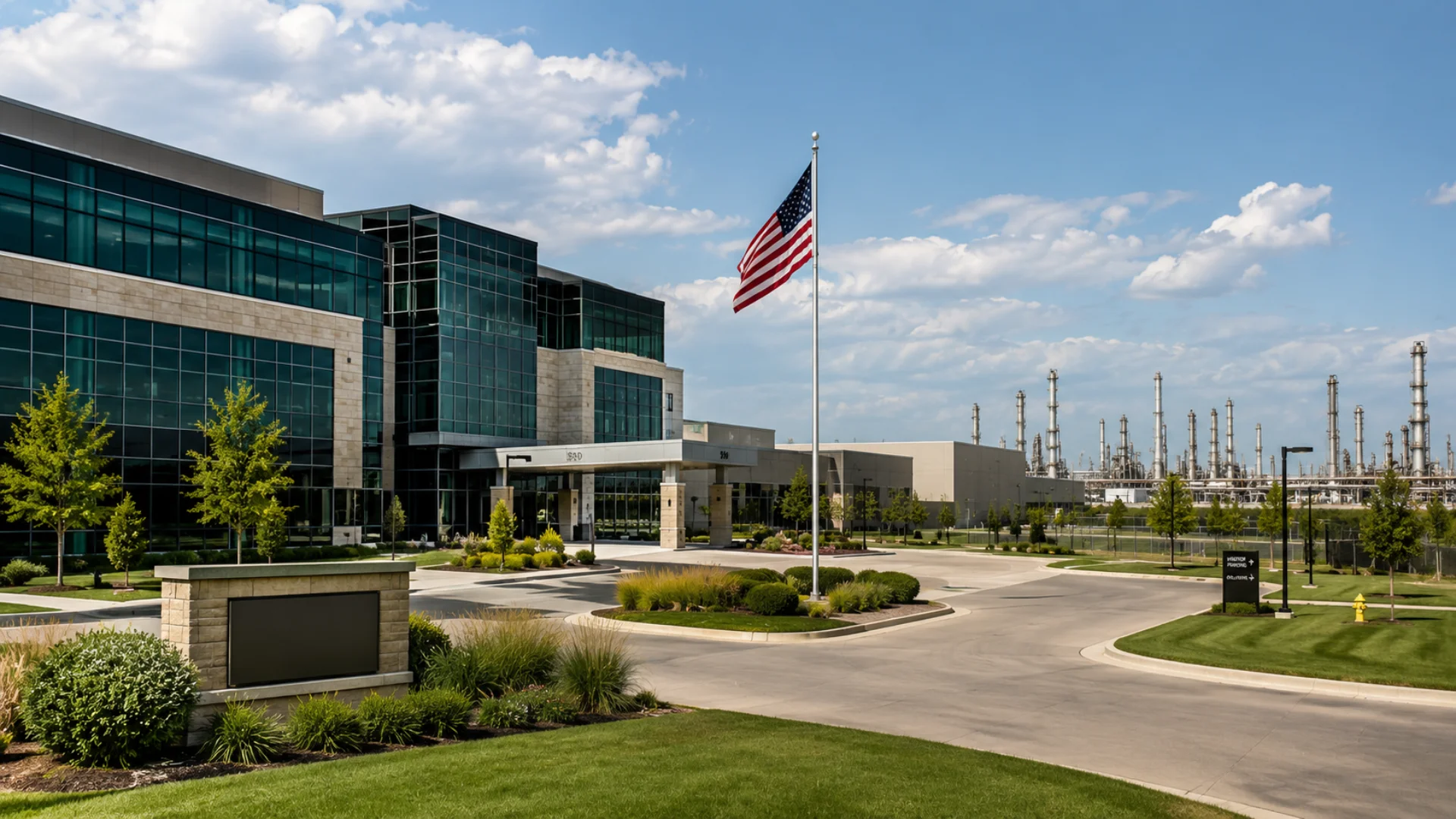
Koch Industries’ headquarters is located in Wichita, Kansas, near K-96 and Oliver on the city’s east side. The company employs roughly 2,900 people directly in Wichita and estimates its economic impact on the local community at more than $750 million annually.
The Koch Industries headquarters address is often listed as P.O. Box 2256, Wichita, Kansas 67201, for mail correspondence, though the physical corporate campus sits at a separate street address in the city. For anyone trying to reach the company directly, Koch Industries doesn’t publish a single general phone number for public inquiries, as a consumer-facing company might; most contact happens through specific subsidiary companies or through media relations for press inquiries.
Beyond Wichita, Koch Industries’ Houston operations are significant, particularly around its refining, chemicals, and commodities trading businesses, given Houston’s role as a hub for the American energy industry. The company also maintains a major presence in Atlanta, tied to Georgia-Pacific, along with facilities in more than 50 countries worldwide. Koch companies employ roughly 120,000 to 130,000 people globally, depending on the year and which subsidiaries are counted, with close to half of that workforce based in the United States.
Koch Industries Leadership
Charles Koch has led the company since 1967 and currently serves as chairman. In 2023, the company restructured its top leadership, appointing Dave Robertson as co-CEO alongside Charles Koch and naming Robertson vice chairman of the board.
Robertson joined Koch in 1984 and previously led several of its divisions, including Flint Hills Resources and Koch Petroleum Group, before moving into the co-CEO role. Jim Hannan serves as president and chief operating officer, having previously run Koch’s Enterprises division. Chase Koch, Charles Koch’s son, holds the title of executive vice president and also serves as CEO of Koch Disruptive Technologies, the company’s venture arm focused on emerging technology investments.
Ownership of the company remains concentrated within the Koch family. Charles Koch owns roughly 42% of the company, while the remaining ownership is split between trusts connected to the late David Koch’s heirs and family trusts tied to Elaine, Preston, and Pierce Marshall Jr., descendants of an earlier Koch family dispute that was settled decades ago.
Is Koch Industries Publicly Traded
No. This is one of the most searched questions about the company, and the answer is straightforward. Koch Industries is privately held and is not publicly listed on any exchange. There’s no Koch Industries stock price to track on a brokerage app, no ticker symbol, and no quarterly SEC filings, unlike those required of public companies.
Charles Koch has been direct about why. He’s stated publicly that the company would go public “over my dead body,” arguing that staying private lets Koch make long-term investment decisions without pressure from quarterly earnings expectations. The company says it reinvests roughly 90% of its earnings back into the business, citing more than $190 billion in growth investments and improvements since 2003.
Because there’s no public stock, there’s also no meaningful Koch Industries market cap in the way you’d calculate one for a publicly traded company, since market cap is based on share price multiplied by shares outstanding. Estimates you might see online for Koch’s “value” are typically based on revenue multiples or private valuation models, not an actual market-determined price.
Koch Industries Environmental Record
This is one of the most searched-for and most contested parts of Koch Industries’ public profile, and it deserves a fair, sourced explanation rather than a one-sided summary.
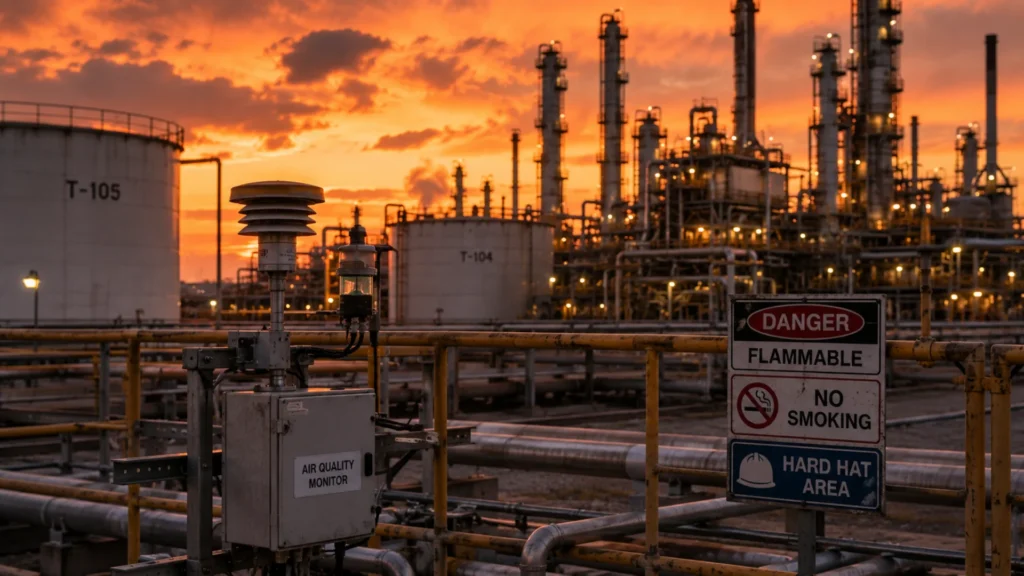
In January 2000, the EPA and the U.S. Department of Justice announced that Koch Industries would pay $30 million to resolve claims tied to more than 300 oil spills across six states: Texas, Oklahoma, Kansas, Missouri, Louisiana, and Alabama. At the time, the EPA described it as the largest civil fine ever imposed on a company under federal environmental law, and the settlement required Koch to improve leak-prevention programs and spend an additional $5 million on environmental restoration projects.
The following year, in April 2001, Koch Industries and its Koch Petroleum Group subsidiary pleaded guilty to Clean Air Act violations related to concealing benzene emissions, a known carcinogen, at a Corpus Christi, Texas refinery. The company paid $10 million in criminal fines and agreed to spend another $10 million on environmental projects in the area, along with a five-year probation period.
In 2000, a separate case involving Koch Petroleum Group’s refinery in Rosemount, Minnesota, resulted in a $6 million criminal fine, the largest federal environmental fine ever paid in that state at the time, tied to a negligent fuel discharge into a wetland and unauthorized wastewater dumping.
More recently, a 2009 agreement between Koch’s Invista subsidiary, the Department of Justice, and the EPA required the company to pay a $1.7 million penalty and spend approximately $500 million to address environmental violations across facilities in seven states.
A 2021 analysis by the research group Good Jobs First, examining two decades of federal and state enforcement data, documented 228 federal regulatory or civil actions and 150 separate state-level penalties against Koch Industries, totaling roughly $823 million in combined federal and state penalties over that period.
To be fair to the other side of this record, Koch Industries has also received recognition for specific facility-level environmental performance. Several Koch-owned facilities, including sites operated by Flint Hills Resources and KochFertilisers, have received EPA ENERGY STAR certification, an award reserved for facilities ranking in the top 25% of their industry for energy efficiency. The company has also stated publicly that it invests heavily in environmental compliance technology across its operations.
Given the scale of Koch’s industrial footprint, refining, chemical manufacturing, and fertilizer production are inherently higher-risk industries for environmental incidents than most other sectors, which is worth keeping in mind when comparing Koch’s record to companies operating in less regulated industries. Advocacy groups like Greenpeace have compiled and publicized much of this enforcement history as part of broader criticism of Koch’s environmental and political positions, while the company and some industry defenders argue that its overall compliance record, relative to the sheer size of its operations, is comparable to that of peers in the same industries.
Koch Industries Careers, Jobs, and Benefits
If you’re researching jobs at Koch Industries, it helps to understand that most hiring happens at the subsidiary level rather than through a single, centralized “Koch Industries” job board, as you’d with a typical single-brand employer. Openings appear under the specific company names Georgia-Pacific, Molex, Flint Hills Resources, Invista, and so on, even though they’re all part of the same parent organization.
The company runs a structured early careers program, including internships and co-ops, which it describes as involving real responsibilities rather than shadow-style observation roles. Koch has stated that interns and co-ops are given genuine project ownership, and that strong performers are frequently extended full-time offers after graduation.
In terms of benefits, compensation, and perks, they vary by subsidiary and role, but the company generally emphasizes performance-based pay aligned with its internal Market-Based Management philosophy, where compensation reflects the value an employee contributes rather than a standardized pay scale based solely on tenure or title. Common benefits across Koch companies typically include health insurance, retirement plans, and professional development resources, consistent with what you’d expect from a large employer of its size, though specific offerings should be confirmed directly with the subsidiary you’re applying to, since packages aren’t identical company-wide.
Common Misconceptions About Koch Industries
Assuming Koch Industries is a single company with one product line. It’s a holding company for dozens of subsidiaries across wildly different industries, from paper towels to industrial software to cattle ranching.
Confusing Koch Industries with Koch Inc. In recent years, the parent company has increasingly used the shorter name Koch, Inc. in its own communications, though Koch Industries remains widely recognized and is used interchangeably, including on many of the company’s own legal and SEC-related documents.
Believing there’s a Koch Industries stock price you can invest in. As covered above, there isn’t. Any figures floating around describing a “Koch Industries stock price” are either referring to a publicly traded subsidiary in a different context or are simply inaccurate.
Treating every environmental enforcement action as recent news. Several of the most frequently cited cases, including the $30 million EPA fine, date back to 2000 and 2001. It’s worth checking the date on any specific incident before assuming it reflects the company’s current operations.
Frequently Asked Questions
Is Koch Industries publicly traded?
No. Koch Industries is privately held, with ownership concentrated among the Koch family and related trusts. There’s no public stock ticker or SEC-mandated quarterly reporting.
What is Koch Industries’ headquarters address?
The company’s corporate campus is located in Wichita, Kansas, near K-96 and Oliver Street, with mail correspondence commonly directed to P.O. Box 2256, Wichita, Kansas 67201.
Who is the CEO of Koch Industries?
Koch Industries currently operates under a co-CEO structure. Charles Koch serves as chairman and co-CEO, while Dave Robertson serves as co-CEO and vice chairman of the board, a leadership arrangement established in 2023.
What products does Koch Industries make?
Through its subsidiaries, Koch Industries produces goods ranging from paper products like Brawny and Dixie under Georgia-Pacific, to synthetic fibers through Invista, electronic components through Molex, enterprise software through Infor, and refined fuels through Flint Hills Resources.
Has Koch Industries had environmental violations?
Yes. The company has faced multiple significant federal and state environmental enforcement actions since 2000, including a record $30 million EPA fine for oil spills and separate Clean Air Act violations tied to benzene emissions. Koch has also received energy-efficiency recognition at select facilities in recent years.
Does Koch Industries offer internships?
Yes. The company runs structured internship and co-op programs across its various subsidiaries, generally described as involving real project responsibilities rather than observational roles.
Conclusion
Koch Industries occupies an unusual place in American business. It’s genuinely massive, with revenue and employee counts that would put it near the top of any public company ranking, yet it operates almost entirely outside the public market scrutiny that companies of similar size typically face.
That privacy has let the company pursue long-term, family-controlled decision-making across a genuinely diverse set of industries, from paper towels to software to cattle ranching. It’s also meant that its environmental enforcement history, well documented in EPA and Department of Justice records, has become one of the most searched-for and debated aspects of its public reputation, alongside its size, its products, and its role as a major private employer in Wichita and beyond.
Whatever angle brought you here, whether you’re evaluating Koch Industries as a potential employer, researching its environmental record, or just trying to understand how a company this large stays entirely private, the picture is genuinely more layered than either a corporate press release or a critical advocacy report alone tends to capture.
For readers who want a deeper, source-cited overview of the company’s full corporate history, the Wikipedia entry on Koch, Inc. offers useful additional background and citations beyond what’s covered here.