

What Is Claude AI? The Essential, Honest Guide
Claude is an AI assistant made by Anthropic, a San Francisco company founded in 2021 by former OpenAI researchers. You type a question or upload a file, and Claude answers in plain language. It can draft an email, explain a contract clause, debug a script, or read a 200-page report and tell you what matters.
That short answer hides a lot. Claude is also a family of models, a set of desktop and browser tools, and a company’s bet on a safer way to build AI. This guide explains what Claude AI is, what it is used for, what it is based on, how much it costs, and who owns it. Every detail reflects what was available in October 2026.
What Is Claude AI In Simple Terms
Think of Claude as a well-read assistant that works through text. You give it instructions, called prompts, and it writes back. Behind the chat window sits a large language model, or LLM, which is a type of AI trained on huge amounts of text so it can produce language that fits the context.
People use the name Claude in three different ways.
- The assistant you chat with on claude.ai, the mobile apps, and the desktop app.
- The models underneath, which developers reach through an API.
- The tools built on those models, including Claude Code for programming, Claude Cowork for file-based tasks, Claude in Chrome, and add-ins for Excel and PowerPoint.
Claude is proprietary, so the models are not open source. You can use them through Anthropic’s own products or through cloud partners such as Amazon Bedrock and Google Cloud’s Vertex AI.
What Is Claude AI Used For
Most people use Claude for three jobs. It reads, it writes, and it codes. Here is what each looks like in daily life.
Reading and research
Claude accepts PDFs, Word files, spreadsheets, and images. A common task is pasting in a long report and asking which five decisions it forces. Another is uploading two contracts and asking where the terms differ. With web search switched on, Claude can pull in current sources and show where an answer came from.
Treat summaries as a first pass. If a number or quote matters, open the original and check it.
Writing and editing
Many writers use Claude to draft, tighten, and change tone. You can ask for a firmer but still polite version of a complaint email, or a plain English rewrite of a dense policy paragraph. It works best when you say who the reader is and what you want them to do.
Coding
Claude Code launched in February 2025 and runs from a terminal, where it can read your files, edit them, and run tests. Developers use it for debugging and refactoring. Non-developers use it to build small tools and automate chores. You can read the product details on the Claude Code page.
Everyday work tasks
Claude Cowork works inside folders you choose, so it can sort files and build reports without a terminal. Claude Tag lets teams tag @Claude in Slack and hand off work. The Chrome, Excel, and PowerPoint tools bring the same assistant into the apps people already open all day. Browser add-ons such as the Merlin Chrome extension show how crowded that space has become.
What Claude AI Is Best Used For
Claude is good for work that involves lots of text and a clear goal. Long documents, careful rewriting, step-by-step explanations, and code are its strongest areas.
It is weaker in a few places you should know about.
- It can state something wrong in a confident tone, which is why important facts need checking.
- Without web search, its knowledge stops at its training cutoff.
- It is not a lawyer, doctor, or accountant, so use it to prepare questions rather than replace advice.
- The free plan has tight usage limits, and long files drain them fast.
Claude can also take over pieces of many jobs. If that worries you, our guide on which jobs are safest from AI looks at where human judgment still wins.
What Is Claude AI Based On
Claude is based on a transformer-style large language model trained on a very large body of text. During training, the model learns patterns in language, then Anthropic refines it in two main ways.
First, human feedback teaches it to prefer answers people find helpful. Second, Anthropic uses an approach it calls Constitutional AI, where the model is trained against a written set of principles. The company has published the long document that describes those values, called Claude’s constitution, and says it is written mainly for Claude itself. The original research paper on Constitutional AI is also public.
Anthropic is incorporated as a public benefit corporation, which means it is legally allowed to weigh its stated mission alongside profit.
The current Claude model lineup
Anthropic named its model tiers after poetry. Haiku is the small, fast model, Sonnet is the middle one, and Opus is the largest, a nod to the term magnum opus. CEO Dario Amodei explained the poetry theme in a 2024 podcast interview. A newer tier sits above them, and in mid-October 2026, the lineup looks like this.
| Model | Best For |
|---|---|
| Claude Fable 5.1 | The hardest reasoning and long-running agent work |
| Claude Opus 5.5 | Complex coding, analysis, and enterprise tasks |
| Claude Sonnet 5.5 | Everyday work with a balance of speed and quality |
| Claude Haiku 5.5 | Fast, low-cost, high-volume tasks |
Fable shares an underlying model with Claude Mythos, but Fable adds extra safety measures. Mythos itself is not public. Anthropic limits it to trusted security organizations through Project Glasswing.
Model names change quickly, so check the official model overview page before you pick one for a project.
What Is Claude AI And How Does It Work
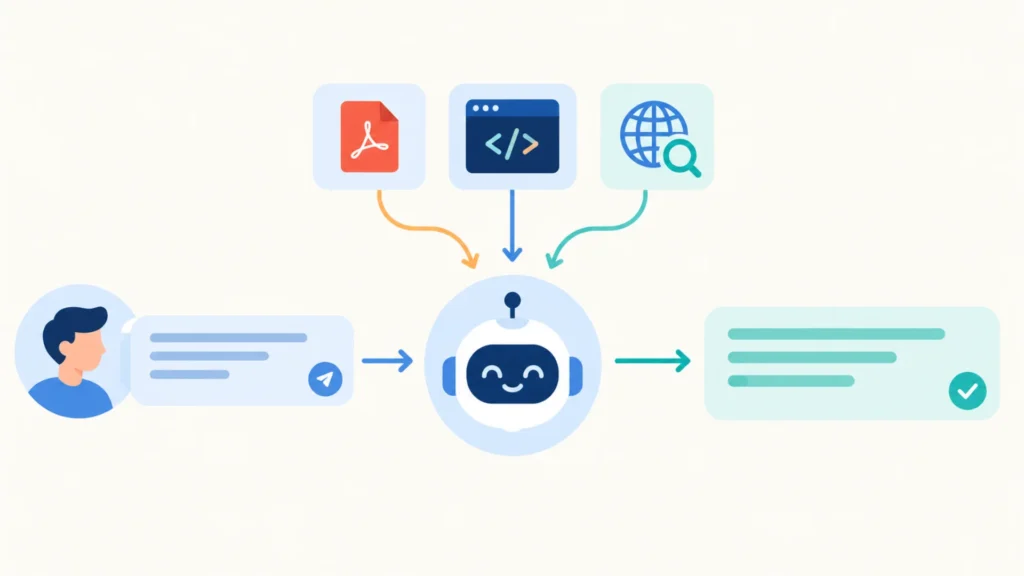
Every message you send follows the same basic path.
| Step | What Happens |
|---|---|
| 1 | You write a prompt, and you can attach files or images |
| 2 | Claude splits the input into small pieces called tokens |
| 3 | The model predicts the next token again and again until the reply is complete |
| 4 | If needed, it uses tools such as web search, file analysis, or code execution |
| 5 | If memory is on, useful context carries into later chats |
Two ideas explain most of Claude’s behavior. The first is the context window, which is how much text the model can hold in view at once. When a chat grows too long, the app summarizes earlier parts so the conversation can continue. The second is extended thinking, a mode where the model works through a problem step by step before it answers.
Here is a practical example. Upload a 40-page vendor agreement and ask for every clause that auto-renews. Claude reads the whole file, lists the clauses, and points to the sections. You still verify the list, but a task that took an hour now takes minutes.
Running models at this scale takes enormous data center capacity. That is one reason questions about energy and cooling keep coming up, which we cover in our explainer on why AI uses so much water.
What Is Claude AI Named After
Claude is widely believed to honor Claude Shannon, the mathematician known as the father of information theory. His 1948 paper, “A Mathematical Theory of Communication,” laid the groundwork for digital communication, and you can read his story on Wikipedia.
There is one honest caveat. Anthropic has not published a formal explanation of the name. The Shannon tribute is the explanation most outlets repeat, and Bridge Michigan notes that the New York Times reported it, but treat it as a strong, widely accepted account rather than an official statement.
What Is Claude AI Free Or Paid
Claude has a free plan, so the short answer is yes. The longer answer depends on how much you use it. Anthropic lists current prices on its pricing page, and they can change.
| Plan | Price | Who it fits |
|---|---|---|
| Free | $0 | Casual questions and trying it out |
| Pro | $20 a month, or $17 a month billed yearly | Regular daily use, plus Claude Code and Cowork |
| Max 5x | $100 a month | Heavy users who hit Pro limits |
| Max 20x | $200 a month | Power users who work in Claude all day |
Usage limits reset on a rolling five-hour window. Pro gives at least five times the free usage per session, and Max gives five or twenty times the Pro amount. Team and Enterprise plans are priced per seat for organizations.
What Is Claude AI and Who Owns It
Anthropic owns Claude. It is a private company led by CEO Dario Amodei and president Daniela Amodei, who are siblings. Neither Amazon nor Google owns it, even though both are major backers.
No single outside investor is publicly known to control Anthropic. Amazon and Google have put in billions and also supply computing power, and Google was reported to hold about 14 percent in a 2025 court filing. In May 2026, Anthropic raised $65 billion at a $965 billion valuation, according to Fortune. Reports also say it filed confidentially for an IPO in June, but a public listing and ticker have not been confirmed.
How Claude Compares With ChatGPT And Gemini
All three can write, summarize, and code, so the real differences are in fit. Claude tends to be chosen for long documents, careful writing, and coding work. ChatGPT has the broadest set of consumer features, and Gemini ties in closely with Google’s apps. The best test is cheap. Give the same task to each free plan and compare the results.
Privacy And Safety Basics
Do not paste passwords, financial account numbers, or other sensitive data into any chatbot. If you use memory, review what it stores in your settings and switch it off if you prefer a clean slate. Our walkthrough on turning off AI features helps if you want less AI across your devices.
Other AI Products Built On Large Models
Claude is one option in a busy field. To see how startups build products on top of large models, read our profiles of Lyzr AI for enterprise agents, Bland AI for phone agents, Bhindi AI for app orchestration, and GC AI for in-house legal work. More coverage sits in our AI and robotics hub.
Questions People Ask About Claude AI
Who made Claude AI?
Anthropic made it. The company launched Claude in March 2023.
Is Claude AI free to use?
Yes, with limits. A free account gives casual access, and paid plans start at $20 a month.
Is Claude AI better than ChatGPT?
Neither wins every task. Claude is strong with long documents, writing, and code, while ChatGPT offers a wider feature set. Test both on your own work.
Can Claude AI search the web?
Yes. When web search is on, it can retrieve current information and show sources.
Is Claude AI open source?
No. The models are proprietary and reachable through Anthropic’s products and partner platforms.
Does Claude AI have a mobile app?
Yes. There are iOS and Android apps, along with a desktop app and the web version.
How To Start Using Claude Today
Go to claude.ai and create a free account with an email address and phone number. Then try three simple prompts. Ask it to summarize a document you already know well, rewrite a message in a different tone, and explain a topic you find confusing as if you were new to it.
Check how well each answer matches what you know. That quick test will show you where Claude saves time and where you still need to double-check its work.