

Bland AI Is Dominating the Voice Agent Race With Complete In-House Technology
Most AI voice startups build on top of someone else’s models. Bland AI decided to build everything itself instead, and that approach helped the company raise $50 million in its most recent funding round.
If you’re researching Bland AI for a possible integration, a job application, or just curiosity about one of the hottest names in voice AI right now, this guide covers everything that matters. We’ll go through what the platform actually does, who runs it, how much it costs, its funding history, and the parts of its story that competitors tend to leave out.
What Is Bland AI
Bland AI, now often just called Bland, is a San Francisco company that builds AI voice agents capable of making and receiving phone calls for businesses. Think of it as a digital employee that can answer support lines, qualify sales leads, schedule appointments, or run outbound calling campaigns, all without a human on the other end.
The company was founded in 2023 by Isaiah Granet and Sobhan Nejad, and it came out of Y Combinator’s Summer 2023 batch. What makes Bland stand out in a crowded voice AI market is a decision the founders made early on. Instead of wrapping their product around OpenAI, Anthropic, or another third-party model, Bland built its own large language model, its own text-to-speech engine, and its own speech-to-text system from scratch.
That decision required significant upfront investment in GPU infrastructure, but the company says it pays off in speed. Bland reports roughly 400-millisecond response latency on live calls, which is fast enough that conversations feel natural rather than robotic.
The Story Behind Bland AI’s Founding
The origin story is more personal than most startup pitches. According to reporting from Fortune, co-founder Sobhan Nejad’s aunt was denied access to medical treatment after being unable to get through to her insurance company by phone. That frustration became the seed for Bland.
Granet and Nejad set out to build a voice agent that could actually stay on a call long enough to solve a real problem, not just read a script and hang up. The company came together during Y Combinator’s Summer 2023 batch, where the founders began building out the infrastructure for a fully self-hosted voice AI platform.
Within four months of a billboard campaign in San Francisco, Bland says it reached $2 million in annual recurring revenue, an early sign of traction that helped the company move quickly through subsequent funding rounds.
Bland AI Funding History and Investors
Bland’s fundraising has moved quickly for a company still in its early years. Here’s the timeline based on public reporting:
- Mid 2023: Roughly $4 million seed round backed by Y Combinator, Soma Capital, and early angel investors
- August 2024: $16 million Series A
- January 2025: $40 million Series B led by Emergence Capital
- June 2026: $50 million Series C led by Dell Technologies Capital
The Series C round pushed Bland’s total funding past $100 million in under three years. Investors joining that round included HubSpot Ventures, Archerman Capital, and Tribeca Venture Partners, alongside existing backers like Emergence Capital, Upfront Ventures, and Scale Venture Partners. A few well-known individual investors also participated, including Affirm co-founder Max Levchin, ElevenLabs CTO Piotr Dąbkowski, and Twilio founder Jeff Lawson.
Bland AI Valuation
Bland AI has not publicly disclosed a specific valuation figure tied to its Series C round. The company remains privately held, and unlike some AI startups that broadcast their valuation in every press release, Bland has kept that number out of public reporting so far. If you see a specific valuation number floating around online, treat it with some skepticism unless it links back to a primary source like the company or a major outlet.
Who Runs Bland AI
Isaiah Granet serves as CEO and co-founder, with Sobhan Nejad as the other co-founder. Both are engineers by background, which lines up with the company’s product philosophy of controlling every layer of the technology stack rather than relying on outside vendors.
Bland has stayed relatively lean compared to some of its funding peers. Estimates place the team size anywhere between 65 and 115 employees depending on the source and the date the estimate was made, with most of the team based in San Francisco.
How Bland AI’s Technology Works
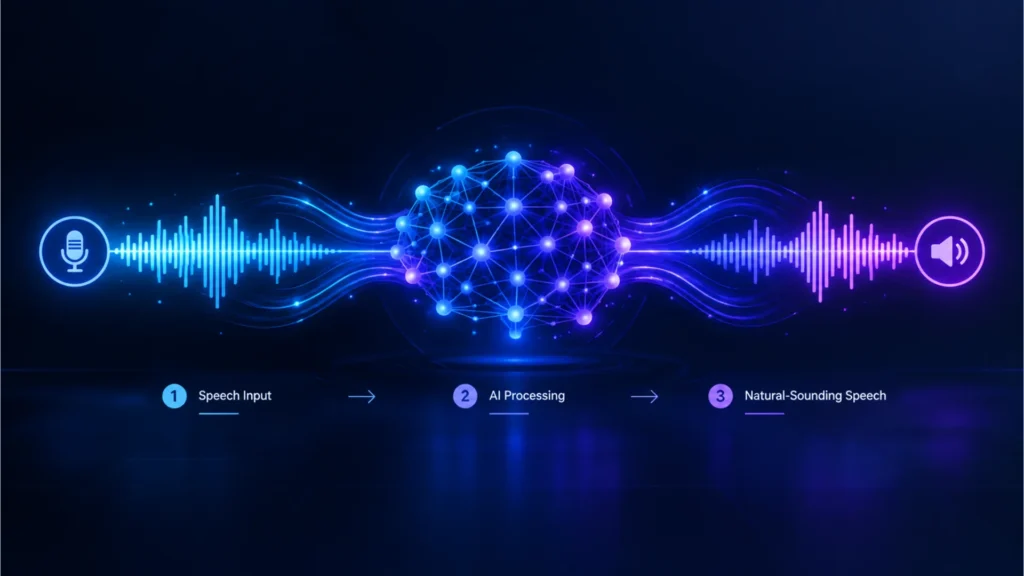
Bland’s core pitch is that voice is its own domain, not an afterthought bolted onto a text-based chatbot. The company built four core components in-house.
Proprietary Voice Model
Rather than routing conversations through GPT-style models built for text, Bland trains models specifically tuned for spoken conversation, including how people interrupt each other, trail off mid-sentence, or change topics unexpectedly.
Custom Text-to-Speech and Speech-to-Text
Both the listening and speaking sides of the pipeline are built internally. This is a major reason Bland can maintain such low response latency, since the system doesn’t have to wait on external API calls to multiple different vendors.
Conversational Pathways
Bland offers a visual workflow tool called Conversational Pathways, which lets teams map out structured call logic while still giving the AI room to adapt naturally within a conversation. This is closer to a flowchart builder than a rigid script, which is part of why Bland is popular with technical teams that want fine-grained control.
Telephony and Integrations
Bland doesn’t own its own phone number inventory. Instead, it plugs into existing telephony providers like Twilio or any SIP trunk a business already uses, and it connects with CRMs and scheduling tools through its API.
Bland AI Pricing Explained
Unlike subscription-based software that charges per seat, Bland uses usage-based pricing billed per minute of call time. This matters because your monthly cost scales directly with how many calls your business actually makes, not how many employees have logins.
Publicly reported starting rates have hovered around $0.09 to $0.14 per minute for base call time, with the company noting that one flat rate covers the language model, speech-to-text, and text-to-speech together, so there are no separate token charges or model provider pass-through fees. Some historical pricing breakdowns have shown additional charges for things like outbound minimums, call transfers, and voicemail detection, so it’s worth checking Bland’s current pricing page directly before budgeting, since usage-based fees like this tend to shift over time.
Enterprise plans with higher volume needs, custom integrations, or stricter data residency requirements are typically negotiated directly with Bland’s sales team rather than published as a flat rate.
Who Uses Bland AI
Bland has picked up a notable list of enterprise customers across industries with high call volumes. Publicly referenced clients include Samsara, Kin Insurance, CNO Financial Group, Better.com, and the Cleveland Cavaliers.
The company targets industries where phone calls remain a primary communication channel despite the shift toward chat and email, including healthcare, insurance, financial services, logistics, and real estate. Bland has pointed to a simple market stat driving this demand: more than 13 billion phone calls happen every single day worldwide, and a large share of those flow through call centers that are expensive to staff and hard to scale.
Bland AI Careers
Job seekers researching Bland AI careers will find a small but fast-growing team, with most roles based in San Francisco and some remote flexibility depending on the position. Listed salary ranges for engineering and technical roles have spanned roughly $120,000 to $220,000, based on postings shared through Y Combinator’s job board.
If you’re comparing voice AI employers, our profile on Skild AI breaks down hiring and culture at another fast-growing AI infrastructure startup, and our GC AI company profile covers how a similar AI-native company structures its product and team.
Common Misunderstandings
A few points of confusion come up repeatedly when people search for Bland AI.
- Assuming Bland lets you swap in your own AI model. It doesn’t, by design. If your workflow depends on using a specific model from OpenAI or another provider, Bland’s self-hosted approach won’t accommodate that, and it’s worth checking this limitation before committing engineering time to an integration.
- Overlooking the AI disclosure requirement. In 2024, a TechCrunch investigation found that Bland’s public demo bot denied being an AI when directly asked, and flagged that some customer campaigns lacked clear AI disclosure to call recipients. This matters because the FCC ruled in February 2024 that AI-generated voice calls fall under the Telephone Consumer Protection Act, requiring proper consent and disclosure, and several states have added their own stricter telemarketing disclosure rules on top of that. Anyone deploying voice AI for outbound calls needs to build compliant disclosure into their call flows regardless of which vendor they use.
- Confusing per-minute pricing with per-seat software costs. Because Bland charges by call minute rather than by user, a small team making a high volume of calls can end up paying more than a large team using a traditional per-seat tool. Model your expected call volume before comparing pricing across platforms.
Frequently Asked Questions
What does Bland AI actually do?
Bland AI builds AI voice agents that make and receive phone calls for businesses, handling tasks like customer support, sales outreach, and appointment scheduling using its own in-house voice and language models.
Who founded Bland AI?
Bland AI was founded in 2023 by Isaiah Granet and Sobhan Nejad, who met through Y Combinator’s Summer 2023 batch in San Francisco.
How much funding has Bland AI raised?
Bland AI has raised more than $100 million total, including a $50 million Series C round led by Dell Technologies Capital in June 2026, following earlier Series A and Series B rounds.
What is Bland AI’s valuation?
Bland AI has not publicly disclosed a specific valuation figure as of its most recent funding round, since the company has kept that number private.
How much does Bland AI cost?
Bland uses per-minute usage-based pricing, with reported starting rates around nine to fourteen cents per minute for base call time, plus potential add-on fees for features like voicemail detection or call transfers.
Is Bland AI publicly traded?
No. Bland AI is a privately held company with no public stock ticker, so shares are not available through a standard brokerage account.
Where can I log in to Bland AI?
Existing customers can log in directly through Bland’s official website at bland.com, where the platform also lists current pricing and documentation for developers.
Final Thoughts
Bland AI’s decision to build its entire voice stack in-house set it apart in a market where most competitors rely on third-party models. Since founding in 2023, the company has grown from a Y Combinator startup into a well-funded player handling millions of calls for real enterprise customers.
Whether Bland’s proprietary, closed approach stays ahead as competitors catch up on latency remains to be seen. For now, it’s a clear example of a startup turning a distinct technical decision into a genuine competitive advantage in a fast-moving corner of the AI industry.