
Exponent Energy Achieves a Stunning Breakthrough in 15 Minute EV Charging
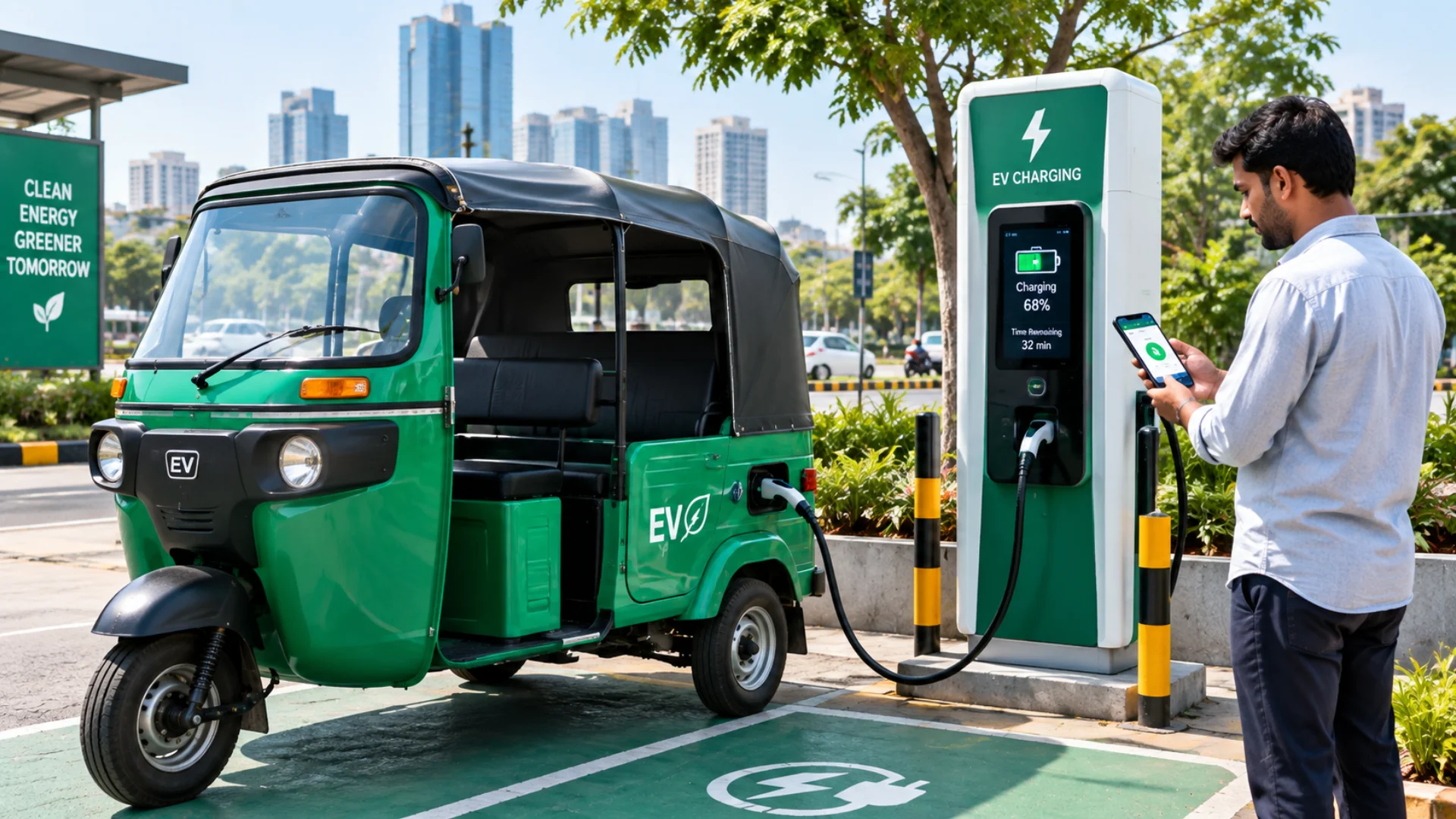
Charging an electric vehicle usually means waiting around for hours. Exponent Energy set out to shrink that wait to 15 minutes, and it built an entire hardware stack from scratch to do it.
The Bengaluru-based startup has quietly become one of the more interesting names in India’s commercial EV space, and it keeps showing up in searches from people trying to figure out three things. What the company actually makes, how much funding it has raised, and whether there is an Exponent Energy stock worth buying.
This guide answers all three, along with the founder story, the technology behind the 15-minute charge, and what to know about Exponent Energy careers if you are considering applying.
What Is Exponent Energy
Exponent Energy is an energy technology company that builds fast-charging batteries and charging stations for electric vehicles, with a specific focus on commercial fleets, electric three-wheelers, and buses in India.
The company was founded in 2020 and is headquartered in Bengaluru. Its core pitch is simple. Most EV batteries take hours to charge because pushing current in faster generates heat that damages standard lithium cells over time. Exponent built a battery pack and charging station designed to work together as one system, which lets it push much higher current safely without wrecking the battery’s lifespan.
The result is what the company calls its Flexible Energy Stack, made up of three parts.
- e^pack is the battery pack installed in the vehicle
- e^pump is the charging station itself
- e^plug is the connector that links the two
Because the pack and the pump are engineered together rather than built to a generic industry standard, Exponent can manage each cell’s temperature and behavior precisely during a fast charge. That is the main reason the company can offer a 0 to 100 percent charge in around 15 minutes using standard lithium iron phosphate cells rather than exotic battery chemistry.
Who Founded Exponent Energy
Exponent Energy was founded by Arun Vinayak, who serves as CEO, along with co-founder Sanjay Byalal. A third co-founder, Jagannath, was part of the founding team as well, though he exited the company in 2026 as part of a leadership transition, continuing on in an advisory capacity.
From Ather Energy to Exponent
Vinayak previously worked at Ather Energy, one of India’s best-known electric scooter makers, where he served as a founding partner and chief product officer. That experience building consumer EV products directly shaped what he wanted to fix next: the charging bottleneck that was slowing down EV adoption across commercial fleets. You can read more about Ather Energy’s background on Wikipedia for context on where Vinayak’s EV experience started.
Byalal brings a different but complementary background. He previously led hardware strategic sourcing and cell strategy at Ather Energy, and before that worked in supply chain leadership at Hindustan Unilever. That combination of battery sourcing expertise and large-scale supply chain experience has shaped how Exponent approaches manufacturing at volume rather than treating each battery as a custom build.
The founders have described their internal philosophy as “Break, Believe, Build,” a mindset that shows up across the company’s job postings and internal culture, favoring fast iteration over long planning cycles.
Exponent Energy Funding and Valuation Timeline
Exponent Energy has raised roughly $65 to $68 million since its founding, based on the most recent disclosed rounds. Here is how that funding built up over time.
- 2020: Company founded in Bengaluru by Arun Vinayak and Sanjay Byalal
- August 2022: $13 million Series A round led by Lightspeed Venture Partners, joined by YourNest VC, 3one4 Capital, and AdvantEdge VC, marking Lightspeed India’s first investment in the EV charging sector
- 2023 to 2025: Continued funding from existing backers, along with a $2 million pre-seed round for its new financing subsidiary, Exponent One, backed by AdvantEdge Founders
- June 2026: Rs 200 crore, or roughly $21.1 million, raised in a round co-led by 360 ONE Asset and TDK Ventures, with Hitachi Ventures joining as a new investor alongside existing backers Eight Roads Ventures, Lightspeed, 3one4 Capital, AdvantEdge VC, and YourNest
That June 2026 round pushed the company’s total funding since inception to $65.7 million, according to Business Today’s reporting on the deal. CEO Arun Vinayak described the milestone as an inflection point, noting that the first five years were about proving the rapid charging technology works reliably, while the next phase is about scaling it into a full energy company.
Exponent has not publicly disclosed a specific valuation figure alongside its most recent round, which is common for growth-stage private companies in India that prefer to keep valuation details out of public funding announcements.
How Exponent Energy Is Used Today
Exponent’s technology is deployed mainly through commercial vehicle partnerships rather than sold directly to individual car owners.
In 2022, the company partnered with Altigreen to launch what was described as the world’s fastest charging electric three-wheeler, built around Exponent’s e^pack using standard lithium-ion cells rated for roughly 3,000 charge cycles. The e^pump network charges at 600 amps, about 15 times the industry standard current, while managing the thermal characteristics of individual cells to keep the pack safe even in hot climates reaching 50 degrees Celsius.
More recently, Exponent has expanded into larger vehicles, including a partnership with bus operator Veera Vahana for 1 megawatt bus chargers, with plans to scale that to 1.5 megawatts. That move into buses signals the company is not just chasing three-wheelers anymore. It is positioning its charging stack as infrastructure for heavier commercial electric vehicles as well.
Earlier in 2026, Exponent launched a financing arm called Exponent One, aimed at solving a separate but related problem. Many commercial EV drivers in India cannot access affordable financing or dedicated home charging, so Exponent One combines the company’s visibility into vehicle usage data with financing products built specifically for commercial EV operators.
This kind of vertically integrated approach, owning the battery, the charger, and now the financing layer, mirrors a broader pattern happening across the battery and energy storage sector. Companies working on next-generation battery chemistry, like EnergyX, are tackling a different part of the same supply chain problem, extracting the lithium that eventually ends up in packs like Exponent’s.
Exponent Energy Careers and Company Culture
Exponent Energy is actively hiring across its Bengaluru headquarters, with roles regularly posted for system engineers, firmware test engineers, vehicle integration engineers, product managers, and field service roles supporting its charging network.
Job listings consistently describe a fast-paced, hands-on engineering culture. Postings mention working with OEM partners across mechanical, electrical, and firmware teams to integrate the e^pack, e^pump, and e^plug across vehicle platforms, along with system-level testing and validation work.
Tips If You’re Considering Applying
- Most roles are based in person at the Bengaluru headquarters or nearby manufacturing sites in Bommasandra, so remote work is uncommon
- Engineering roles frequently ask for hands-on experience with tools like Arduino, STM, or TI development boards for firmware and test work
- Field and service roles often prefer candidates with prior OEM experience in three-wheelers, commercial EVs, or battery service and maintenance
- The company’s internal language, “Break, Believe, Build,” shows up in nearly every job description, so candidates who thrive in a fast iteration environment tend to be a good fit
Is There an Exponent Energy Stock
This is where a lot of search confusion happens, so it is worth clearing up directly.
Exponent Energy is a privately held startup and has no public stock price or ticker symbol. It has not filed for an IPO, and shares are not available to retail investors through any brokerage account. Funding has come entirely through venture capital rounds from firms like Lightspeed, TDK Ventures, and 360 ONE Asset, not from public markets.
Part of the confusion comes from name overlap with a few unrelated companies. Exponent, Inc, listed on Nasdaq under the ticker EXPO, is a separate American engineering and scientific consulting firm that happens to have a battery and energy storage practice, but it has no connection to the EV charging startup in Bengaluru. There is also drinkexponent.com, an electrolyte drink brand, and Tallgrass Resources, a Tulsa-based oil and gas company, both of which share partial name similarity but operate in entirely different industries.
If you searched for “Exponent Energy stock” hoping to invest, the honest answer is that no such stock currently exists. The company remains privately funded, and any future path to public markets would likely follow the same private secondary market route common among high-growth Indian startups before a formal IPO process begins. Staying private well past the point of significant scale is not unusual either, as seen with large privately held industrial businesses like Koch Industries, which has operated for decades without a public listing.
Exponent Energy Location and Facilities
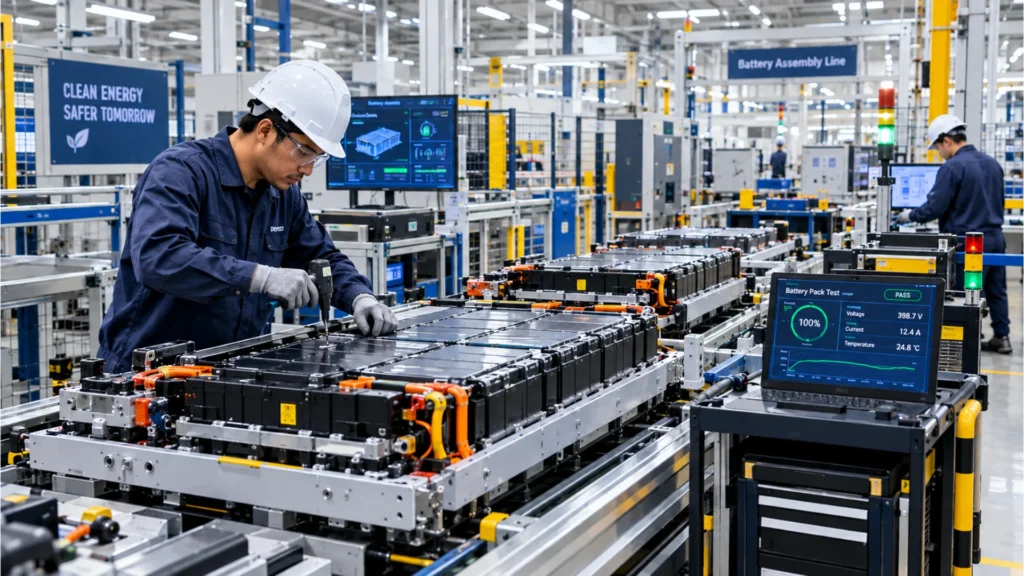
Exponent Energy is headquartered in Bengaluru, India, with manufacturing and testing operations at facilities including a site in Bommasandra, part of the city’s established electronics and hardware manufacturing corridor. Bengaluru’s position as India’s largest technology hub gives the company access to a deep pool of engineering talent across software, hardware, and battery chemistry.
The company’s charging network, its e^pump stations, has expanded across pilot cities starting with Bengaluru, with plans first announced in 2022 to scale to roughly 100 charging locations per city as adoption grows.
Misconceptions About Exponent Energy
- Confusing it with Exponent Inc, the Nasdaq-listed consulting firm. The two companies share a name and both work in energy-adjacent fields, but they are completely separate businesses with no ownership connection.
- Assuming Exponent Energy sells directly to individual EV owners. Its business model centers on commercial fleets, three-wheelers, and buses rather than personal vehicles, which is different from how many people first assume a charging company operates.
- Looking for a public valuation figure. Unlike some startups that publicize valuation alongside every funding round, Exponent has kept that number private in its more recent raises, so widely cited older valuation figures may be outdated.
- Thinking the technology relies on exotic battery chemistry. The 15-minute charge comes from how the pack and charger are engineered together, not from unusual or experimental battery materials. Exponent uses standard lithium iron phosphate cells, a chemistry documented in detail on Wikipedia’s overview of lithium iron phosphate batteries.
Frequently Asked Questions
Who founded Exponent Energy?
Arun Vinayak and Sanjay Byalal founded Exponent Energy in 2020. Vinayak serves as CEO and previously worked at Ather Energy as founding partner and chief product officer.
How much funding has Exponent Energy raised?
Exponent Energy has raised roughly $65.7 million in total funding as of its June 2026 round, which was co-led by 360 ONE Asset and TDK Ventures.
Is there an Exponent Energy stock I can buy?
No. Exponent Energy is privately held and has no public ticker. It has not announced any IPO plans, and funding has come exclusively through venture capital.
What does Exponent Energy actually make?
It builds the e^pack battery pack, the e^pump charging station, and the e^plug connector, together called its Flexible Energy Stack, designed to deliver a 15-minute EV charge for commercial vehicles.
Where is Exponent Energy located?
Exponent Energy is headquartered in Bengaluru, India, with manufacturing operations including a facility in Bommasandra.
How can I apply for Exponent Energy careers?
Open roles are posted on platforms including Workable, Built In, and startup job boards, primarily for in-person positions based in Bengaluru.
Conclusion
Exponent Energy took on one of the most frustrating problems in electric mobility, the long wait to recharge, and built its own battery and charging hardware from the ground up to solve it. That approach has carried the company from a $13 million Series A in 2022 to a growing role supplying commercial fleets, buses, and three-wheelers across India.
The bigger test ahead is scale. Turning a proven 15-minute charging technology into a nationwide energy backbone for commercial EVs is a much bigger undertaking than proving the concept works in a handful of pilot cities, especially as global EV adoption keeps climbing according to the International Energy Agency’s Global EV Outlook. For now, Exponent Energy remains one of the more closely watched private companies in the EV infrastructure space, with strong technical credibility and no public stock in sight.