
Field AI Just Turned Robot Reliability Into a 2 Billion Business
What Is Field AI
Field AI is a robotics software company that builds what it calls a universal brain for robots. Instead of making its own hardware, the company builds AI models that can be dropped into robots made by other companies, letting them navigate, make decisions, and avoid danger in places that have no GPS signal, no map, and no reliable internet connection.
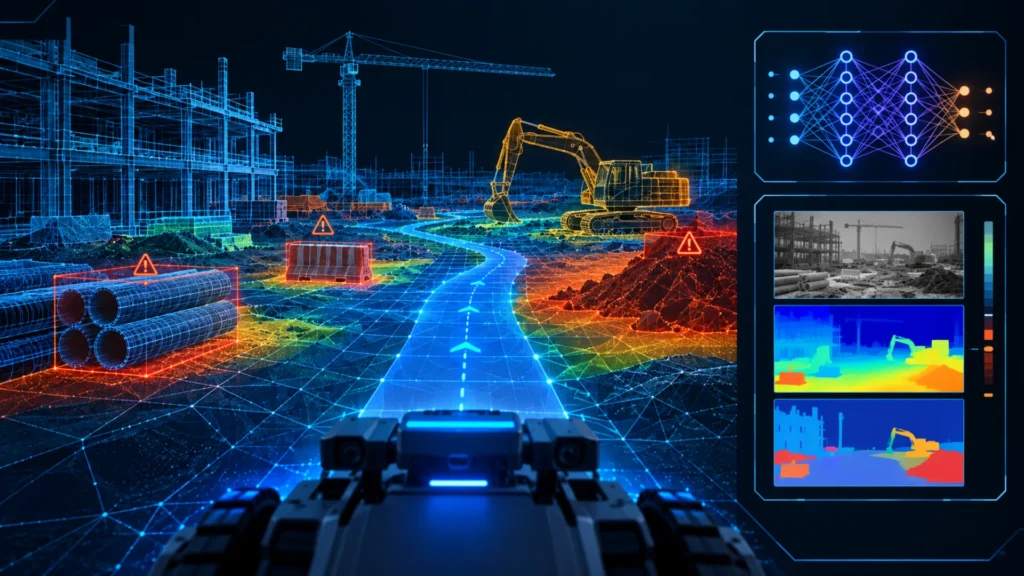
The company’s technology runs on something it calls Field Foundation Models, or FFMs. These are trained to understand physics and risk at the same time, so a robot can tell the difference between a puddle it can safely roll through and a hole it needs to avoid, even in an environment it has never seen before.
Field AI is privately held and headquartered in Irvine, California. As of its most recent funding round, it’s valued at $2 billion, making it one of the most well-funded robotics software startups in the country, according to CNBC’s coverage of the raise.
How Field AI Is Different From Other Robotics Companies
Most companies in robotics either build the physical robot, like Boston Dynamics, or build a general AI model and try to adapt it for physical use later. Field AI has picked a narrower and, so far, more successful lane. It only builds the software brain, and that brain is designed for physical reality from day one rather than retrofitted afterward.
Founder Ali Agha has been direct about this distinction in interviews. He’s said the industry’s usual approach of taking large language and vision models built for text or images and forcing them into robots creates problems that then need to be patched after the fact, things like hallucinated instructions or unsafe movements. Field AI instead built what it calls intrinsically risk-aware architecture from the start, according to the company’s own funding announcement.
Who Founded Field AI
Field AI was founded in January 2023 by Ali Agha, who serves as CEO, along with Shayegan Omidshafiei as President and Chief Scientist, and David Fan as CTO. A fourth co-founder, Justin Saeheng, served as COO until leaving the company in 2024.
Ali Agha’s Background at NASA and DARPA
Ali Agha’s résumé is a big part of why investors took this company seriously so quickly. Before starting Field AI, he spent years as a Robotics Technologist and Group Leader at NASA’s Jet Propulsion Laboratory, working alongside Caltech’s Center for Autonomous Systems and Technologies.
At JPL, Agha led Team CoSTAR, a collaboration between JPL, Caltech, and MIT that won the Urban Circuit of the DARPA Subterranean Challenge in February 2020. That competition tasked robots with mapping and searching complex underground environments without any GPS, using an autonomy system Agha’s team called NeBula. He was also the principal investigator on DARPA RACER, a program focused on high-speed off-road autonomous vehicles, and worked on a coordinated autonomy project pairing the Mars Helicopter with a rover.
Before JPL, Agha was a research engineer at Qualcomm working on perception for self-flying drones and self-driving cars, and earlier held a postdoctoral position at MIT’s Laboratory for Information and Decision Systems. He holds a doctorate from Texas A&M University.
The Rest of the Founding Team
Shayegan Omidshafiei leads Field AI’s AI and science direction, focused on developing the Field Foundation Models alongside other machine learning systems designed to handle situations they weren’t explicitly trained for, according to the Field AI team page. The wider team draws from an unusually deep bench of veterans from NASA JPL, DARPA programs, DeepMind, SpaceX, Amazon, Tesla Autopilot, and Boston Dynamics, according to company materials and research from Contrary.
Field AI Funding and Valuation
Field AI has raised a total of $405 million, and it did this across two funding rounds that were announced together in August 2025.
Who Invested in Field AI
The investor list reads like a who’s who of tech billionaires and top-tier venture funds. Backers include NVentures, which is Nvidia’s venture capital arm, Bezos Expeditions, the investment vehicle for Jeff Bezos, and Gates Frontier, tied to Bill Gates. Other participants include BHP Ventures, Canaan Partners, Emerson Collective, Intel Capital, Khosla Ventures, Temasek, Samsung Ventures, and Prysm.
Vinod Khosla of Khosla Ventures said in the company’s funding announcement that Field AI’s approach to embodied intelligence “reflects a pragmatic path forward” for scaling autonomy, and that the company is positioned at the forefront of the general-purpose robotics shift.
How the 2 Billion Dollar Valuation Happened
The combined $405 million round pushed Field AI’s valuation to $2 billion, according to a source familiar with the deal cited by both CNBC and TechCrunch. What stands out is the timing. The company was only about two and a half years old at that point, and Agha told CNBC that most of the investor interest was inbound rather than something the company had to chase.
That kind of rapid rise to unicorn status, and then well beyond it, isn’t common even in a hot funding environment. It puts Field AI in the same conversation as other heavily backed, pre-revenue-disclosure hardware and deep tech startups working on hard physical problems, the kind of company where public “stock” searches turn up confusion rather than answers because there’s no ticker to find, a pattern our Form Energy funding breakdown runs into as well for a very different kind of hard tech startup.
Is Field AI Publicly Traded
No. Field AI is a private company, and there’s no Field AI stock available to buy on any public exchange right now. The company hasn’t announced any IPO plans. If you see sites offering “Field AI shares” or pre-IPO stock, treat that with real caution, since legitimate access to equity in a private company like this is normally limited to venture investors, employees, and accredited investors through private markets.
How Field Foundation Models Actually Work
The core of Field AI’s product is the Field Foundation Model, and understanding what makes it different is worth a closer look, since this is the actual technical bet the company and its investors are making.
Physics First, Not Vision First
Most modern AI models, including the ones used in some other robotics companies, are trained heavily on internet images, video, and text, then adapted to control a physical robot. Field AI took a different starting point. It built its models to reason about physical uncertainty and risk from the ground up, rather than adding safety checks after the model is already making decisions.
In an interview with TechCrunch, Agha explained the reasoning directly: “The mission is to build a single robot brain that can generalize across different robot types and a diverse set of environments. To get there, you need to manage risk and safety as you go to these new environments. And that has been a fundamental gap in robotics: traditional models and traditional approaches were never designed to manage that risk and safety,” a point covered in TechCrunch’s report on the funding round.
Working Without Maps or GPS
Field AI’s models let robots operate without pre-built maps, without GPS, and without a fixed, pre-programmed path. That matters a lot in places like an active construction site, an underground mine, or a disaster area, where the layout changes daily, and satellite signal often doesn’t reach at all.
Embodiment-Agnostic Design
Field AI describes its software as embodiment-agnostic, meaning the same underlying brain can be adapted to different kinds of robots, including wheeled robots, legged robots like quadrupeds, drones, and increasingly, humanoids. This is a meaningful technical claim, because most robotics AI historically has been built and tuned for one specific robot type at a time.
Edge Computing Without the Cloud
Robots running Field AI’s software can operate fully on the edge, meaning the decision-making happens on the robot itself rather than depending on a live connection to the cloud. That’s a practical requirement for a mine shaft or a remote industrial site where connectivity simply isn’t reliable.
Field AI and the Robot Dog Partnership With Boston Dynamics
One of the clearest ways to understand what Field AI actually does in practice is through its partnership with Boston Dynamics, announced in March 2026.
What Spot and Field AI Do Together
The partnership pairs Boston Dynamics’ four-legged Spot robot, sometimes referred to as the Field AI robot dog in search queries, with Field AI’s Field Foundation Models. Boston Dynamics provides the physical hardware and mobility, while Field AI provides the autonomy software that lets Spot make its own navigation and inspection decisions.
Marc Raibert, founder of Boston Dynamics, explained the connection went back years, noting his team had known Agha and his group “since they won the Urban-circuit of the DARPA Subterranean Challenge using Spot robots, while tackling similar challenges for NASA,” according to the official partnership announcement from Boston Dynamics.
A Real Deployment on a Construction Site
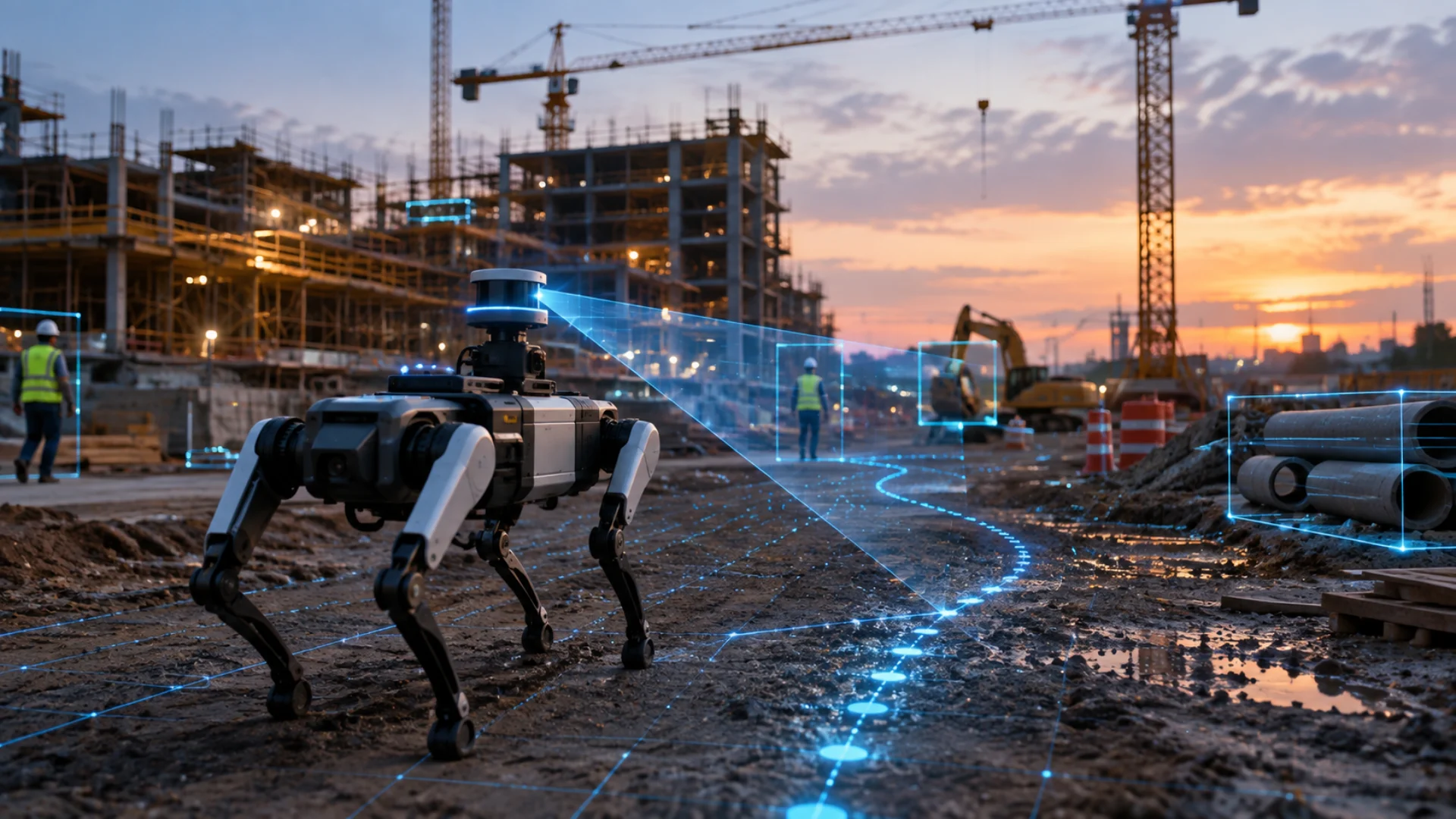
A concrete example of this partnership in action comes from a deployment at a DPR Construction jobsite in Santa Clara, California. A Spot robot running Field AI’s software autonomously walked more than 100 miles across the site, captured over 45,000 photos, mapped four floors, documented 125,000 square feet of roofing, and scanned 500,000 square feet of interior space, all without a human operator steering it, according to Boston Dynamics’ published case study.
A superintendent on that project, Justin Schreiner, said the system had been used primarily for tracking construction progress through photography, a task that previously required a person walking the site for hours with a 360-degree camera.
Field AI’s Industries and Use Cases
Field AI doesn’t build for one single industry. Its software is currently deployed or marketed across several sectors where sending a human into a dangerous or repetitive environment is expensive, slow, or risky.
- Construction, where robots handle progress documentation, safety monitoring, and material tracking on active job sites
- Energy and utilities, where autonomous inspection can check equipment in hazardous or hard-to-access locations
- Mining, an environment that shares a lot in common with the underground conditions Agha’s team tackled during the DARPA Subterranean Challenge
- Logistics, where warehouse and yard robots need to adapt to constantly shifting layouts
- Federal and defense applications, handled through a dedicated subsidiary that works specifically with government customers, according to reporting from the Orange County Business Journal
Field AI Boston Office and Company Locations
While Field AI’s headquarters and largest engineering team are based in Irvine, California, the company also runs a growing research and development team out of Boston, Massachusetts. Job postings describe the Boston team as focused on humanoid manipulation and human-robot interaction research, a more specialized slice of the company’s broader autonomy work.
Field AI has also posted roles in Pittsburgh, Pennsylvania, and Singapore, reflecting a company that’s expanding its technical footprint beyond Southern California as it scales. The Irvine headquarters itself moved in 2025 into a larger 41,000-square-foot space in the Irvine Spectrum area, after outgrowing its original office in nearby Mission Viejo, according to details of the lease reported by Irvine Company.
Field AI Careers
Field AI has been hiring aggressively since its funding announcement, with dozens of open roles posted at any given time. Most positions are concentrated in Irvine and require on-site work, reflecting the company’s emphasis on testing software directly on physical hardware rather than remotely.
Roles span robotics autonomy engineering, machine learning, simulation, infrastructure, and federal program support, along with product and operations positions. Compensation for engineering roles in Irvine has been publicly listed in the range of roughly $125,000 to $220,000 depending on seniority and specialization, based on postings reviewed across multiple job boards. If you’re specifically interested in the Boston research team or federal division roles, both show up as their own categories on the company’s careers page rather than being folded into the general Irvine listings.
FAQs
Is there a Field AI Wikipedia page?
Not as of this writing. Field AI doesn’t yet have a dedicated Wikipedia entry, so the most reliable sources for background on the company are its own newsroom, direct interviews with Ali Agha in outlets like TechCrunch and CNBC, and funding databases like Crunchbase.
Who is the CEO of Field AI?
Ali Agha is the founder and CEO. Before starting the company, he led robotics autonomy research at NASA’s Jet Propulsion Laboratory and Caltech.
How much is Field AI worth?
Field AI was valued at $2 billion following its $405 million combined funding round announced in August 2025.
Does Field AI make its own robots?
No. Field AI builds the AI software, called Field Foundation Models, that other companies’ robots use to navigate and make decisions. Its most public hardware partnership is with Boston Dynamics.
What is the Field AI robot dog?
This typically refers to a Boston Dynamics Spot quadruped running Field AI’s autonomy software, used for tasks like construction site inspection and mapping.
The Bottom Line
Field AI has moved unusually fast for a company built around a genuinely hard technical problem. Getting a robot to make safe decisions in an environment it has never seen, without GPS or a map, has been one of robotics’ most stubborn challenges, and Ali Agha’s team spent years working on exactly that problem before turning it into a company.
The $2 billion valuation and the investor list that includes Bezos, Gates, and Nvidia say a lot about how seriously the market is taking the bet. Whether Field AI ends up being the company that supplies the “brain” for a large share of the world’s working robots is still an open question, but the technical foundation, the founding team’s track record, and the early commercial deployments with partners like Boston Dynamics give it a real shot at getting there.