Periodic Labs Builds AI That Runs Real Experiments
Most AI models learn from the finished record of science, the papers and textbooks that tell the story after the fact. Periodic Labs argues that this is the wrong data for discovering new materials, because the process, including the failed attempts, never made it into print. Co-founder Liam Fedus put it this way in a September 2026 interview with The Generalist, and the company’s answer is to build its own laboratories and generate the missing data.
This guide covers the idea, the lab, the founders, the money, and the parts that are still unproven.
The Idea In One Paragraph
Periodic Labs was founded in May 2025 by Liam Fedus, a former OpenAI research vice president who helped create ChatGPT, and Ekin Dogus Cubuk, who led the materials work behind Google DeepMind’s GNoME project. It emerged from stealth in September 2025 with a $300 million seed round. Its stated first goal is a new high-temperature superconductor, and its method is to let AI propose experiments, let robots run them, and feed the real results back into the model.
Why A Perfect Simulator Would Still Not Be Enough
Computers can already simulate materials, so why build labs at all? Cubuk’s answer, as summarized from a recent Latent Space interview, is that even a perfect simulation would not replace experiments. He points to magnesium diboride. A Japanese group tested roughly 30,000 substances and about 30 showed interesting superconductivity, and magnesium diboride was one of them. Finding it was a screening problem across physical samples, and real measurements are noisy.
That noise is a feature of Periodic’s design. The company builds reinforcement learning environments that reward a model for correctly identifying material phases from noisy X-ray diffraction data, which is the kind of messy signal a real lab produces. A separate summary of the Generalist interview adds the commercial angle: materials often take 10 to 20 years to go from lab discovery to technology because scale-up fails, and Periodic hopes AI-driven loops can shorten that.
Inside The Lab
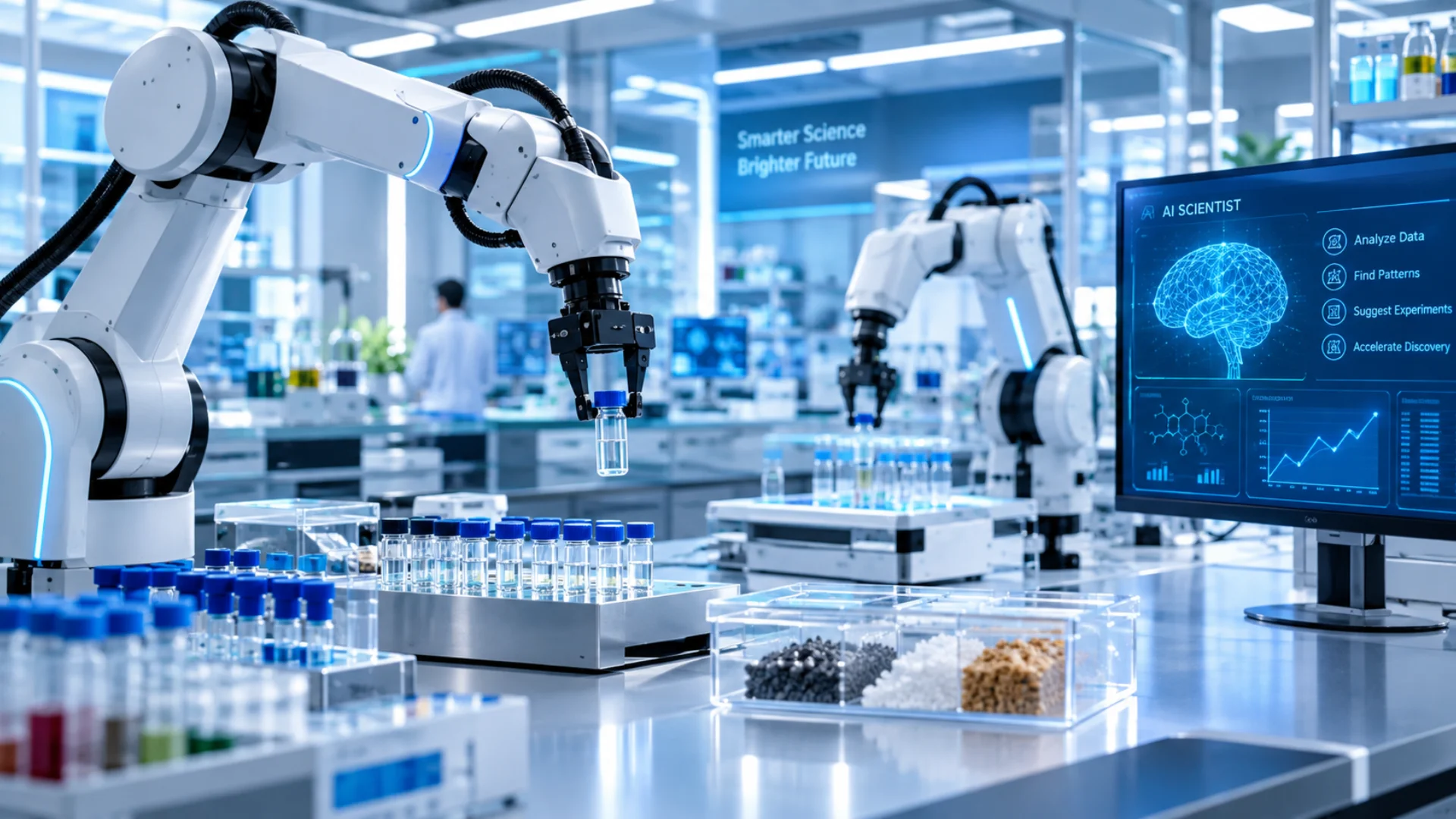
The first lab is built around powder synthesis. Robots mix powders of existing materials in chosen ratios and heat them until they react into something new. Contrary Research explains why it was chosen, because a large share of solid-state materials, including superconductors and magnets, can be made this way, and the operations are simple enough for a robot. The lab is in Menlo Park, California.
| Step in the loop | What happens |
|---|---|
| Hypothesis | A model reads the literature and proposes candidates |
| Simulation | Quantum-mechanical calculations narrow the list |
| Synthesis | Robots make the most promising samples |
| Characterization | Instruments measure the real properties |
| Feedback | Results, including failures, retrain the model |
The founders describe the end goal with two phrases. Cubuk calls it a compiler for matter, and the podcast host compared it to a TSMC for materials, where a customer specifies the properties wanted, and Periodic works out how to synthesize them. The founders have also said they plan to open more labs, and they describe a mission they call synthesis superintelligence.
Skild AI covers another company trying to give AI a grip on the physical world, though through robots rather than materials. A related example of machines collecting real-world data is in our Gecko Robotics.
Periodic Neon, The First Model Trained On Its Own Lab Data
In September 2026, Periodic released its first model, Periodic Neon, a model with roughly one trillion parameters that it trained further on data from its own laboratory and deployed inside its Menlo Park labs. Its job is narrow and practical. It reads X-ray diffraction results and works out which material a robot actually made. Co-founder Liam Fedus said the team used 1,300 Nvidia H200 chips and several months of experimental data. Reports on the release say the model was built from an open-weight base model rather than from scratch.
The headline result is a score on a test set of 134 hard diffraction problems that Periodic built, called FrontierXRD. Coverage says Neon solved about 55 percent of them, up from under 3 percent for the starting model, and that it beat named frontier models, reported to include OpenAI’s GPT-6 Astra and Anthropic’s Claude Fable 5.1, on the company’s own benchmark. Treat those figures as company-reported. A benchmark written by the team that trained the model is not an independent test, and I found no outside replication yet.
Why X-Ray Diffraction Is A Smart First Test
X-ray diffraction is how materials scientists check what they have made. A beam hits a crystal and produces peaks at fixed angles, a pattern that works like a fingerprint for the material. Real samples are messy. Peaks overlap, several phases can sit in one sample, and noise hides weak signals. Reading those patterns is slow expert work, and every wrong call wastes a robot’s time. Automating that step is the right place to start because it sits in the middle of the loop. Faster and more accurate reading means the lab can decide on the next experiment sooner, which connects to the noisy data design described earlier in this guide.
Labs That Run Around The Clock
Periodic says it has moved from its first physical experiments to labs that run around the clock in Menlo Park. Continuous operation matters for a simple reason. The company’s whole argument is that real experiments, including failed ones, are the missing training data, and a lab that sits idle at night produces less of it. More samples per week means more data per week. It also raises costs, because powders, instruments, and staff all scale with throughput. Compute is the other bill, and Neon’s training run shows the company spends on both chips and chemistry.
Who Is Paying Today
Periodic is not purely a research bet. As of March 2026, Contrary Research reports early semiconductor customers and some revenue. One analysis of a November 2025 interview says the near-term model is supplying Periodic’s models and experimental data to firms doing physical research and development, with a longer-term option to license models or share in discoveries. That analysis is third-party, so treat the business model as a plausible reading rather than a company announcement.
Funding And The $7.5 Billion Question
| Date | Event | How solid is it |
|---|---|---|
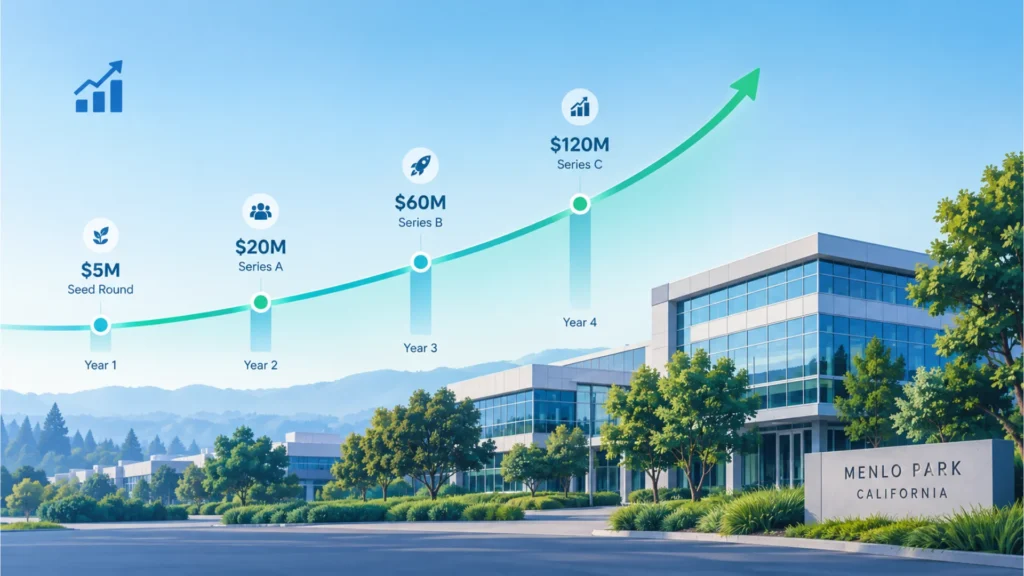
| September 2025 | $300 million seed led by Andreessen Horowitz at about $1.3 billion | Widely reported |
| March 2026 | Bloomberg reports talks at about $7 billion | Reported talks |
| May 2026 | Forbes reports advanced talks for at least $500 million at $7.5 billion, led by AMP | Reported talks |
| June 2026 | A Forge listing shows a $750 million Series A and a smaller A-2 at a $7.5 billion post-money valuation, about $1.07 billion total. | No company announcement found |
The seed round included Nvidia, Jeff Bezos, Eric Schmidt, Jeff Dean, Accel, Felicis, DST Global, and others. As for the later round, I could not find an official announcement or a major-outlet confirmation that it closed, so treat the $7.5 billion figure as probable but not confirmed.
What that valuation rests on is future discovery. No room-temperature superconductor has been announced, and the company itself says nobody will get there in one shot.
Stock, Team, And Location
Periodic Labs is private and has no ticker or IPO filing. Secondary marketplaces list reference prices for accredited investors, but those are not public stock prices. Estimates of headcount range from roughly 50 to 95, with senior technical roles reported in the $200,000 to $250,000 range and visa sponsorship offered. The lab is in Menlo Park, and the company prefers hires in Menlo Park or San Francisco. Roles mix PhD scientists and hands-on lab engineers.
How It Compares With Other AI Science Startups
Lila Sciences, founded within Flagship Pioneering, takes a broader approach across life sciences, chemistry, and materials, and has raised more than $550 million. Periodic is narrower, with one demanding target, high-temperature superconductors, and one general method, powder synthesis.
How To Read The Periodic Labs Hype
Separate what has been shown from what has not. Shown so far are a funded team, working robotic labs in Menlo Park, and a model that reads diffraction data well on the company’s own test. Not shown are a new superconductor, repeatable commercial licensing at scale, or an officially announced second funding round. The valuation rests on the gap between those two lists. Periodic belongs to a small group of labs betting that nature, not the internet, is the next dataset.
Flapping Airplanes challenges the scaling approach from another direction, arguing models should need far less data to learn. Battery makers such as Form Energy show why materials work matters, since a better chemistry can reshape an industry, and also how slow the road from lab result to factory can be. A discovery that works in a lab still has to be made cheaply, in large quantities, and to a standard buyers trust. That is the stretch where most materials breakthroughs stall, and it is the stretch Periodic has not reached yet.
Questions People Ask About Periodic Labs
Who founded Periodic Labs?
Liam Fedus and Ekin Dogus Cubuk.
Has Periodic Labs discovered a superconductor?
No. It is the stated long-term goal, not an announced result.
How much has Periodic Labs raised?
$300 million in its seed round, plus a later round reported at a $7.5 billion valuation that I could not confirm from an official source.
Is Periodic Labs publicly traded?
No. It is private and has no ticker.
Where is Periodic Labs located?
The lab is in Menlo Park, California, and the company also has a San Francisco presence.
What is Periodic Neon?
Periodic Neon is the company’s first model, with about one trillion parameters, trained further on its own lab data to read X-ray diffraction results inside its Menlo Park labs.
What is X-ray diffraction used for in materials science?
It produces a pattern that works like a fingerprint, so scientists can confirm which material they actually made and whether it has the structure they wanted.
What To Watch Next
Look for a verifiable materials result from the Menlo Park lab, official confirmation of the later funding round, and news of additional labs. Also watch for a second Neon release and any independent test of its benchmark results. Until a discovery is published and reproduced, the company’s value is a bet that real experiments will beat reading the textbook. The compute behind AI of this kind also depends on faster chip-to-chip links, the problem our Ayar Labs profile covers.