
K2 Space Achieves a Remarkable Valuation Surge in the Satellite Industry
Most satellite startups spent the last decade trying to build smaller. K2 Space did the opposite, and it just landed a $6.8 billion valuation for betting that bigger was the smarter move all along.
That kind of contrarian call rarely pays off this fast. But K2 Space has gone from a two-person startup with an $8.5 million seed round to a company backed by Kleiner Perkins, ICONIQ, and ARK Invest, with over $1 billion raised and more than $1 billion in signed contracts, in under four years.
This article covers everything worth knowing about K2 Space. Who started it, what makes its satellites different, how its funding and valuation grew so quickly, and what to know if you are looking into K2 Space careers or asking about a K2 Space stock price.
What Is K2 Space
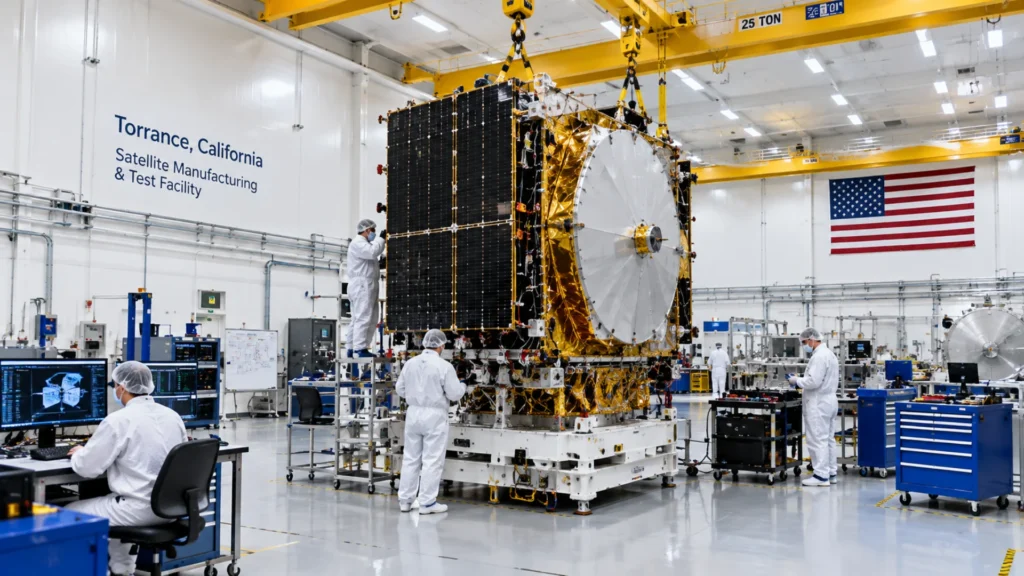
K2 Space is an American aerospace manufacturer that designs and builds large, high-power satellites for commercial, government, and defense customers. The company is headquartered in Torrance, California, inside a 180,000-square-foot factory built to produce up to 100 satellites a year.
Founded in 2022, K2 Space set out to challenge an industry trend. Most satellite makers, especially in the small satellite boom of the 2010s, were building smaller and cheaper spacecraft. K2 bet that the rise of heavy lift rockets like SpaceX’s Falcon 9 and Starship meant mass was no longer the constraint it used to be. If a rocket can lift more, a satellite can be bigger, carry more power, and do more.
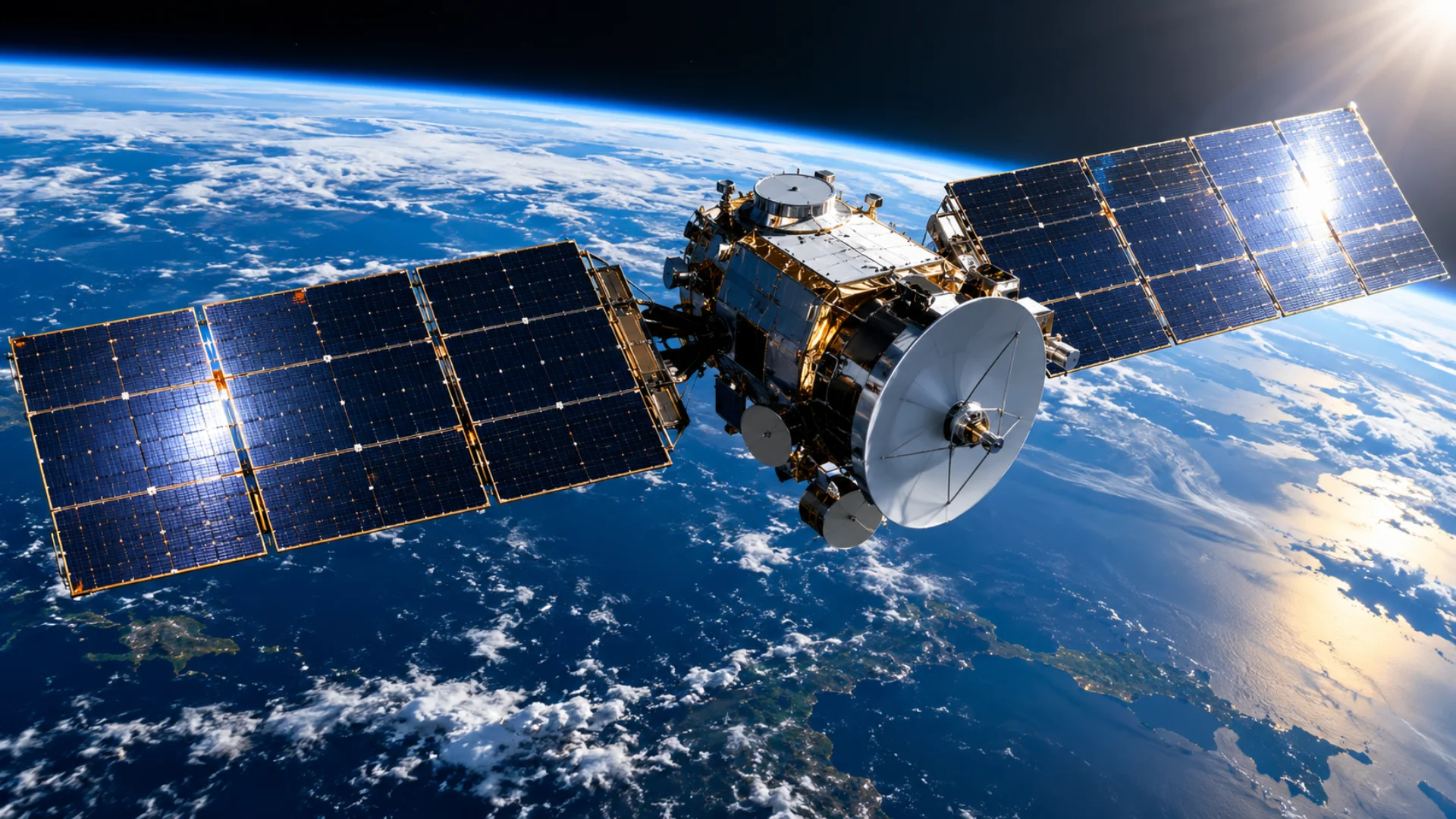
That single idea is the foundation of the company. Its satellites are built around what it calls the Mega Class bus, a platform designed to generate roughly 20 kilowatts of power, which puts it in the same power class as some of the largest commercial satellites ever built by legacy manufacturers like Airbus and Boeing.
Who Founded K2 Space
K2 Space was founded by brothers Karan Kunjur and Neel Kunjur in 2022. Karan serves as CEO and Neel serves as Chief Technology Officer.
A Childhood Fascination With Space Turned Into a Company Name
According to interviews and company profiles, the brothers grew up with a mural of the famous “Earthrise” photograph in their childhood home, which shaped an early interest in space. The name K2 is a double reference. It nods to their shared initial, and it points to the Kardashev scale, a framework used to measure how advanced a civilization is based on how much energy it can harness.
A “Type II” or K2 civilization is one capable of using the entire energy output of its star, a concept laid out in the original Kardashev scale developed by Soviet astronomer Nikolai Kardashev in 1964. It is an ambitious name for a company, and it lines up with how the founders talk about their long-term goals for space infrastructure.
Complementary Backgrounds in Business and Engineering
Karan Kunjur spent close to a decade at Boston Consulting Group leading turnaround and growth work for Fortune 500 clients before helping scale Text IQ, an AI startup, through a nine-figure acquisition by Google in 2021. He studied math and economics at Northwestern University and later earned an MBA from INSEAD.
Neel Kunjur brings the engineering side. He spent more than five years at SpaceX, where he worked on avionics systems for the Dragon spacecraft and served as a mission director for Dragon missions. He later worked as a senior electrical systems engineer at Kittyhawk, an electric aircraft company. That SpaceX background shows up constantly in how K2 talks about its manufacturing philosophy, treating satellites more like a production line problem than a one-off engineering project.
K2 Space Funding and Valuation Growth
K2 Space has raised more than $1 billion since its founding, and its valuation has climbed just as fast as its production goals.
A Quick Look at the Funding Timeline
- 2022: $8.5 million seed round led by First Round, with Republic Capital, Also Capital, Countdown Capital, and Alpine Space Ventures also participating
- Prior rounds: Additional funding brought total capital raised to roughly $450 million ahead of the company’s Series D, with backers including Altimeter, Redpoint, T. Rowe Price, and Lightspeed
- December 2025: $250 million Series C round
- July 2026: $500 million Series D round at a $6.8 billion post-money valuation, led by Kleiner Perkins and ICONIQ, with CapitalG, Lightspeed Venture Partners, Altimeter Capital, Spark Capital, Sands Capital, ARK Invest, and T. Rowe Price Associates also joining
The Series D more than doubled the K2 Space valuation in about seven months. CEO Karan Kunjur has said the number is not just hype. It reflects real revenue multiples tied to a growing backlog of signed contracts, which now exceeds $1 billion across commercial and government customers.
That backlog includes a roughly 30-satellite initial order for SES’s meoSphere network, a role supplying satellites for Anduril’s work on the Golden Dome for America missile defense program, and a position as bus provider for the Space Force’s Protected Tactical SATCOM-Global initiative, which the company has called its first program of record with the Pentagon. K2 also holds a $22.9 million Space Force contract for two Enterprise Space Terminals.
What Makes K2 Space’s Satellites Different
Most satellite manufacturers, especially in the smallsat era, design around tight mass and power budgets. K2 Space flips that model.
Its first satellite, named Gravitas, launched in 2026 and delivers around 20 kilowatts of power, putting it among the highest-power spacecraft ever built. The company’s pitch is straightforward. More power and more mass capacity mean a single satellite bus can support a much wider range of missions, from high-throughput communications to demanding defense payloads to future on-orbit compute workloads.
Each satellite costs roughly $15 million, a price point the company says is possible because its supply chain is about 85 percent vertically integrated. Building components in-house rather than sourcing them from a long chain of subcontractors cuts both cost and lead time, which matters a great deal when customers want dozens of satellites delivered on a defined schedule rather than one at a time.
K2 has also said it is developing a next-generation satellite bus targeting roughly five times more power by the end of 2028, which would push its output well past current commercial satellite benchmarks.
This kind of vertically integrated, hardware-heavy manufacturing approach is a pattern showing up across the broader aerospace and defense sector right now, not just at K2. It echoes the manufacturing philosophy behind companies like Mach Industries, which has built its own in-house propulsion and factory network for autonomous defense systems, and drone makers like Garuda Aerospace, which has focused on building domestic production capacity rather than relying on long overseas supply chains.
K2 Space Careers and Company Culture
K2 Space employs roughly 137 people as of mid-2026, according to company profile data, with the vast majority based at its Torrance, California headquarters. That is a small team relative to a $6.8 billion valuation, and the company has been actively hiring to support its production ramp toward 100 satellites a year.
Open roles typically span mechanical, electrical, and aerospace engineering, manufacturing and production technicians, supply chain and procurement, and program management for both commercial and government contracts. The company also runs paid internship programs, including mechanical engineering and aerospace dynamics internships based on-site in Torrance. You can find all this here.
Tips If You’re Considering Applying
- Nearly all roles are in-office at the Torrance, California headquarters, so remote work is not the norm here
- Manufacturing and technician roles list posted salary ranges in the range of $100,000 to $140,000 depending on experience
- Engineering internships run roughly 12 weeks and are structured around a single mentored project rather than rotational tasks
- Because K2 works on Pentagon programs like Golden Dome and Protected Tactical SATCOM-Global, some roles may require U.S. citizenship or the ability to obtain a security clearance
K2 Space Stock Explained
This is one of the most searched questions about the company, so it deserves a direct answer.
There is no K2 Space stock price available on the NYSE or Nasdaq, and the company has no ticker symbol because K2 Space has never gone public. It remains privately held, and no IPO date has been announced.
Private secondary market platforms such as Forge Global, Hiive, and the Nasdaq Private Market list estimated share prices based on trades among existing employees and early investors. These figures shift often and are not the same as a real, exchange-quoted stock price. As of late 2026, some of these platforms have listed estimates in the range of roughly $100 to $130 per share, though these numbers reflect thin secondary market activity rather than public trading.
If you came here hoping to buy K2 Space stock through a normal brokerage account, the honest answer is that you currently cannot. Access is limited to accredited investors through specialized pre-IPO platforms, and minimum investments on these platforms often start at several thousand dollars, with some requiring six-figure minimums. The SEC’s own investor bulletin on accredited investor status explains the income and net worth thresholds required before any platform can even let you try.
This is common among fast-growing private aerospace companies. A company reaching a valuation of $1 billion or more while still private is often called a unicorn, and K2 Space, along with peers in the space and defense sector, fits that description well past the billion-dollar mark.
K2 Space Location and Facilities
K2 Space is headquartered at 1355 Sepulveda Blvd in Torrance, California, part of the dense cluster of aerospace companies in the Los Angeles South Bay region, an area with deep roots in American space manufacturing going back to the original Space Shuttle program.
Its Torrance facility spans 180,000 square feet and is designed specifically to scale production toward 100 large satellites annually. The location keeps K2 close to a regional talent pool of aerospace engineers and manufacturing specialists, along with proximity to major West Coast launch sites used by companies like SpaceX.
K2’s Protected Tactical SATCOM-Global work falls under Space Systems Command, the branch of the U.S. Space Force that manages satellite acquisition programs. You can see how that office describes its own mission on the official Space Systems Command site.
How K2 Space Compares to Other Satellite Companies
K2 Space is often mentioned alongside newer entrants like Apex, which builds smaller, standardized satellite buses in the 100 to 500 kilogram range for a wide variety of missions. The comparison highlights the core difference in strategy. Apex is optimizing for standardization and speed at a smaller scale, while K2 is optimizing for maximum power and mass on a smaller number of larger, more capable satellites.
Compared to legacy manufacturers like Boeing and Airbus, which have built high-power satellites for decades using far more traditional, slower production processes, K2’s pitch is that it can deliver similar power output at a fraction of the price and on a dramatically faster timeline, closer to how SpaceX approaches manufacturing rockets.
Common Mistakes People Make Researching K2 Space
- Assuming it’s a small satellite company. K2 Space is often lumped in with the CubeSat and smallsat boom. Its entire business model is built on the opposite idea, building larger, high-power satellites rather than smaller ones.
- Assuming the valuation reflects a finished, mature business. A $6.8 billion valuation is a price investors agreed to pay based on projected revenue multiples. It is not the same as current profit, and the company has been public about the fact that its valuation is tied closely to its signed contract backlog rather than delivered revenue alone.
- Confusing K2 Space with K2 Corporation or unrelated ski and outdoor brands. The name overlap causes some search confusion. Always check for Torrance, California, and CEO Karan Kunjur to confirm you have the right company.
- Thinking a K2 Space stock price found on a secondary market site is a real, tradable market price. These are estimates based on limited private transactions, not public market prices.
Frequently Asked Questions
Who founded K2 Space?
Brothers Karan Kunjur and Neel Kunjur founded K2 Space in 2022. Karan serves as CEO and Neel serves as CTO, drawing on his prior experience building Dragon spacecraft avionics at SpaceX.
What is K2 Space’s current valuation?
As of July 2026, K2 Space is valued at $6.8 billion following a $500 million Series D round, more than doubling its valuation from around seven months earlier.
How much funding has K2 Space raised?
K2 Space has raised more than $1 billion in total funding since 2022, backed by investors including Kleiner Perkins, ICONIQ, CapitalG, Lightspeed Venture Partners, Altimeter Capital, and T. Rowe Price Associates.
Is there a K2 Space stock price I can buy today?
No. K2 Space is privately held and has no ticker symbol. Estimated share prices exist only on private secondary market platforms and require accredited investor status to access.
Where is K2 Space located?
K2 Space is headquartered in Torrance, California, at a 180,000-square-foot manufacturing facility designed to build up to 100 satellites per year.
How can I apply for K2 Space careers?
Open roles are posted on the company’s official careers page and on job boards like Greenhouse, Built In, and Indeed, primarily for in-office positions in Torrance, California.
Conclusion
K2 Space took a bet that ran against the entire direction of the satellite industry, and in under four years, that bet turned into a $6.8 billion valuation and a factory built to produce 100 large satellites a year.
The company’s next stretch will be about proving it can actually hit that production number while delivering on major commitments tied to SES, Anduril, and the Space Force. For now, K2 Space stands as one of the clearest examples of how quickly a contrarian idea in aerospace can turn into one of the most closely watched private companies in American space technology.