
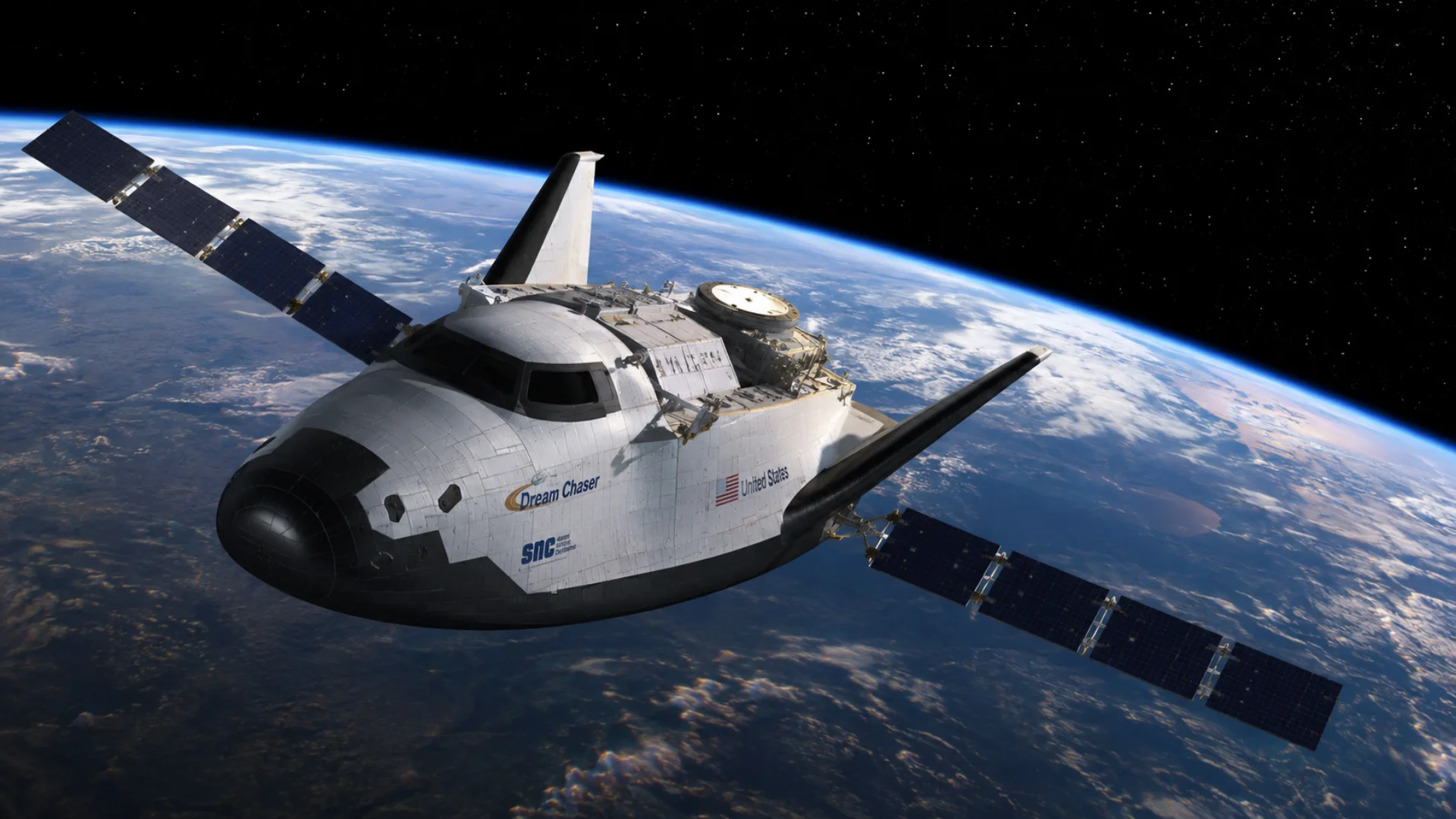
Impulse Space Charts a Powerful New Course for In-Space Mobility
Getting a rocket off the ground used to be the hard part of spaceflight. Now that SpaceX, Rocket Lab, and a handful of other launch providers have made orbit routine, a new problem has taken its place: what happens after the rocket drops you off?
Impulse Space exists to answer that question. The Redondo Beach, California company builds vehicles that pick up where a rocket’s job ends, carrying satellites and other payloads the rest of the way to their final orbit, or well beyond it. This guide covers what Impulse Space actually does, who runs it, where the company is based, how much it has raised, and what it is like to work there.
What Is Impulse Space
Impulse Space is an American aerospace company that designs and builds in-space vehicles, working within an ecosystem closely supported by entities like The Aerospace Corporation for national space security. Instead of building rockets, Impulse builds the spacecraft that ride on top of a rocket and then maneuver independently once they separate, delivering satellites to a precise orbit rather than wherever the rocket’s upper stage happens to drop them off.
The company was founded in September 2021 and has grown quickly into one of the best-funded private space companies outside of SpaceX itself, alongside satellite hardware pioneers like K2 Space in the satellite industry. Its pitch to customers is speed. Instead of a satellite spending six to ten months slowly raising its own orbit using onboard thrusters, an Impulse vehicle can carry it there in a matter of hours or days.
Impulse Space CEO and Founder
Tom Mueller founded and now runs Impulse Space as its CEO. Mueller is not a newcomer to rocketry. He was SpaceX’s first employee, recruited personally by Elon Musk back in 2002, and spent nearly two decades there leading propulsion development.
During his time at SpaceX, Mueller led the team behind the Merlin engine, which still powers the Falcon 9 and Falcon Heavy today, along with the Draco and SuperDraco thrusters used on the Dragon spacecraft. He moved into the role of Propulsion CTO in 2016 and stepped back to a part-time senior advisor position in 2019 before retiring from SpaceX in November 2020.
Mueller started Impulse Space less than a year later, applying the same propulsion expertise to a different problem: getting spacecraft to move efficiently once they are already in orbit. Alongside Mueller, Eric Romo serves as President and Chief Operating Officer and is frequently the company’s public voice on business strategy and hiring.
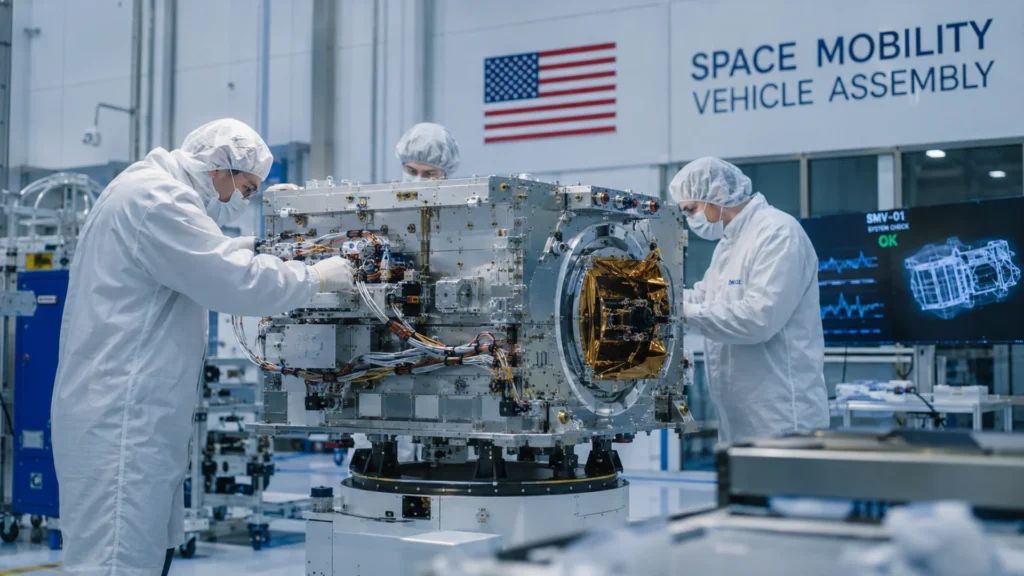
Impulse Space Headquarters and Other Locations
Impulse Space is headquartered in Redondo Beach, California, registered at 2651 Manhattan Beach Boulevard. You can find the exact Impulse Space headquarters location on Google Maps.
The company has expanded well beyond that single site as its contract backlog has grown. It now operates additional facilities in Boulder, Colorado, Washington, D.C., and a growing test site in Mojave, California, where propulsion hardware gets put through its paces before flight.
That geographic spread mirrors a broader pattern among well-funded aerospace and deep tech startups, which tend to open specialized sites for testing, manufacturing, and government relations as they scale past their original headquarters. Our profile on Garuda Aerospace’s growth from a single Chennai facility into a multi-site drone manufacturer follows a similar arc, just in a different corner of the aerospace industry.
What Impulse Space Actually Builds
Impulse Space currently develops two main vehicle lines, aimed at different parts of the in-space mobility problem.
Mira, the Orbital Maneuvering Vehicle
Mira is Impulse’s smaller, already flying vehicle. It is designed for last-mile delivery in low Earth orbit, picking up a satellite after a rideshare launch and placing it precisely where the customer needs it rather than leaving it at the rocket’s default drop-off point. As of mid 2026, Mira has completed three missions in orbit.
Helios, the High Energy Transfer Vehicle
Helios is the larger, more ambitious vehicle still in development, with a first flight expected in 2027. It is built to move payloads to high-energy orbits, such as geostationary orbit, dramatically faster than a satellite could get there under its own power. Company leadership has described the pitch to commercial customers directly: launch on a Falcon 9 and reach a final orbit the same day, instead of waiting the better part of a year.
Impulse Space Funding History
Impulse Space has raised money in five distinct venture rounds since its founding, with each round substantially larger than the last as the company’s contract backlog grew.
- Seed and early rounds, 2021 to 2023: initial venture funding to build out Mira and early propulsion hardware
- Series C, June 2025: $300 million led by Linse Capital, bringing total funding to $525 million at the time, with the company citing more than 30 signed contracts worth close to $200 million
- Series D, June 2026: $500 million, co-led by 137 Ventures and BANNER VC, with additional participation from Founders Fund, Lux Capital, Valor Equity, RTX Ventures, DCVC, Airbus, and Linse Capital
The Series D round pushed Impulse Space’s total capital raised past $1 billion and valued the company at roughly $4.26 billion, according to Reuters reporting on the deal. That places Impulse among the most heavily funded private space infrastructure companies operating today, trailing only a small handful of launch providers.
For more on how funding rounds tend to scale as deep tech companies move from prototype to production contracts, see our breakdown of EnergyX’s staged fundraising path and how Form Energy raised capital around a similarly hardware-intensive business model.
Impulse Space Customers and Government Contracts
Impulse Space’s revenue comes from a mix of commercial, civil, and defense customers, which the company has said gives it a contract backlog worth hundreds of millions of dollars.
On the defense side, Impulse Space was awarded a $34.5 million contract by the U.S. Space Force in 2024. More recently, the company was named as a partner on Anduril Industries’ space-based interceptor contract under the Pentagon’s Golden Dome missile defense program, a project projected to cost $185 billion over the next decade.
Impulse also works with NASA, which selected the company to produce two orbital transfer vehicle service studies through the agency’s Launch Services Program. On the commercial side, Impulse has partnered with other regional aerospace companies including Vast and Relativity Space on mission integration work.
Impulse Space Careers
Impulse Space is hiring aggressively following its Series D round, with the company saying it plans to add up to 200 new employees across its four locations. Headcount has already more than doubled over the past year, and Tracxn puts the company’s current employee count at roughly 372 as of early 2026.
Open roles skew heavily toward propulsion engineering, avionics, manufacturing, and mission operations, reflecting the company’s focus on physical hardware over software. Leadership has been explicit that it prioritizes engineering talent to build and test physical systems rather than relying on automation for that work.
You can browse current openings directly on the Impulse Space careers page.
Is Impulse Space Publicly Traded
No, not yet. Impulse Space remains a privately held company, so there is no public stock ticker or share price available through a normal brokerage account. Its equity is held by venture investors, founders, and employees with stock options.
Some pre-IPO trading platforms list estimated share prices or valuation ranges for Impulse Space, which can create the impression of an active public market. Those listings reflect private secondary market activity among accredited investors, not a real stock exchange listing, and pricing on them can vary widely from the company’s actual last-round valuation.
Given the surge of investor interest in space companies following SpaceX’s own anticipated public offering filing, it would not be surprising to see Impulse Space explore a future IPO. Nothing has been announced as of mid 2026, so treat any specific IPO date you see elsewhere with skepticism.
Impulse Space Compared to Other In-Space Mobility Companies
Impulse Space is not the only company building orbital transfer vehicles, but it has separated itself through funding and government contract wins. Momentus, an early mover in the space tug category, has struggled with technical setbacks and a smaller balance sheet. Rocket Lab, better known for its Electron and Neutron launch vehicles, also builds a photon satellite bus with some orbital transfer capability, but that is a smaller part of a much broader launch business.
What sets Impulse apart is its narrow focus. Rather than also trying to build a rocket, Impulse has stayed focused on the mobility layer between launch and final orbit, betting that as launch becomes cheaper and more frequent, demand for precise, fast last-mile delivery will only grow.
Common Mistakes People Make Researching Impulse Space
A few points of confusion come up often enough to address directly.
Confusing Impulse Space with SpaceX. Tom Mueller’s SpaceX background leads some people to assume Impulse builds rockets. It does not. Impulse builds vehicles that operate after a rocket’s job is finished.
Assuming Impulse Space is publicly traded. As covered above, it is a private company with no public stock price.
Mixing up Mira and Helios. Mira is the smaller vehicle already flying missions today. Helios is the larger, still-in-development vehicle aimed at high-energy orbits, not expected to fly until 2027.
Overlooking the defense side of the business. Impulse Space is often covered as a purely commercial satellite logistics company, but its Space Force contract and Golden Dome partnership with Anduril make defense a meaningful part of its business.
Frequently Asked Questions
Who is the CEO of Impulse Space? Tom Mueller, SpaceX’s first employee and the engineer behind the Merlin rocket engine, founded and currently leads Impulse Space as CEO.
Where is Impulse Space headquartered?
Redondo Beach, California, with additional facilities in Boulder, Colorado, Washington, D.C., and Mojave, California.
How much funding has Impulse Space raised?
More than $1 billion total, including a $300 million Series C in June 2025 and a $500 million Series D in June 2026 that valued the company at about $4.26 billion.
Does Impulse Space have open jobs?
Yes. The company is actively hiring across engineering, manufacturing, and operations roles, with current listings on its careers page.
Is Impulse Space stock available to buy?
No. Impulse Space is privately held and does not trade on any public stock exchange.
What vehicles does Impulse Space build?
Mira, a smaller orbital maneuvering vehicle already flying missions, and Helios, a larger high-energy transfer vehicle expected to debut in 2027.
Conclusion
Impulse Space took the propulsion expertise that helped make SpaceX’s rockets reliable and pointed it at a different problem: what happens once a payload is already in orbit. With more than a billion dollars raised, a growing defense contract portfolio, and an aggressive hiring push out of its Redondo Beach headquarters, the company has positioned itself as one of the leading players in a space mobility category that barely existed five years ago. For background on the company’s founding and technical milestones, Wikipedia’s entry on Impulse Space is a solid starting point.